Morocco Visa Requirements 2026: Do You Need a Visa? Full Guide by Nationality
Complete breakdown of Morocco's visa policy: which passports travel visa-free for 90 days, who needs an e-visa or embassy visa, passport validity rules, and how to extend your stay if you need more time.
[!NOTE] Fast-Facts & Direct Answer Summary
Complete breakdown of Morocco's visa policy: which passports travel visa-free for 90 days, who needs an e-visa or embassy visa, passport validity rules, and how to extend your stay if you need more time.
- Destination Focus: Authentic Moroccan culture, scenic routes, and local travel insights
- Currency & Payments: Moroccan Dirham (MAD; ~10 MAD ≈ €1 / $1.08 USD). Cash is essential outside major hotels
- Best Travel Window: October through April offers ideal temperate weather across Morocco and the desert
- Local Hospitality: Berber culture is renowned for warm hospitality, mint tea welcoming rituals, and rich musical heritage.
Quick Answer
Most Western travelers do not need a visa for Morocco. Roughly 70 nationalities can enter visa-free for tourism and stay up to 90 days, including all EU/Schengen countries, the UK, the US, Canada, Australia, New Zealand, Japan, South Korea, and the GCC states. If your passport isn't on that list, you'll need a visa arranged in advance through a Moroccan embassy or consulate — Morocco does not currently offer visa-on-arrival for non-exempt nationalities.
Who Can Enter Morocco Without a Visa (90 Days)
This list is illustrative of the major regions covered — always confirm your specific nationality on your country's embassy site or Morocco's consular pages before booking, since exemption lists are updated periodically.
- Europe: all 27 EU member states, plus Iceland, Liechtenstein, Norway, Switzerland, and the UK
- North America: United States, Canada, Mexico
- South & Central America: Brazil, Argentina, Chile, Peru, Colombia, and several others
- Middle East / Gulf: Bahrain, Kuwait, Oman, Qatar, Saudi Arabia, United Arab Emirates
- Asia-Pacific: Australia, New Zealand, Japan, South Korea, China, Malaysia, Indonesia, the Philippines, Singapore
- Africa: Algeria, Tunisia, Senegal, Côte d'Ivoire, Mali, and several other nations with reciprocal or historical agreements
If you don't see your nationality here, don't assume — check officially. Visa policy also occasionally distinguishes between passport holders and residents/permit holders of the same country (for example, UK Biometric Residence Permit holders who aren't British citizens typically still need a visa even though British passport holders don't).
Passport Validity
Requirements here vary by source and by nationality — some guidance says 3 months of remaining validity beyond your entry date, other sources (and some airlines' own check-in systems) apply a stricter 6-month rule. The safest practice is to travel with at least 6 months of passport validity remaining, which satisfies every version of the rule and avoids any risk of being denied boarding by an airline applying the stricter standard.
If You Need a Visa
For nationalities not on the exemption list, you'll need to apply at a Moroccan embassy or consulate before you travel — bring:
- A passport valid for the intended stay plus buffer
- Passport-sized photos
- Proof of accommodation (hotel booking or invitation letter)
- Proof of return/onward travel
- Proof of sufficient funds
Processing times and exact document lists vary by embassy, so start this well before your travel dates — this is not something you can sort out on arrival.
Extending Your Stay Beyond 90 Days
If you want to stay longer than the visa-exempt 90 days (or your visa's validity):
- Apply at the Bureau des Étrangers (Foreigners' Office) at the local police headquarters — every major Moroccan city has one.
- Start the process at least 15 days before your current permitted stay expires — don't wait until the last few days.
- Bring your passport, proof of funds, a letter explaining your reason for extending, and any other requested documentation.
- A tourist stay can typically be extended once for up to another 90 days — it isn't indefinitely renewable as a way to live in Morocco long-term.
Overstaying is a real risk to avoid. If you exceed your permitted stay without an approved extension, Moroccan immigration law treats this as a violation — consequences can include fines, being required to appear before a judge before you're allowed to leave the country, and potential future entry bans. If your travel plans are even slightly uncertain, start the extension process early rather than risk running out the clock.
Entry and Exit Stamps
Whether you're visa-exempt or visa-holding, you'll receive an entry stamp at the border — keep it valid and legible, since you'll need it (or the record it creates) when you exit. Don't lose track of your entry date; it's the anchor for your 90-day count.
FAQ
Do US citizens need a visa for Morocco?
No — US passport holders can enter visa-free for tourism or business and stay up to 90 days.
Do UK citizens need a visa for Morocco?
No — British passport holders are visa-exempt for stays up to 90 days. Note this applies to full British citizen passports; UK residents on a Biometric Residence Permit who aren't British citizens usually still need a visa.
Can I extend my 90-day stay in Morocco?
Yes, typically once, for up to another 90 days, by applying at the Bureau des Étrangers at least 15 days before your current stay expires.
What happens if I overstay my visa in Morocco?
You risk fines, having to appear before a judge before departure, and possible future entry bans. If your trip might run long, start an extension well before the 90 days are up rather than waiting.
Is Morocco visa-on-arrival for non-exempt nationalities?
No — if your nationality isn't on the visa-exempt list, you need to arrange your visa in advance through a Moroccan embassy or consulate; there's no visa-on-arrival option for those nationalities.
Ready to Plan the Rest of Your Trip?
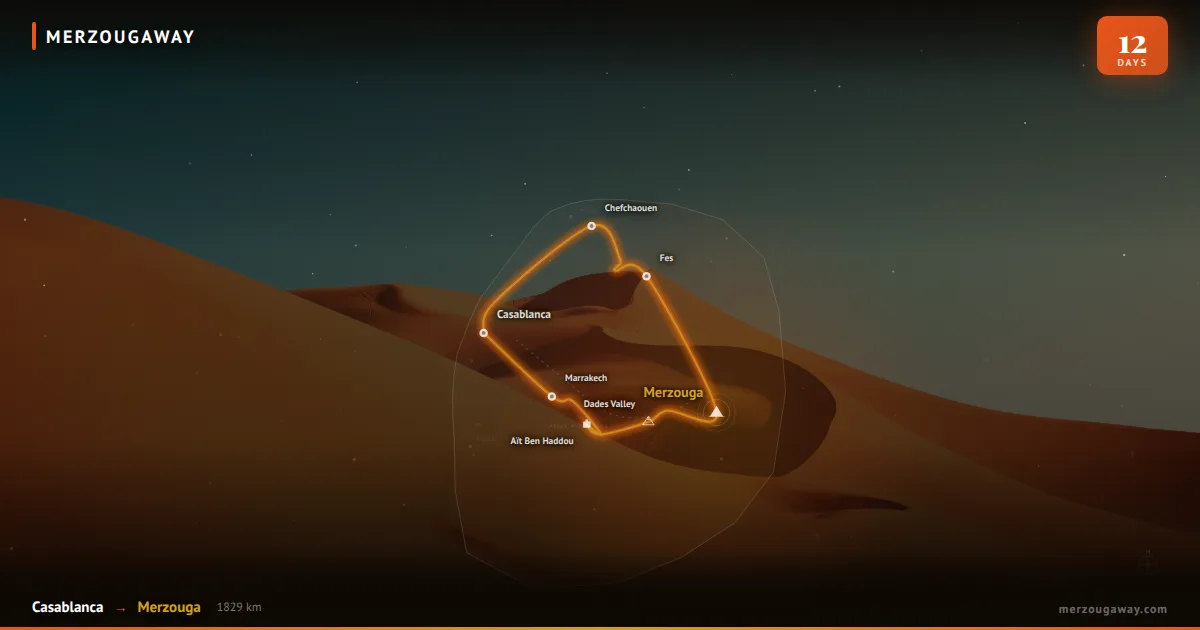
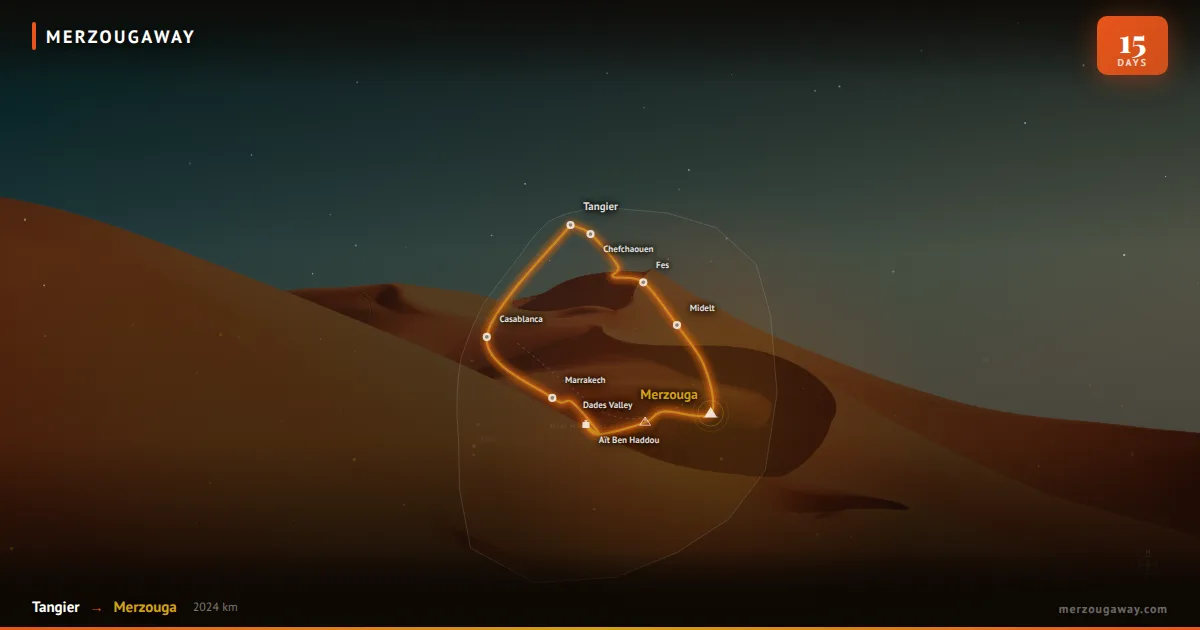
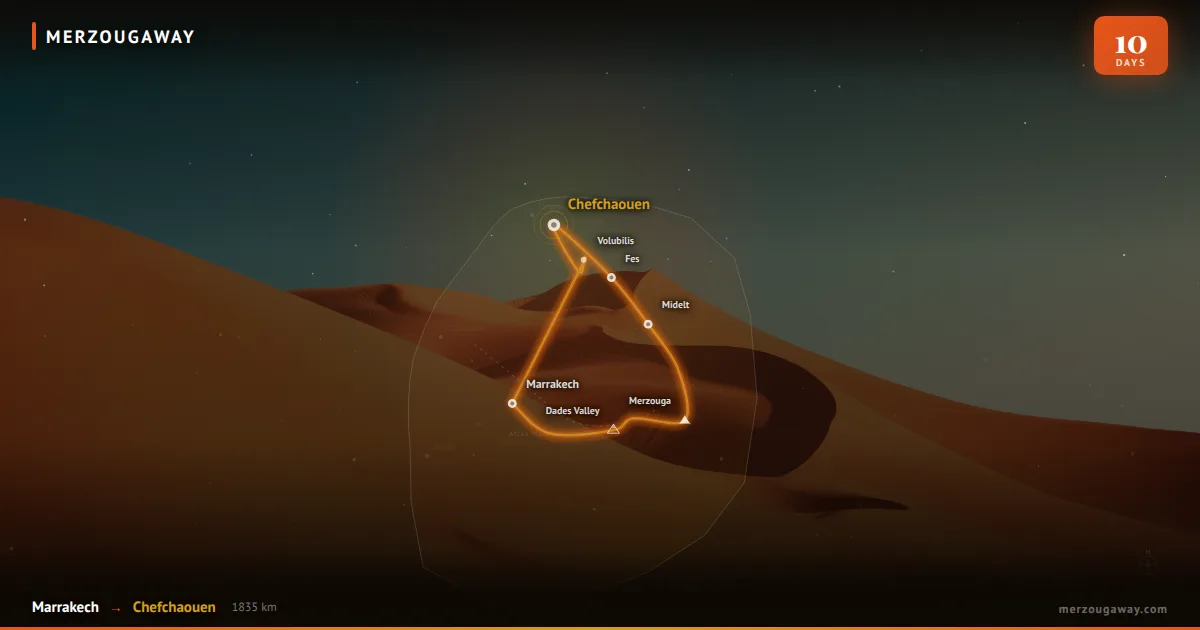
Once your entry paperwork is sorted, the fun part starts. Browse our Morocco tours — from 2-day Sahara add-ons to the 12-day Grand Morocco Circuit — or check our guide on what a Morocco trip actually costs to help plan your budget alongside your visa timeline. Also see is Morocco safe, driving in Morocco, and getting a local SIM or eSIM.
Email: [email protected] WhatsApp/Phone: +212675203319 / +212668534981
This guide summarizes general policy as of mid-2026 and is not a substitute for official confirmation. Visa rules can change and vary by nationality — always verify your specific requirements with a Moroccan embassy/consulate or your own government's travel advisory before booking non-refundable travel.
Sahara Route & Drive-Time Estimator
Calculate realistic driving hours across the High Atlas (Tizi n'Tichka pass), compare scenic stops (Dadès, Todra, Ziz), and plan your custom desert itinerary.
MerzougaWay Team
We are a passionate team of local guides dedicated to sharing the beauty and culture of our home, Morocco. Our journey began with a simple desire to offer authentic, memorable experiences that go beyond the typical tourist trails.