Marrakech Desert Trips: The Real Guide to Reaching the Sahara (2026)
Merzouga, Zagora, or Agafay — which desert trip from Marrakech actually fits your time and budget, what each one really costs, and what the drive is like. A practical guide, not a template.
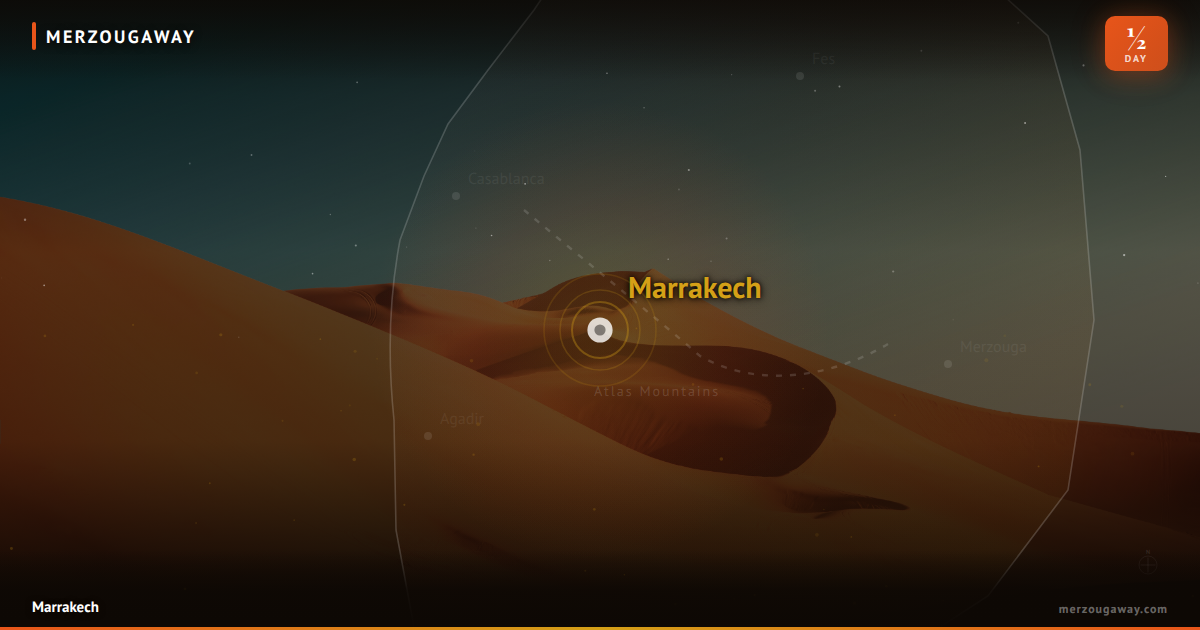
"Desert trip from Marrakech" covers three genuinely different experiences, and confusing them is the most common planning mistake we see. Merzouga gets you the real Erg Chebbi dunes — the ones from the postcards, up to 150 meters of wind-carved sand — but it's a full two-day journey each way. Zagora is closer and gets you into desert scenery faster, though the dunes themselves (Erg Chigaga) require a bit more driving beyond the town to reach properly. Agafay is barely an hour from the city, technically a rocky pre-Saharan landscape rather than sand dunes, and it exists for people who want a taste of "desert" without giving up two or three days of a Marrakech-based trip. None of these is objectively "the best" — it depends entirely on how much time you actually have.
[!NOTE] Fast-Facts & Direct Answer Summary
Merzouga, Zagora, or Agafay — which desert trip from Marrakech actually fits your time and budget, what each one really costs, and what the drive is like. A practical guide, not a template.
- Destination Focus: Authentic Moroccan culture, scenic routes, and local travel insights
- Currency & Payments: Moroccan Dirham (MAD; ~10 MAD ≈ €1 / $1.08 USD). Cash is essential outside major hotels
- Best Travel Window: October through April offers ideal temperate weather across Morocco and the desert
- Local Hospitality: Berber culture is renowned for warm hospitality, mint tea welcoming rituals, and rich musical heritage.
Merzouga and Erg Chebbi: the real Sahara
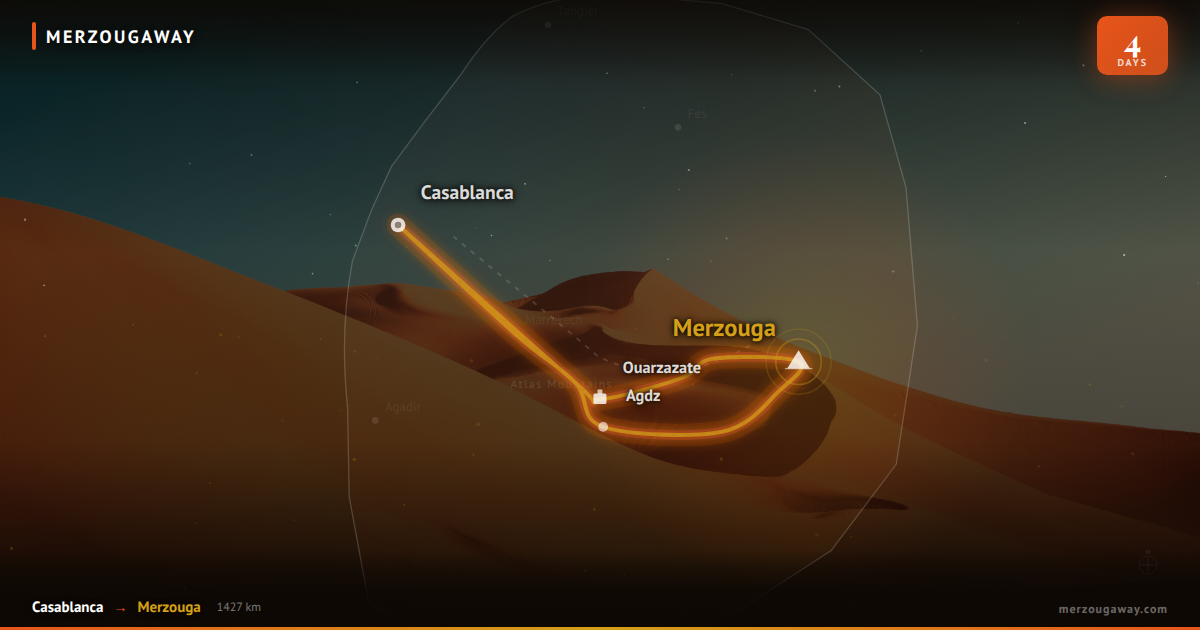
This is the trip most people picture when they imagine Morocco's desert, and it earns the reputation. Merzouga sits roughly 560 km from Marrakech, and the drive genuinely takes 8-9 hours if you did it in one push — which is exactly why nobody sensible does it that way. The route crosses the High Atlas via the Tizi n'Tichka pass, drops into Ouarzazate, then continues along the Dades and Todgha valleys before reaching the dunes, and splitting that drive over two days (with a stop in the Dades or Todgha area) turns an exhausting slog into one of the more scenic parts of the whole trip. Attempting Merzouga as a one-day round trip from Marrakech isn't realistic — you'd spend close to 18 hours total just driving, leaving essentially no time in the desert itself, which is why every properly structured itinerary runs at least 3 days/2 nights, with 4 or 5 days giving you room to actually rest and add stops like Ait Ben Haddou or Todgha Gorge without rushing.
Once you arrive, the standard structure is a camel trek into the dunes for sunset, a night in a desert camp (options range from shared-facility budget camps to camps with private en-suite tents), dinner and music around the fire, then a sunrise camel ride back out before the return drive. A private 3-day/2-night version of this trip with us starts from €250 per person; stretching to 4 days (which adds more of the Atlas and valley stops) starts from €420, and a 5-day version starts from €520. Prices vary a fair amount across operators depending on camp comfort level and group size, so treat any number you see, including ours, as a starting point to compare against rather than a fixed industry rate.
Zagora and Erg Chigaga: closer, but read the fine print
Zagora sits about 360 km from Marrakech, roughly 6-7 hours by road through the Draa Valley — Morocco's longest river valley, lined with palm groves and old kasbahs, which makes the drive itself worth doing slowly rather than rushing. The catch is that Zagora town isn't actually in the dunes; Erg Chigaga, the dune field associated with the region, sits a further stretch by 4x4 or camel beyond the town. A 2-day/1-night Zagora trip is a legitimate way to get a genuine desert-camp night with less total driving than Merzouga requires, and it tends to see fewer tourists than the Merzouga circuit — but if towering, iconic Sahara dunes are specifically what you're after, Merzouga's Erg Chebbi is the taller, more accessible dune field of the two. Our 2-day Marrakech to Zagora tour starts from €190 per person.
Agafay: the one-day option, with the right expectations
Agafay is a rocky, moon-like desert about 40 km and roughly an hour from Marrakech, and it's popular for exactly one reason: it fits into a single day or overnight without touching the rest of a Marrakech itinerary. It is not sand dunes — it's a stony plateau with Atlas Mountain views, which some travelers find just as striking and others find is not what they pictured when they booked "a desert trip." If you're short on time, want a sunset camel ride and dinner under the stars without committing two or three days, or you're doing this as an add-on to a longer Marrakech stay, Agafay does the job well. An overnight glamping stay starts from €150 per person, and a shorter sunset dinner and camel ride experience starts from €55.
What the days actually look like on a Merzouga trip
A well-run 3-day Marrakech-to-Merzouga trip usually breaks down like this: day one is the long drive over the Tizi n'Tichka pass with a stop at Ait Ben Haddou's UNESCO-listed kasbah, then on to overnight in the Dades or Todgha valley. Day two continues past Todgha Gorge and the Valley of Roses, arriving in Merzouga by mid-afternoon in time for a camel trek out to camp before sunset, dinner, and music around the fire. Day three starts with a sunrise camel ride back to the village, breakfast, and the return drive to Marrakech, arriving by evening. Extending to 4 or 5 days simply spreads this same core structure out, adding time in the Atlas or an extra night to break up the return leg rather than changing what happens in the desert itself.
Packing for the temperature swing
The single most underestimated part of this trip is how much colder the desert gets at night compared to how hot it is during the day, especially outside summer. Bring lightweight, breathable clothing for daytime heat, but also a proper warm layer — the "warm days, cold nights" pattern in the Sahara is real even when Marrakech itself feels mild. A scarf or shesh does double duty for sun and blown sand, sturdy closed shoes handle both the dunes and the 4x4 stops, and a headlamp is genuinely useful once camp lighting fades after dinner. Skin dries out fast in desert air, so bring more moisturizer and lip balm than you think you'll need, and pack a reusable water bottle — staying properly hydrated (aim for 3+ liters a day) matters more here than in the city.
Choosing between the seasons
Spring (March-May) and fall (September-November) are the most comfortable windows, with daytime temperatures around 20-30°C and cool, pleasant nights — they're also the most popular months, so book ahead if you're traveling then. Summer (June-August) gets genuinely extreme, often 35-45°C in the day, but nights stay warm rather than cold, tourist numbers drop, and prices soften — workable if you pace activities around the cooler morning and evening hours. Winter (December-February) brings pleasant, mild days but nights that can approach freezing, which is when that warm layer in your bag stops being optional. None of these seasons rules out a desert trip; they just change what you need to pack and how much company you'll have on the dunes.
Private trip or joining a group
We run these as private trips only — your own vehicle, driver-guide, and itinerary, rather than being placed with strangers on a fixed schedule. It costs more per person than a shared group departure would, but it means you can adjust the pace, stop longer at Ait Ben Haddou if you want to, or skip a stop that doesn't interest you, which matters a lot on a multi-day trip where the itinerary is the whole point. If you're deciding between operators generally, the questions worth asking are the same regardless of who you book with: what's the group size and vehicle type, is the guide English-speaking, what exactly is included in the camp (private or shared bathroom, which meals), and what's the cancellation policy.
Desert activities once you're there
Camel trekking is the signature activity — a gentle, unhurried ride timed for sunset or sunrise, best done in long pants with a scarf handy for sand. Sandboarding on the Erg Chebbi dunes needs no experience and equipment is provided by camps in the area. A 4x4 excursion into the dunes and out to visit a nomad family or a fossil site (the region around Merzouga and nearby Erfoud is known for fossil beds) fills a few hours well on longer trips. And after dark, this is one of the least light-polluted places you'll likely ever stand — clear nights bring out the Milky Way in a way that genuinely surprises first-timers, which is why an evening dedicated to nothing but the sky is worth building into the itinerary rather than treating as a footnote.
Respecting where you are
The desert around Merzouga isn't empty of people — Berber and nomad communities live and work in this landscape, and the villages you pass through are homes, not stage sets. Dress modestly, especially in villages, ask before photographing anyone, and take your shoes off if you're invited into a tent or home. A few words of greeting in Arabic or Berber go further than you'd expect, and if you're buying something directly from an artisan or a nomad family rather than a shop, that's usually the more meaningful way to spend money here. It's also a fragile environment — pack out anything you bring in, and don't add to the erosion pressure on dune faces by cutting new tracks where a path already exists.
Frequently Asked Questions
How long should I spend in the desert?
A 2-day/1-night Merzouga trip is technically possible but rushed, since one full day is driving in each direction; 3 days/2 nights is the realistic minimum for a comfortable trip, and 4-5 days gives you room to enjoy the Atlas crossing and valley stops rather than treating them as pass-through scenery.
Is a desert trip from Marrakech safe?
Yes, it's a well-established route that thousands of travelers do every year — book with an operator who provides a licensed driver-guide and a properly equipped vehicle, and follow their guidance once you're out in the dunes, particularly around sun exposure and hydration.
What's the actual difference between Erg Chebbi and Erg Chigaga?
Erg Chebbi, near Merzouga, has taller dunes (up to around 150m) and more developed camp infrastructure; Erg Chigaga, near Zagora, is more remote with a larger dune field but requires more off-road travel beyond the town to reach.
Can I do this trip in summer?
Yes, though daytime temperatures can reach 40-45°C, so plan activities for early morning or evening, choose a camp with shade or a pool if possible, and drink more water than feels necessary — summer also means fewer crowds and generally lower prices.
Ready to see the Sahara for yourself?
If Merzouga is the trip you're weighing, our 3-day Marrakech to Merzouga desert tour covers the Atlas crossing, Ait Ben Haddou, and a night in the dunes with a private driver-guide throughout.
Need Help Planning Your Desert Adventure?
- WhatsApp: +212 675 203 319 / +212 668 534 981
- Email: [email protected]
This guide is regularly updated. Last updated: July 2026.
Sahara Route & Drive-Time Estimator
Calculate realistic driving hours across the High Atlas (Tizi n'Tichka pass), compare scenic stops (Dadès, Todra, Ziz), and plan your custom desert itinerary.
MerzougaWay Team
We are a passionate team of local guides dedicated to sharing the beauty and culture of our home, Morocco. Our journey began with a simple desire to offer authentic, memorable experiences that go beyond the typical tourist trails.