Merzouga, Morocco: What to Actually Know Before You Go (2026)
No airport, no train, and a full-day drive from Marrakech — the practical facts about reaching Merzouga and the Erg Chebbi dunes, what it costs, and what a visit actually involves.
Merzouga is a small village in southeastern Morocco, close to the Algerian border, that exists almost entirely because of what's next to it: the Erg Chebbi dunes, one of the most accessible stretches of true Sahara sand dunes anywhere in the country. It's a village of a few thousand people built around desert tourism, which means the infrastructure is genuinely built for visitors — but it's also remote in ways that catch people off guard if they haven't planned the journey properly.
[!NOTE] Fast-Facts & Direct Answer Summary
No airport, no train, and a full-day drive from Marrakech — the practical facts about reaching Merzouga and the Erg Chebbi dunes, what it costs, and what a visit actually involves.
- Destination Focus: Authentic Moroccan culture, scenic routes, and local travel insights
- Currency & Payments: Moroccan Dirham (MAD; ~10 MAD ≈ €1 / $1.08 USD). Cash is essential outside major hotels
- Best Travel Window: October through April offers ideal temperate weather across Morocco and the desert
- Local Hospitality: Berber culture is renowned for warm hospitality, mint tea welcoming rituals, and rich musical heritage.
Getting there is the part to plan around
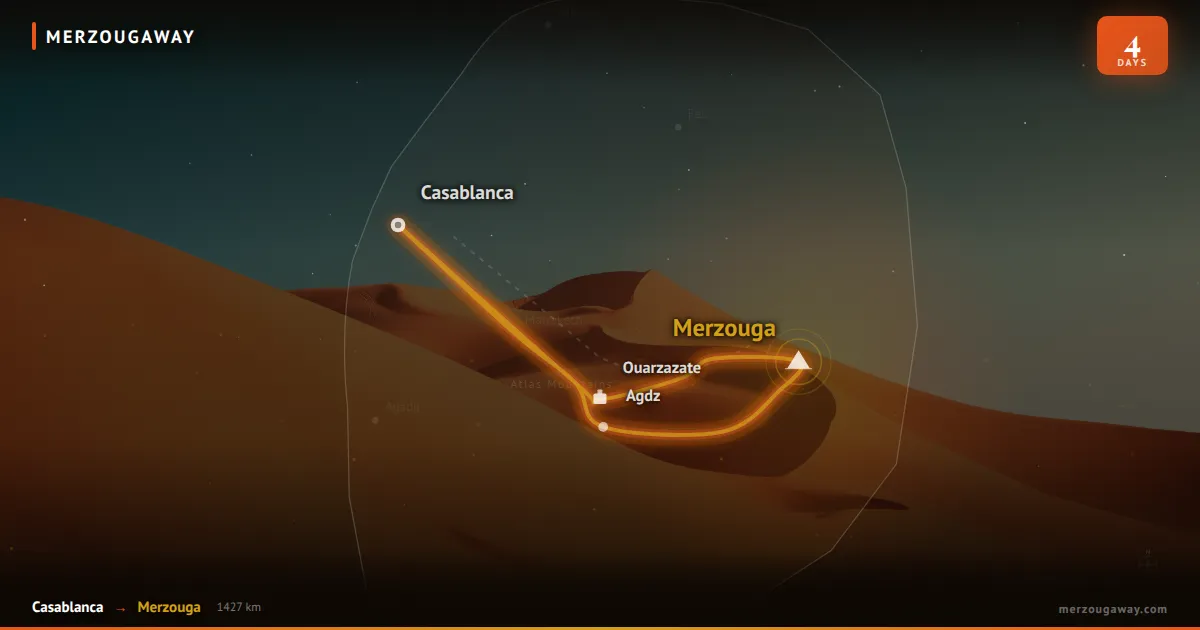
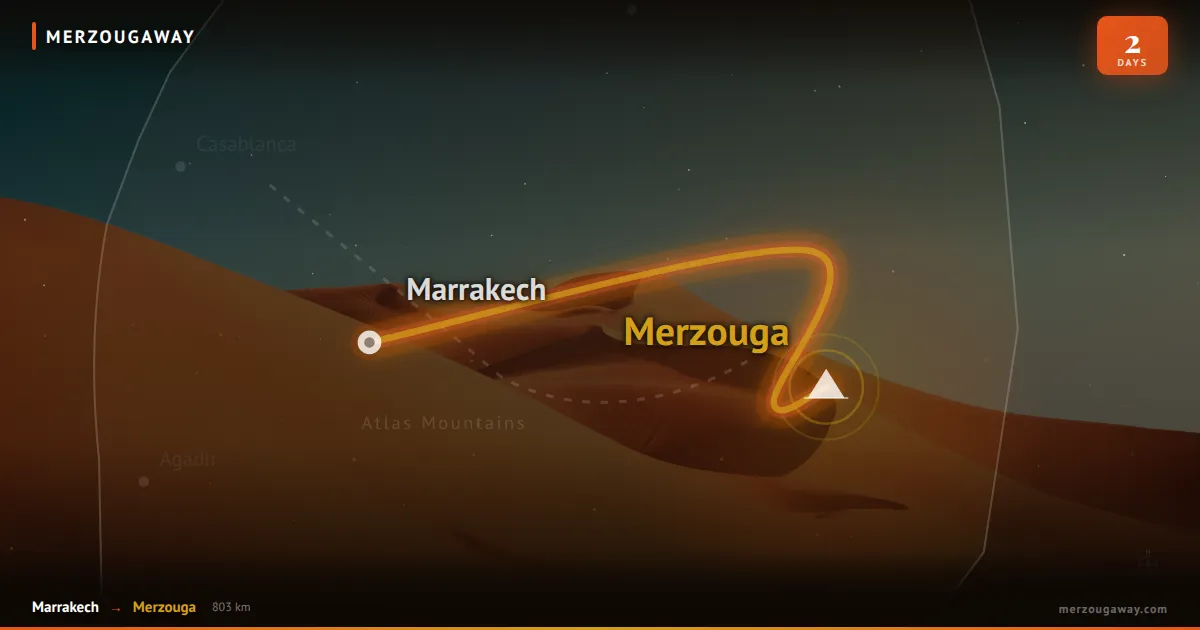
Merzouga has no airport of its own. The nearest one is Errachidia (ERH), roughly a 2-hour drive away, and it has limited domestic connections; Ouarzazate (OZZ) is about 5 hours by road, and Fès-Saïss (FEZ) around 8 hours. There's also no direct train to Merzouga — the rail network doesn't reach this far into the southeast, so however you arrive, the final leg is by road, either a private transfer, a grand taxi, or a CTM/Supratours bus to a nearby town followed by a shorter transfer. From Marrakech, the drive is 9-10 hours via the N9 and N10, crossing the High Atlas at the Tizi n'Tichka pass; from Fès it's 8-9 hours via the N13. Both of these are long enough that splitting the journey over two days, rather than attempting it in one push, is what almost every properly planned trip does — a one-day round trip from Marrakech simply isn't realistic once you account for the drive alone.
Where to stay
Accommodation in and around Merzouga runs the full range. In the dunes themselves, desert camps vary from simple shared-facility setups to camps with private en-suite tents and proper dining areas — the main differences between tiers are privacy, bathroom access, and how elaborate the evening meal and entertainment are, rather than anything about the core experience of a night under the stars. In the village, there are mid-range guesthouses and small hotels, some with dune-view pools, and a handful of budget auberges and hostel-style options for travelers keeping costs down. If you're booking a multi-day desert tour, the camp is usually arranged as part of the package rather than something you book separately.
What there is to do
A camel trek — typically an hour or so at sunset or sunrise — is the signature activity, and it's genuinely worth timing around one of those two windows rather than doing it in harsh midday light. A night in a desert camp with dinner and music around the fire is the natural pairing with that trek. Beyond the dunes themselves, a 4x4 excursion can take you to visit a nomad family or to fossil sites near Erfoud (this whole region is known for its fossil beds), sandboarding on the dunes needs no experience and equipment is typically provided locally, and Khamlia village, about 7 km from Merzouga, is known for its Gnawa musical tradition — a visit there usually includes tea and a short music performance with a local family. None of these need to be booked far in advance individually; they're standard inclusions or easy add-ons on most desert-camp stays.
Food while you're there
Tagine and couscous are the staples you'll eat most often, mechoui (slow-roasted lamb) shows up at bigger gatherings, and harira soup is common, especially heartier in the cooler months. Mint tea is poured constantly and is worth treating as the local ritual it is rather than just a drink. Restaurants in the village tend to serve a similar range of Moroccan staples with dune views as the main draw; camps typically include full board, so most of your meals on a multi-day trip are already arranged.
Practical basics
Bring cash — Moroccan Dirhams, and small bills specifically, since change is hard to come by. There are ATMs in the village, and credit cards are accepted at most hotels and camps, but not reliably beyond that. Tipping follows the same general Moroccan norms as elsewhere: roughly 10% at restaurants, and a similar rough guideline for camel guides and camp staff, usually handed over at the end of your stay. WiFi exists in hotels and some cafés but can be slow, and mobile coverage is decent in the village itself but drops off once you're properly out in the dunes, which is honestly part of the appeal for a lot of visitors. Stick to bottled water, bring sun protection you'd use anywhere hot and dry, and know that the nearest hospital-level medical care is in Errachidia — the village itself has only a basic clinic.
What to pack
Beyond your travel documents and a stash of small-denomination cash, pack for a bigger temperature swing than the season alone suggests: lightweight, breathable clothing for daytime heat, and a proper warm layer for nights, since the desert cools dramatically after dark even when the day was scorching. A scarf or shesh handles both sun and blown sand, comfortable closed shoes work better than sandals for the dunes and 4x4 stops (sandals are fine once you're actually at camp), and a headlamp earns its space once the camp's lighting fades after dinner. Desert air is dry enough that most people find they need more moisturizer and lip balm than usual, and a reusable water bottle is worth having on hand at all times — aim for 3+ liters a day in warm weather.
When to go
Spring (March-May) and autumn (September-November) are the most comfortable months — daytime temperatures in the 20-30°C range with cool, pleasant nights, and correspondingly the busiest and most expensive time to visit. Summer (June-August) is genuinely extreme, regularly up to 45°C in the day, though nights stay warm rather than cold, and this is when crowds thin out and prices tend to soften. Winter (December-February) brings pleasant days but nights that can drop close to freezing — the season where packing that warm layer stops being optional and becomes essential.
What a trip actually costs
Costs scale a lot with comfort level. A simpler setup — shared-facility camps, basic guesthouses, self-catering meals — can run in the low hundreds of MAD per day; a private multi-day tour with a comfortable camp, full board, and a dedicated driver-guide sits meaningfully higher, and a luxury camp stay with private amenities higher again. Rather than quoting a single figure that goes stale quickly, it's worth treating any specific tour's published price as the number to compare against, since that reflects current rates far better than a general estimate would. Our own 3-day Marrakech to Merzouga tour, for reference, starts from €250 per person, with longer 4- and 5-day versions starting from €420 and €520.
Etiquette worth knowing
Dress modestly in the village — this is a community, not a resort, and casual tourist beachwear reads differently here than at a hotel pool. Ask before photographing people, take your shoes off if invited into a tent or home, and use your right hand for eating and greeting, which is the customary norm across Morocco. Public displays of affection and drinking alcohol in public aren't part of local custom here, and it's worth avoiding both, along with sensitive topics like politics, out of the same basic courtesy you'd extend anywhere you're a guest.
💳 Financial Logistics, ATM Realities & Local Desert Commerce
Preparing your finances for the Sahara avoids stressful payment surprises in an isolated desert region where modern credit card processing remains limited:
┌─────────────────────────────────────────────────────────────────────────────────────────────┐
│                    MERZOUGA & ERG CHEBBI PRICING & PAYMENT BENCHMARKS                       │
├─────────────────────┬──────────────────────────┬──────────────────┬─────────────────────────┤
│ ITEM / SERVICE      │ STANDARD LOCAL PRICE     │ PAYMENT METHOD   │ LOCAL LOGISTICAL TIP    │
├─────────────────────┼──────────────────────────┼──────────────────┼─────────────────────────┤
│ 1-Hour Quad Rental  │ 650–850 MAD (€60–€80)    │ Cash (MAD / EUR) │ Safety goggles & helmet │
│ (Erg Chebbi Dunes)  │ per person               │ or Card (+3–5%)  │ included in rental      │
├─────────────────────┼──────────────────────────┼──────────────────┼─────────────────────────┤
│ Traditional Madfouna│ 80–120 MAD (€7.50–€11)   │ Cash strictly    │ Order 2 hours ahead at  │
│ (Berber Pizza Meal) │ feeds 2–3 people         │ (Local bakery)   │ village wood-fire baker │
├─────────────────────┼──────────────────────────┼──────────────────┼─────────────────────────┤
│ Berber Scarf        │ 50–100 MAD (€4.50–€9.00) │ Cash strictly    │ 4 to 6 meters of cotton;│
│ (*Cheche* Turban)   │ depending on length      │ (Souk stall)     │ hand-dyed indigo fabric │
├─────────────────────┼──────────────────────────┼──────────────────┼─────────────────────────┤
│ 1.5L Bottled Water  │ 6–10 MAD (€0.55–€0.90)   │ Cash strictly    │ Buy in village grocers  │
│ (Sidi Ali / Ain Sais│ at corner grocers        │ (Coins / bills)  │ before heading into camp│
├─────────────────────┼──────────────────────────┼──────────────────┼─────────────────────────┤
│ Sandboard Rental    │ 50–80 MAD per day        │ Cash strictly    │ Complimentary at luxury │
│ (Village Shop)      │ or free at luxury camp   │ (Deposit ID)     │ desert camps            │
└─────────────────────┴──────────────────────────┴──────────────────┴─────────────────────────┘
ATM Reliability & Emergency Banking Access
- The Single Village ATM Caveat: Merzouga village has exactly one operational bank ATM (Attijariwafa Bank on the main street). During high tourist season weekends, this machine routinely runs out of cash banknotes or suffers telecommunication network failures. Never rely on withdrawing cash upon arrival in Merzouga.
- The Rissani Banking Backup Hub: The historic market town of Rissani (35 km north along the N13 highway) features four full-service bank branches (Attijariwafa Bank, Banque Populaire, BMCE Bank of Africa, and Crédit Agricole) with reliable, 24-hour exterior ATMs. Stop in Rissani or Erfoud to withdraw sufficient Moroccan Dirhams for your desert stay.
- Cash Currency Preferences in the Desert: While Moroccan Dirhams (MAD) are the official and preferred currency, local desert tour operators and luxury camps gladly accept major foreign cash currencies (Euros, US Dollars, British Pounds) for quad biking excursions, camel rides, and tips at fair market exchange rates. Ensure foreign banknotes are crisp, unripped, and free of ink markings.
- Electricity & Charging Protocols in Desert Camps:
- Solar Array Capacity: Modern luxury camps generate electricity through high-output solar photovoltaic panels paired with deep-cycle gel or lithium battery banks, supplemented by clean-burning diesel generators during evening hours.
- In-Tent Outlets: Every luxury tent features standard European 220V round two-pin wall sockets (Type C and E). You can charge smartphones, laptops, mirrorless camera batteries, and drones with complete safety.
- High-Wattage Restrictions: Do not attempt to plug in 2,000-watt hair dryers, flat irons, or travel electric kettles. These high-draw resistive appliances will immediately trigger the solar inverter's circuit breaker and cut power to your tent. Luxury camps provide specialized low-draw hair dryers in bathroom vanities upon request.
- Wi-Fi Connectivity & Working Remotely from the Dunes: If you need to stay connected for remote work or video calls, Maroc Telecom (IAM) provides 4G LTE cellular coverage along the western face of Erg Chebbi. Luxury camps maintain 4G Wi-Fi routers in central dining lounges with download speeds averaging 10 to 20 Mbps, sufficient for Zoom meetings and file transfers.
- Local Languages & Communication in Merzouga: The native mother tongue of Merzouga's indigenous population is Tamazight (specifically the Tashelhit/Tamazight dialects of the Ait Atta Berber tribe). However, due to decades of international hospitality, virtually all camp hosts and drivers speak fluent French and English, with many also speaking Spanish, Italian, and German. Learning a few words of Berber—such as "Azul" (Hello) and "Tanmirt" (Thank you)—will bring broad, joyful smiles to local faces.
- Drinking Water & Hydration in the Desert: Even during cool winter months, low Saharan humidity accelerates dehydration without causing heavy sweating. Drink a minimum of 2.5 to 3 liters of bottled mineral water each day. Trusted Moroccan bottled water brands available in all village grocers include Sidi Ali (still mineral water) and naturally sparkling Oulmès.
- Emergency Fuel & Automotive Repair in Merzouga: For self-drivers, Merzouga village has modern fuel stations (Afriquia and Petrom) providing diesel (Gasoil 10) and unleaded gasoline (Sans Plomb). Small roadside mechanic shops in Hassilabied can repair flat tires, weld brackets, and inspect engine cooling systems for modest cash fees.
- Desert Souvenirs & Ethical Handicraft Purchases: When shopping in desert villages, look for authentic local items: natural desert rose gypsum crystals (rose des sables), genuine trilobite and ammonite fossils extracted from local quarries, hand-carved soapstone figurines, and traditional indigo Berber turbans (cheche). Purchasing directly from village craftsmen ensures your tourism spending supports desert families. Always negotiate with a warm, polite demeanor, keeping in mind that small price differences represent vital household income in remote rural desert communities.
Frequently Asked Questions
Does Merzouga have an airport?
No — there's no airport in Merzouga itself. The nearest is Errachidia (ERH), about a 2-hour drive away, with Ouarzazate and Fès further still, so most visitors arrive by road rather than flying in directly.
Can I take a train to Merzouga?
No, there's no direct rail line this far southeast. You'd take a train to a connecting hub and finish the journey by bus, grand taxi, or private transfer, or simply travel the whole way by road from Marrakech or Fès.
Can I visit Merzouga as a day trip from Marrakech?
Not realistically — the drive alone is 9-10 hours each way, so a round trip in a single day would mean close to 18 hours of driving with barely any time in the desert. A 3-day/2-night trip is the practical minimum.
Is Merzouga safe to visit?
Yes, it's a well-established tourism destination that welcomes visitors year-round. The usual common-sense precautions apply — book with a reputable operator, stay hydrated, follow your guide's instructions in the dunes, and keep valuables secure.
Planning the Merzouga leg of your trip
If you're mapping out how to actually get from Marrakech into the dunes, our 3-day Marrakech to Merzouga tour covers the full route, including the Atlas crossing and a night in a desert camp.
Need Help Planning Your Trip?
Contact us at [email protected] or WhatsApp +212 675 203 319 / +212 668 534 981. Our local team can help you plan the Merzouga leg of your Morocco trip.
This guide is regularly updated. Last updated: July 2026.
Sahara Route & Drive-Time Estimator
Calculate realistic driving hours across the High Atlas (Tizi n'Tichka pass), compare scenic stops (Dadès, Todra, Ziz), and plan your custom desert itinerary.
MerzougaWay Team
We are a passionate team of local guides dedicated to sharing the beauty and culture of our home, Morocco. Our journey began with a simple desire to offer authentic, memorable experiences that go beyond the typical tourist trails.