Merzouga, Morocco: The Complete Travel Guide (2026)
Everything for a first trip to Merzouga and the Erg Chebbi dunes — when to go, how to actually get there, what there is to do, and what a realistic 2-3 day itinerary looks like.
Merzouga is a small village at the edge of the Sahara, and almost everything about it is organized around one thing: getting you into the Erg Chebbi dunes, which rise up to around 150 meters just outside town and are among the tallest and most photogenic in North Africa. It isn't a destination you pass through quickly — there's no airport here, the drive from any major city takes the better part of a day, and most of what makes the trip worthwhile (the sunset, the night sky, the sunrise) only really happens if you stay at least one night. This guide covers what to actually plan for.
[!NOTE] Fast-Facts & Direct Answer Summary
Everything for a first trip to Merzouga and the Erg Chebbi dunes — when to go, how to actually get there, what there is to do, and what a realistic 2-3 day itinerary looks like.
- Destination Focus: Authentic Moroccan culture, scenic routes, and local travel insights
- Currency & Payments: Moroccan Dirham (MAD; ~10 MAD ≈ €1 / $1.08 USD). Cash is essential outside major hotels
- Best Travel Window: October through April offers ideal temperate weather across Morocco and the desert
- Local Hospitality: Berber culture is renowned for warm hospitality, mint tea welcoming rituals, and rich musical heritage.
Why people make the trip
The dunes themselves are the obvious draw, but the parts that surprise first-time visitors more are the night sky — genuinely some of the darkest, clearest conditions you'll find anywhere, with the Milky Way visible to the naked eye on a clear night — and the Berber and Amazigh communities living around the desert's edge, whose hospitality and music (particularly the Gnawa tradition in nearby Khamlia) are as much a part of the trip as the sand itself. Camel treks, sandboarding, and 4x4 excursions round out the activity list, but the dunes and the sky are really what everyone comes for.
When to go
Spring (March-May) and autumn (September-November) are the easiest months — daytime temperatures in the 20-30°C range, cool but manageable nights, and the desert at its most comfortable for camel treks and time outdoors. Winter (December-February) brings pleasant days but genuinely cold nights, sometimes down to freezing, so warm layers aren't optional if you're camping. Summer (June-August) is intense, regularly hitting 40°C plus during the day, but nights stay warm and clear skies make it a strong season specifically for stargazing, if you're willing to shift your schedule around the heat and rest through the hottest hours.
Getting there
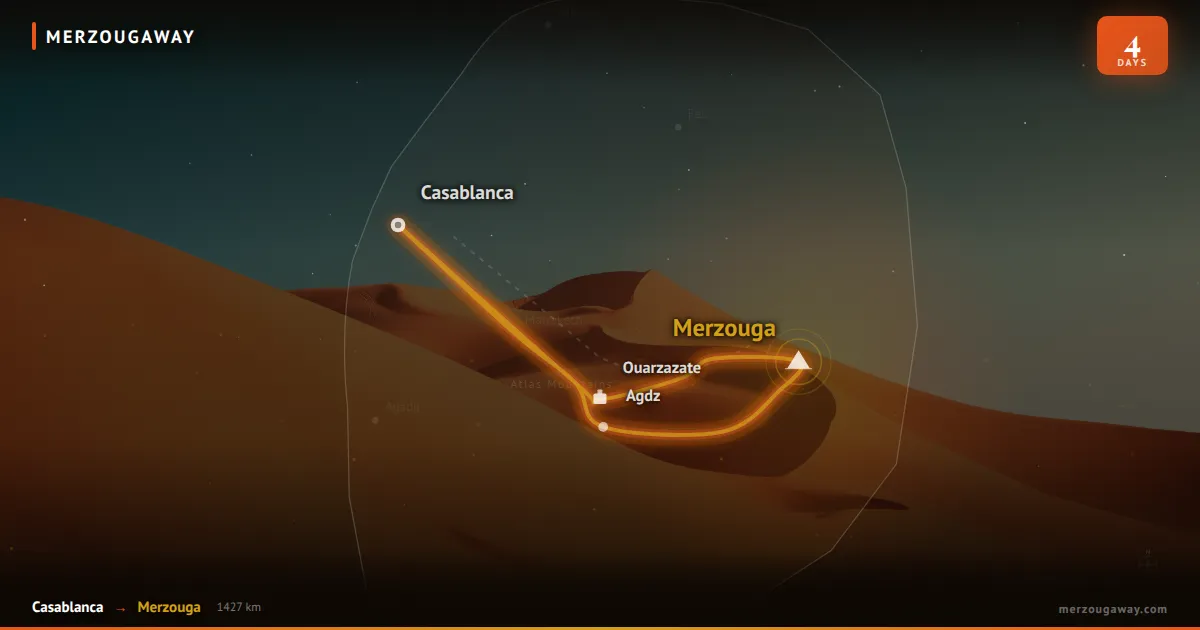
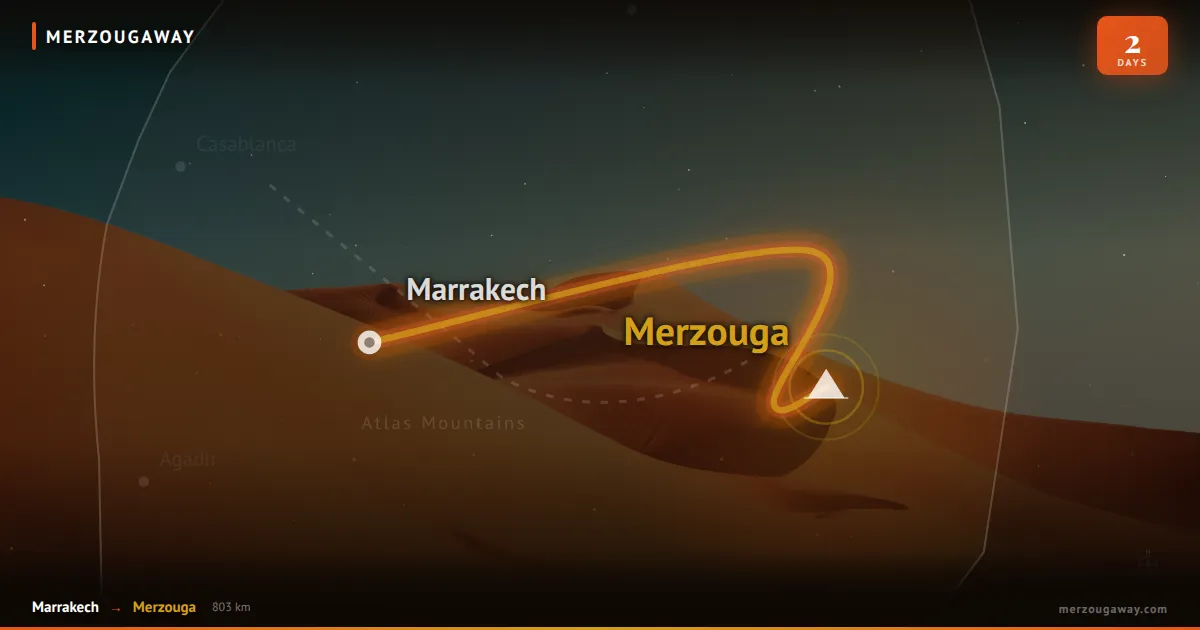
There's no airport in Merzouga, and there won't be one any time soon — the nearest is Errachidia (ERH), roughly two to two-and-a-half hours away by road, followed by Ouarzazate (five to five-and-a-half hours) and Fès (around seven hours through the Middle Atlas). From Marrakech, the drive is nine to ten hours across the High Atlas via the Tizi n'Tichka pass — long enough that a same-day round trip isn't realistic, and most visitors fold it into a multi-day private tour with stops along the way rather than treating it as a single transfer. There's no direct train either; the closest stations are Fès and Meknès, both still five-plus hours from Merzouga by road. A private driver-guide is genuinely the easiest way to do this leg, since the route passes through mountain scenery worth stopping for rather than driving through in one push — our 3-day Marrakech to Merzouga tour is built around exactly that.
What to actually do
A camel trek at sunset or sunrise is close to mandatory — an hour or so riding into the dunes, usually ending at or starting from a desert camp, and it's genuinely one of the more memorable ways to see Erg Chebbi rather than just a photo-op. Spending a night in a desert camp is the other core experience, and it's worth doing even if you're staying at a hotel in the village for the rest of your trip, since the sunset-to-sunrise stretch is what the whole detour to Merzouga is really about. Sandboarding on the dune faces is easy to pick up and rented locally at modest cost, best attempted in the cooler morning or late-afternoon hours rather than midday. A 4x4 excursion into the surrounding desert typically covers a nomad family visit, a fossil site or two (this region is rich in trilobite and ammonite fossils, mined and sold locally), and a stop at a desert oasis, and can be arranged as a half-day or full-day trip. Khamlia, a small village about 7 km from Merzouga, is known for its Gnawa musicians — descendants of West African communities brought to Morocco generations ago — and an evening of music and tea there is one of the more culturally grounded stops in the area. Rissani, about 35 km away, has a genuine working souk on market days (traditionally Tuesday, Thursday, and Sunday) and the mausoleum of Moulay Ali Cherif, founder of the current Alaouite dynasty.
Where to stay
Accommodation splits into three tiers: desert camps directly on or beside the dunes (ranging from basic shared-bathroom tents to private en-suite tents with proper beds and solar power), kasbah-style hotels in the village or nearby Hassilabied with pools and reliable air conditioning, and simple village auberges for travelers who mainly want a clean room and can arrange a camp night separately. Nearly every tier of accommodation can arrange a camel trek or camp night even if it isn't bundled into the room rate, so budget doesn't lock you out of the core desert experience — it just changes how it's packaged.
Where to eat
Merzouga's restaurants are almost all built around the same core: tagines, couscous, and grilled meats, often served on a terrace with a dune view, with prices generally lower than what you'd pay in Marrakech or Fès for equivalent quality. Mint tea and fresh-baked bread are a constant across every price tier, and most desert camps include a set dinner as part of the overnight stay rather than offering a separate menu.
Practical basics
The Moroccan Dirham is the only currency you'll want cash in — ATMs exist in Merzouga village, but cash is still preferred for small purchases, and cards are mainly useful at hotels and camps rather than local restaurants or shops. Arabic and Tamazight (Berber) are the everyday languages, French is widely understood, and English is spoken at most tourist-facing businesses, though a few French phrases go a long way with drivers and camp staff. Bottled water is the safer default for drinking, sun protection is essential in every season, and a scarf or shesh genuinely earns its keep against both sun and blowing sand rather than being a purely decorative packing item. Dress modestly when visiting villages like Khamlia or Rissani, ask before photographing people, and expect haggling in the souks but not at fixed-price shops or hotels.
A realistic first-trip itinerary
Two nights is the minimum to actually experience Merzouga rather than rush through it. On a typical first day, you arrive, settle in, and head out for a 4x4 excursion or an afternoon of sandboarding before a sunset camel ride into a desert camp for the night, with dinner and music around the fire once the sun's down. The second day starts with sunrise back over the dunes, ideally followed by a visit to Khamlia or the Rissani souk depending on the day of the week, with the afternoon left open before an evening departure or a second night if your schedule allows it. If you have a third day to spare, use it for whichever activity you didn't fit into the first two — a longer camel trek, a fossil-focused 4x4 route, or simply more time to rest before the long drive back.
🏜️ Beyond the Sand Dunes: Khamlia, Dayet Srij & Pre-Saharan Geology
While the 150-meter golden crests of Erg Chebbi are the primary attraction, the surrounding pre-Saharan hamada is rich in ecological wonders, ancient cultures, and geological history:
┌─────────────────────────────────────────────────────────────────────────────────────────────┐
│                    GREATER MERZOUGA MICRO-DESTINATIONS & EXCURSIONS MATRIX                  │
├─────────────────────┬────────────┬─────────────┬────────────────┬───────────────────────────┤
│ SITE / ATTRACTION   │ DISTANCE   │ DRIVE TIME  │ OPTIMAL TIME   │ ADMISSION & HIGHLIGHTS    │
├─────────────────────┼────────────┼─────────────┼────────────────┼───────────────────────────┤
│ Khamlia Gnawa       │ 7 km S     │ 10 Mins     │ 10:30 AM –     │ Free entry (50–100 MAD    │
│ Music Village       │ of Merzouga│ (Paved road)│ 12:30 PM       │ band tip); trance rhythms │
├─────────────────────┼────────────┼─────────────┼────────────────┼───────────────────────────┤
│ Dayet Srij          │ 4 km W     │ 10 Mins     │ 07:00 AM –     │ Free; seasonal pink       │
│ Seasonal Salt Lake  │ of Merzouga│ (Dirt track)│ 09:00 AM       │ flamingos & desert ducks  │
├─────────────────────┼────────────┼─────────────┼────────────────┼───────────────────────────┤
│ Mifis Abandoned     │ 12 km SE   │ 20 Mins     │ 03:00 PM –     │ Free; historic French/    │
│ Kohl & Lead Mines   │ into hamada│ (4x4 track) │ 05:00 PM       │ Berber mineral shafts     │
├─────────────────────┼────────────┼─────────────┼────────────────┼───────────────────────────┤
│ Rissani Souk &      │ 35 km N    │ 30 Mins     │ Sun, Tue, Thu  │ Free; donkey parking lot; │
│ Alawite Mausoleum   │ (N13)      │ (Paved)     │ Mornings       │ dates & Madfouna pizza    │
└─────────────────────┴────────────┴─────────────┴────────────────┴───────────────────────────┘
The Miracle of Dayet Srij Seasonal Flamingo Lake
- Desert Wetland Ecosystem: Located just west of Merzouga village at the base of the dunes, Dayet Srij is a seasonal endorheic lake that fills after autumn flash floods. When filled with water (typically November through April), it creates an astonishing visual mirage: brilliant pink Greater Flamingos (Phoenicopterus roseus), shelducks, and migratory waders swimming against a backdrop of golden sand dunes.
- Mifis Kohl Mines & Plateau Panoramas: High on the rocky black hamada southeast of the dunes lie the abandoned French colonial mineral shafts of Mifis. For centuries, local Berber and Tuareg nomads extracted galena (lead sulfide) to grind into traditional cosmetic eye kohl. The elevated ridgeline offers sweeping panoramic vistas across the entire Erg Chebbi dune field stretching to the Algerian frontier.
- Visiting Nomadic Encampments with Indigenous Respect: Nomadic Berber families belonging to the Ait Atta tribe maintain seasonal tent encampments across the black desert plains behind the dunes. MerzougaWay arranges respectful cultural visits where travelers sit on woven camel-hair mats to share fresh mint tea, understanding the realities of water scarcity, pastoral herding, and desert adaptation firsthand.
- The Ancient Khettara Underground Irrigation Channels: Along the desert approach road near Jorf and Hannabou, explore the subterranean engineering marvel known as the Khettaras. Constructed in the 14th century, this ingenious gravity-fed underground canal system channeled mountain water over 30 kilometers across the desert to irrigate date palm groves without evaporation loss under the scorching Saharan sun. Visitors can descend stone staircases into the cool subterranean aqueduct shafts.
- Traditional Bread Baking in Earthen Tannour Ovens: In local Berber desert villages like Hassilabied and Khamlia, daily bread (khobz) is baked inside cylindrical clay ovens heated with dried palm fronds and olive wood. Local women slap round disks of semolina dough directly against the searing interior clay walls. The bread bubbles into a smoky, blistered flatbread that pairs perfectly with olive oil and spicy tagines.
- Exploring the Rissani Date Market & Donkey Parking Hub: On Tuesdays, Thursdays, and Sundays, Rissani hosts the largest traditional souk in the pre-Sahara. Outside the market walls lies the famous "Donkey Parking Lot," where hundreds of working donkeys are tethered while their owners barter across the spice, livestock, and leather stalls. Sample succulent local Medjool and Boufeggous dates harvested from the surrounding Tafilalet palm forest.
- The Desert Architecture of Earth and Palm Wood: Traditional homes in Merzouga and Hassilabied are built entirely from sun-dried clay mud bricks (pisé), straw, and date palm trunks (khellal). This ancient vernacular architecture provides extraordinary natural insulation, maintaining indoor temperatures up to 15°C cooler than the searing summer heat outside.
- Local Wildlife of Erg Chebbi: Beyond domestic camels and sheep, the dunes shelter specialized desert wildlife: shy fennec foxes (Vulpes zerda) with enormous ears for nocturnal hearing, spiny-tailed desert lizards (Uromastyx or Dhab), horned desert vipers, and delicate dung beetles that navigate sand crests using celestial polarized light.
- Responsible Desert Tourism Guidelines: Support native Berber livelihoods by booking directly with locally owned tour companies based in Merzouga like MerzougaWay. Avoid single-use plastic water bottles by refilling reusable insulated bottles at camp water dispensers, and always ask permission before taking photos of local oasis farmers and children.
- The Desert Night Sky & Bortle Scale Class 1 Stargazing: The remote geographical isolation of Erg Chebbi, sheltered behind the Atlas mountain barrier with zero major urban centers within 100 kilometers, creates a Bortle Class 1 dark sky. Travelers can observe the Andromeda Galaxy, the celestial arms of the Milky Way, and vibrant shooting stars with the naked eye from the quiet comfort of their tent terrace.
Frequently Asked Questions
Is Merzouga safe for tourists?
Yes, generally very safe — the same standard precautions that apply anywhere in Morocco, like keeping valuables secure and agreeing prices before a service rather than after, are really all you need here.
Do I need a guide for the desert?
It isn't mandatory, but a guide meaningfully improves both the experience and the safety of it — dunes are disorienting at night and in poor visibility, and a local guide also opens doors to the nomad and Berber communities you wouldn't otherwise access on your own.
Can I visit Merzouga in one day?
It's technically possible from a nearby town like Errachidia, but not recommended from anywhere further — the whole point of Merzouga is the sunset-to-sunrise stretch in the dunes, and a same-day visit skips exactly that.
What should I wear in the desert?
Light, loose, breathable clothing during the day, a warm layer for the evening and night regardless of season, and a scarf for sun and windblown sand — swimwear only if your accommodation has a pool.
How do I get to Merzouga if I'm flying in?
There's no airport in Merzouga itself. Fly into Errachidia, Ouarzazate, Fès, or Marrakech and continue by private transfer or as part of a multi-day tour — Errachidia is closest, Marrakech has the most flight options but by far the longest drive.
Contact Us
Ready to plan your Merzouga trip? Contact us for personalized advice and a private itinerary built around what you actually want to do in the desert.
- Email: [email protected]
- WhatsApp: +212 675 203 319 / +212 668 534 981
Last updated: July 2026.
Sahara Route & Drive-Time Estimator
Calculate realistic driving hours across the High Atlas (Tizi n'Tichka pass), compare scenic stops (Dadès, Todra, Ziz), and plan your custom desert itinerary.
MerzougaWay Team
We are a passionate team of local guides dedicated to sharing the beauty and culture of our home, Morocco. Our journey began with a simple desire to offer authentic, memorable experiences that go beyond the typical tourist trails.