Winter Itinerary: Merzouga Desert in December
What December in Merzouga actually feels like — comfortable days, genuinely cold nights, quieter camps, and some of the best stargazing conditions of the year.
December is arguably the most underrated month to visit the dunes around Merzouga. Summer's brutal heat is long gone, spring's crowds and higher prices haven't arrived yet, and what's left is comfortable daytime warmth, dust-free skies, and some of the best stargazing conditions of the year. It does ask a bit more of your packing list than the shoulder seasons — the trade-off for those clear skies is genuinely cold desert nights.
[!NOTE] Fast-Facts & Direct Answer Summary
What December in Merzouga actually feels like — comfortable days, genuinely cold nights, quieter camps, and some of the best stargazing conditions of the year.
- Destination Focus: Authentic Moroccan culture, scenic routes, and local travel insights
- Currency & Payments: Moroccan Dirham (MAD; ~10 MAD ≈ €1 / $1.08 USD). Cash is essential outside major hotels
- Best Travel Window: October through April offers ideal temperate weather across Morocco and the desert
- Local Hospitality: Berber culture is renowned for warm hospitality, mint tea welcoming rituals, and rich musical heritage.
What the weather actually does
Daytime in December is comfortable rather than hot — typically somewhere in the high teens to mid-20s Celsius, pleasant for climbing dunes or riding a camel without the exhaustion factor summer brings. Mornings and evenings cool off noticeably, and once the sun is fully down, desert nights can drop close to freezing on a clear, still night. That's not a Merzouga quirk — it's just how deserts behave everywhere: no cloud cover or humidity to trap the day's heat, so it radiates straight back out after sunset. Don't expect snow or anything dramatic, just a real swing between a warm afternoon and a genuinely cold night, so pack accordingly rather than assuming "winter in the Sahara" means mild.
Why it's worth the extra layers
Fewer visitors travel in December than during the March-May or September-November peak windows, which tends to mean a quieter camp, more attentive guides, and generally softer accommodation prices than you'd find in spring. The payoff for packing warm is real: calm, dust-free air makes December one of the best months of the year for stargazing. Nights are long this time of year, and with essentially no light pollution out here, the Milky Way shows up as a distinct band overhead on any clear night — no fighting through haze or heat shimmer the way you sometimes do in summer.
A realistic few days in the desert
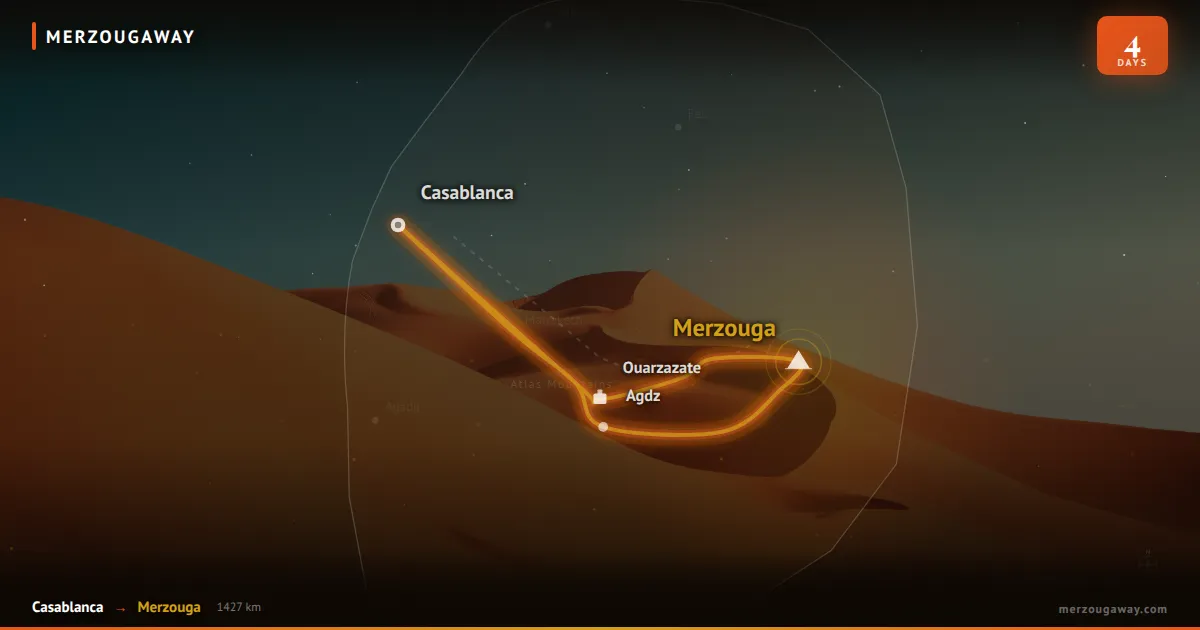
A December trip follows the same shape as any other season's multi-day tour: crossing the High Atlas via the Tizi n'Tichka pass (the road climbs high enough that it's noticeably colder up there than down in Marrakech, so keep a layer within reach for the drive itself), a stop at Ait Ben Haddou, then on toward Merzouga via Ouarzazate and the Dades or Todgha gorge country. Once you're at camp, the rhythm is the one that makes any desert night here worthwhile — a camel ride out to the dunes timed for sunset, dinner and Berber music around the fire, genuinely excellent stargazing once things quiet down, and an optional sunrise walk the next morning. The main December-specific adjustment is simply dressing for it properly: a well-insulated or heated tent matters more here than in warmer months, and the hour around the campfire is a lot more enjoyable with a real jacket on.
What to actually pack
The core of a good December kit is layering: a base layer, a warm mid-layer (fleece or wool), and a windproof outer layer for the evenings, plus a hat and gloves for after dark. Closed-toe shoes matter more in winter than summer, since sandals won't cut it once temperatures drop. Sunscreen and a sun hat are still non-negotiable during the day — the desert sun stays strong even when the air is cool, and it's easy to underestimate when you're not sweating the way you would in July. If you tend to feel the cold, ask about extra blankets or gas heating when you book — better-equipped camps offer both, and it's worth confirming rather than assuming.
Is December actually worth it?
For most travelers, yes. Clear skies, comfortable daytime temperatures, and noticeably fewer other visitors make it one of the better times of year to see the dunes, provided you come prepared for real cold at night rather than expecting a mild Mediterranean winter. The first half of the month tends to be quieter than the run-up to the December/January holidays, when visitor numbers pick back up.
December Weather Dynamics: Crisp Sunshine and Freezing Nights
December is one of the most visually stunning months to visit Erg Chebbi, featuring crisp blue skies and exceptional photographic clarity:
+---------------------+-------------------+---------------------+-----------------------+
| Time of Day         | Temperature (°C)  | Temperature (°F)    | Sensation & Packing   |
+---------------------+-------------------+---------------------+-----------------------+
| Midday (12:00-15:00)| 18°C - 21°C       | 64°F - 70°F         | Sunny, pleasant; light|
|                     |                   |                     | sweater or shirt      |
+---------------------+-------------------+---------------------+-----------------------+
| Sunset (17:30)      | 12°C - 14°C       | 54°F - 57°F         | Chilly breeze; fleece |
|                     |                   |                     | or windbreaker coat   |
+---------------------+-------------------+---------------------+-----------------------+
| Midnight            | 3°C - 6°C         | 37°F - 43°F         | Cold; winter parka,   |
|                     |                   |                     | scarf, and gloves     |
+---------------------+-------------------+---------------------+-----------------------+
| Dawn Pre-Sunrise    | 0°C - 3°C         | 32°F - 37°F         | Near freezing; thermal|
|                     |                   |                     | base layers & beanie  |
+---------------------+-------------------+---------------------+-----------------------+
The extreme temperature swing occurs because dry desert sand cannot store heat once the sun sets. At MerzougaWay luxury camps, tents feature heavy canvas insulation, radiant heating, and electric heated mattress pads that keep your bed warm throughout the night.
What to Pack for Merzouga in December
Preparing for December's extreme temperature swings requires versatile layering:
- Base Layers: Pack thermal merino wool long-sleeve shirts and leggings to wear under your clothes at night and during early morning sunrise rides.
- Outer Jacket: Bring a windproof, insulated down jacket or heavy winter parka for evening campfire sessions.
- Headwear and Gloves: A warm fleece beanie, gloves, and a wool scarf are essential when the temperature drops near freezing before dawn.
- Footwear: Warm wool socks and sturdy closed-toe trail sneakers ensure your feet stay warm in cold morning sand.
Winter Wildlife and Desert Gastronomy in December
Visiting Erg Chebbi in December offers unique natural and culinary experiences:
- Migratory Flamingos at Dayet Srji: Winter rains fill this seasonal lake west of Merzouga, attracting flocks of wild pink flamingos, shelducks, and desert larks.
- Hearty Winter Tagines: Camp dinners feature warming winter recipes: slow-simmered lamb tagines with prunes and toasted almonds, steaming bowls of fava bean soup (bessara), and spiced ginger mint teas.
The Science of Winter Desert Temperatures
Understanding the physics of Saharan winter weather explains why temperatures drop so sharply:
- Dry Air and Heat Radiation: Erg Chebbi sits at 700 meters elevation in an ultra-arid basin. Without atmospheric moisture or cloud cover to trap daytime warmth, heat radiates directly into space after sunset, causing temperatures to plunge by 15°C to 20°C in just a few hours.
- Luxury Camp Heating Solutions: MerzougaWay luxury camps feature heavy-duty insulated canvas tents, radiant gas heaters, and multi-setting electric mattress pads that pre-heat your bed to cozy perfection.
- Private En-Suite Hot Showers: Dedicated gas water heaters in each luxury tent ensure steaming hot water pressure for morning and evening showers.
Complete 4-Day December Itinerary
Below is the recommended winter route connecting Marrakech and Merzouga:
- Day 1: Marrakech to Dades Valley via Tizi n'Tichka and Ait Benhaddou (330 km; overnight in heated kasbah).
- Day 2: Dades to Merzouga via Todra Gorge and Erfoud fossil workshops; sunset camel trek into luxury camp.
- Day 3: Full day Sahara exploration: 4x4 dune safari, Gnawa music in Khamlia, nomad family tea, sandboarding.
- Day 4: Sunrise over dunes, return via N12 Southern Loop through N'Kob kasbahs and Draa Valley to Marrakech.
Winter Stargazing and Astrophotography in December
December offers the most extraordinary dark-sky conditions of the entire year:
- Pristine Atmospheric Clarity: The cold, dry winter air has virtually zero haze or dust, providing razor-sharp visibility of stellar constellations.
- Prominent Winter Constellations: Easily spot the brilliant constellation of Orion, the Pleiades cluster, and Sirius shining with breathtaking intensity across the southern horizon.
- Camera Settings: Use a wide-angle lens (f/2.8), exposure of 20 seconds, and ISO 3200 to capture the galactic core arching across the golden dunes.
Traditional Berber Hospitality Around the Winter Fire
In the heart of winter, the evening campfire in Erg Chebbi becomes the communal living room of the desert:
- The Cedar Fire: Dry tamarisk and acacia wood burn with a rich, aromatic fragrance, casting glowing light across the campsite.
- Baking Bread in Sand (Taguella): Camp hosts demonstrate the ancient nomadic technique of baking unleavened flatbread directly beneath hot coals and clean desert sand, brushing it clean before serving it hot with olive oil and wild honey.
- Oral Storytelling and Lore: Indigenous Berber guides share ancestral stories of camel caravans, desert survival, and traditional herbal remedies beneath a billion sparkling stars.
The Golden Dawn Transformation: December Sunrise
Waking up for sunrise in Erg Chebbi during December is one of the most rewarding moments of the journey:
- 06:45 AM Twilight: Step onto the dunes in the crisp dawn chill as the eastern horizon shifts through delicate shades of violet, dusty rose, and pale amber.
- The First Light: As the sun crowns the eastern dune ridge along the Algerian border, the horizontal light illuminates wind-sculpted sand ripples in warm gold, while the western slip-faces remain bathed in deep blue shadow.
- Warming Up: Return to your heated camp dining tent to enjoy steaming cups of spiced coffee, freshly poured mint tea, and warm flatbreads straight from the griddle.
Traditional Berber Winter Hospitality
Winter in the Sahara is when traditional Amazigh hospitality shines brightest:
- The Welcoming Fire: Guests arriving at camp are greeted with warm blankets and invited to sit around a blazing tamarisk-wood fire.
- Fresh Mint Tea Ceremony: Steaming gunpowder green tea infused with wild mountain spearmint, verbena, and local honeycomb is poured from silver pots held high above glass tumblers, creating a frothy crown of foam (regga).
- Communal Tagine Feasts: Dining together from large communal terracotta tagine dishes fosters warm conversation and cultural connection between international guests and Berber hosts.
Detailed Winter Desert Packing Matrix
Ensure you have the right gear for December's extreme temperature swings:
+-----------------------+-----------------------------+---------------------------------+
| Packing Category      | Recommended Gear            | Functional Purpose              |
+-----------------------+-----------------------------+---------------------------------+
| Thermal Base Layers   | Merino wool top and leggings| Worn under daytime clothes at   |
|                       |                             | night and during sunrise rides  |
+-----------------------+-----------------------------+---------------------------------+
| Insulated Outerwear   | Down jacket or heavy winter | Essential for outdoor evening   |
|                       | parka with hood             | campfire drumming sessions      |
+-----------------------+-----------------------------+---------------------------------+
| Head & Neck Warmth    | Fleece beanie, wool scarf,  | Protects against freezing dawn  |
|                       | thermal fleece gloves       | temperatures atop high dunes    |
+-----------------------+-----------------------------+---------------------------------+
| Footwear              | Merino wool hiking socks and| Keeps feet warm while walking on|
|                       | closed-toe trail shoes      | cold, damp morning sand         |
+-----------------------+-----------------------------+---------------------------------+
The Serenity of December Mornings in Erg Chebbi
Waking up in the Sahara in December offers an unforgettable sensory experience:
- The Dawn Silence: Before the wind begins to stir, the dunes are wrapped in profound, absolute stillness unlike any soundscape on earth.
- The First Cup of Atay: Savoring steaming gunpowder green tea steeped with fresh spearmint and local honeycomb while watching the golden sunrise crown the eastern dune ridge is a treasured ritual.
- Walking on Crisp Sand: The cool, firm morning sand provides solid footing for exploring the dune crests before returning to camp for breakfast.
Evening Campfire Traditions in Winter
Gathering around the cedarwood fire in December is the social highlight of the desert day:
- Acoustic Gnawa Percussion: Camp hosts and musicians play hypnotic polyrhythms on goat-skin frame drums and metal castanets.
- Sharing Stories Under the Stars: International travelers and indigenous Berber hosts share stories, laugh, and celebrate the timeless beauty of the Sahara beside glowing embers.
Connecting with Desert Nomads in Winter
Visiting nomadic families during the cool winter months offers a rare window into authentic pastoral resilience. Sitting together inside a woven goat-hair tent sharing fresh mint tea and bread creates lasting human connections across cultures.
Luxury Camp Heating Reliability
All MerzougaWay luxury desert camps in Erg Chebbi operate high-capacity solar battery systems backed by dedicated gas water heaters, ensuring continuous hot running showers and cozy electric bed warmers even during December's coldest dawn temperatures.
Frequently Asked Questions (FAQ)
Is December a good month to visit Merzouga and Erg Chebbi?
Yes, December is one of the best months for travelers who want comfortable daytime temperatures (18–22°C / 64–72°F) without the scorching heat of summer. Dune hiking, quad biking, and camel rides are effortless during the day, and winter night skies offer exceptionally clear stargazing.
How cold does the desert get in December?
December desert nights drop to between 2°C and 7°C (35–45°F), with occasional near-freezing mornings at sunrise. Because dry desert air loses heat rapidly after sunset, bringing thermal underwear, a warm fleece or down jacket, a beanie, and wool socks is crucial.
Are desert camps heated in December?
Luxury desert camps in Merzouga generally provide electric space heaters, heated mattress pads, or reverse-cycle air conditioning units powered by solar batteries or generators, along with thick Berber wool duvets. Standard or budget bivouacs do not have heating, relying solely on heavy layered blankets. Always confirm tent heating before booking winter stays.
What should I wear for a camel trek in December?
Wear long, comfortable pants (jeans or trekking trousers) to prevent saddle chafing, closed-toe walking shoes or boots, and layered tops (t-shirt plus fleece and windbreaker). During morning camel rides, temperatures can feel chilly, so having gloves and a scarf or Berber turban handy makes the ride much more enjoyable.
Can you see the sunrise and sunset clearly in December?
December boasts some of the most vivid sunrises and sunsets of the year in Erg Chebbi. Winter air has almost zero dust or heat haze, allowing deep amber, violet, and crimson hues across the sand dunes. Sunrise occurs around 7:15 AM and sunset around 5:30 PM.
Ready to plan a December trip to Merzouga?
- WhatsApp: +212675203319 / +212668534981
- Email: [email protected]
Contact us and we'll build a private winter desert itinerary around your dates.
Smart Sahara Packing List Generator
Generate a personalized, weather-adjusted packing checklist for your Moroccan desert adventure in under 30 seconds.

MerzougaWay Team
We are a passionate team of local guides dedicated to sharing the beauty and culture of our home, Morocco. Our journey began with a simple desire to offer authentic, memorable experiences that go beyond the typical tourist trails.