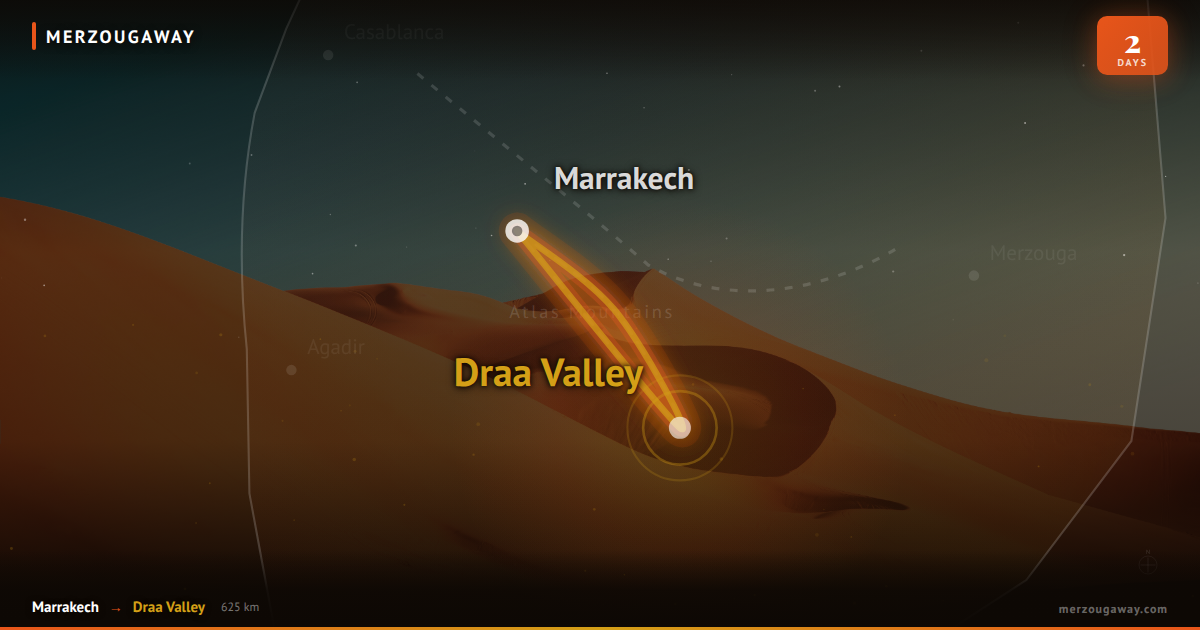
2-Day Marrakech to Zagora Desert Tour: Draa Valley & Sahara Camp
🌟 Overview
Short on time but still craving a real Sahara experience? The Zagora desert is the closest Sahara destination to Marrakech — you can be riding a camel at sunset on day one and back in Marrakech by the next evening. This 2-day tour is the fastest, most accessible way to experience a genuine desert night without sacrificing the magic that makes Morocco unforgettable.
The route threads through some of the most cinematic landscapes in North Africa: the soaring passes of the High Atlas, the ancient fortress of Aït Ben Haddou, and the extraordinary green corridor of the Draa Valley — Morocco's longest river oasis — a 200km ribbon of swaying palms, weathered kasbahs, and Berber villages that has fed trans-Saharan caravans for centuries. It is a completely different world from the Merzouga route, with its own singular character, quieter dunes, and an authenticity that many seasoned Morocco travellers consider the more intimate desert experience.
Whether you have just two days between Marrakech activities or you are building a longer itinerary and want to add a desert leg, this tour delivers the full emotional arc — mountain drama, oasis beauty, sunset dunes, a star-filled night, and a Berber campfire — in the shortest possible time frame.
Tour Highlights
- Closest desert to Marrakech: just 6–7 hours driving (vs. 9–10 hours to Merzouga)
- Cross the High Atlas Mountains via the spectacular Tizi n'Tichka Pass (2,260m)
- Visit Aït Ben Haddou (UNESCO World Heritage Site)
- Drive through the Draa Valley — 200km of layered palm oases, ancient kasbahs, and Berber villages
- See the legendary "Timbuktu 52 Jours" caravan sign in Zagora town
- Sunset camel trek into the desert dunes
- Overnight in a desert camp under the Milky Way, with a traditional Moroccan dinner and Berber drumming
Why Choose This Tour?
- Shortest Desert Tour Available: Two days is genuinely all you need for a meaningful desert experience
- A Different Desert: Zagora offers a rawer, less commercialised landscape than the mega-dunes of Merzouga
- The Draa Valley Drive: consistently rated one of Morocco's most beautiful road journeys
- Budget-Friendly: a shorter tour means a lower price without cutting corners on experience
- Perfect Add-On: combine seamlessly with two or three days exploring Marrakech's medina and souks
Itinerary
Day 1 — Marrakech → Tizi n'Tichka → Aït Ben Haddou → Draa Valley → Zagora Desert
Your private driver collects you from your Marrakech riad or hotel at 7:00 AM, early enough to beat the city traffic and arrive at Aït Ben Haddou during the golden morning light. From the moment you leave the pink city behind, the landscape begins its dramatic transformation.
Within the first ninety minutes you are climbing into the High Atlas on the N9 road via Tizi n'Tichka Pass (2,260 metres above sea level). This is one of Morocco's most theatrical drives: hairpin bends carved into rust-red rock faces, sheer drops into valley floors far below, roadside Amazigh women selling saffron and rose water, and — on clear days — views stretching to the distant Sahara haze. Take your time here; the pass itself rewards a ten-minute stop to breathe the thin, cool mountain air and photograph the switchbacks disappearing into the valley.
By mid-morning you descend the southern face of the Atlas and arrive at Aït Ben Haddou, the UNESCO-listed ksar that has doubled as Sodom, Yunkai, and ancient Egypt in countless films and television productions. Walk the cobbled alleys between towering mud-brick towers, climb to the granary at the summit for panoramic views across the river valley below, and take at least thirty minutes simply to sit and absorb the scale of it. This is one of the finest pieces of earthen architecture on the planet.
Continuing south through Ouarzazate — Morocco's "Hollywood of the desert" — you enter the Draa Valley by early afternoon. The change is almost shocking: after an hour of ochre desert steppe, a solid wall of date palms appears, stretching from horizon to horizon. This is the 200km palm corridor, home to an estimated four million date palms and dozens of ancient kasbahs in various states of glorious ruin. The road passes through the village of Agdz and alongside the striking dark cliffs of Jbel Kissane, whose shadow falls across fortified Berber granaries (agadirs) that have stored grain and dates since medieval times. Your driver will stop at panoramic viewpoints where the scale of the oasis — green life threading through an ocean of stone desert — is genuinely breathtaking.
By late afternoon you reach the outskirts of Zagora. Before heading to the dunes, stop for a photograph at the town's most iconic image: the "Timbuktu 52 Jours" wooden sign, a relic of the trans-Saharan caravan trade that once linked sub-Saharan Africa to the Mediterranean world. Fifty-two days by camel. Let that number settle for a moment.
Shortly after, the camel handlers are waiting at the edge of the desert. At sunset — the light turning the dunes copper and amber — you mount your camel and begin the forty-five to sixty minute trek into the dunes. The silence out here is profound. Arrive at your desert camp as the stars emerge, settle around the campfire with mint tea, and let the evening unfold: a generous traditional Moroccan dinner of slow-cooked tagine and couscous, followed by Berber drumming and music that echoes off the dunes, followed by some of the most extraordinary stargazing you are ever likely to experience. The Draa Valley skies are dark, clear, and deeply humbling.
Day 2 — Zagora Desert → Draa Valley → Marrakech
Wake before the camp stirs for sunrise over the dunes — the way the first amber light rakes across the sand ridges, erasing shadows one by one, is worth every early alarm. Breakfast is served at camp: fresh bread, local honey, argan oil, and strong coffee or Moroccan mint tea.
After breakfast, your camel ride returns you across the desert floor to the road (or, if you prefer, a 4x4 transfer can collect you from camp). The morning desert is different from the evening one — cooler, quieter, the tracks of fennec foxes and desert beetles visible in the soft sand.
The return drive to Marrakech follows a slightly different route through the Draa Valley, allowing you to see new sections of the oasis and stop at a kasbah or local cooperative along the way, a chance to see traditional pottery, Berber carpets, or locally produced rose water. The valley is somehow even more beautiful when you know you are leaving it.
As the afternoon progresses you climb back into the High Atlas via Tizi n'Tichka, the mountains appearing different in the warm southerly light, before descending into the familiar chaos and colour of the Marrakech plains. Your driver delivers you to your accommodation at approximately 7:00–8:00 PM.
Included & Not Included
- • Private air-conditioned 4x4 or minivan
- • Professional English-speaking driver/guide
- • 1 night in a desert camp (dinner & breakfast)
- • Sunset camel trek
- • Pick-up and drop-off at your Marrakech accommodation
- • Traditional Berber cheche (turban/scarf) — yours to keep
- • Polished fossil souvenir from Erfoud
- • Lunches and drinks
- • Entrance fees to monuments
- • Tips for guides and drivers
🏜️ Zagora vs. Merzouga — Which Desert Is Right for You?
Choosing between Zagora and Merzouga is one of the most common questions we receive. Both are authentic Sahara experiences; the right choice depends on your time, budget, and what kind of desert you want to see.
| Zagora | Merzouga (Erg Chebbi) | |
|---|---|---|
| Distance from Marrakech | 6–7 hours | 9–10 hours |
| Minimum tour length | 2 days | 3 days |
| Dune type | Smaller dunes, rocky desert, palm oasis | Massive golden erg dunes (up to 150m high) |
| Landscape route | Draa Valley palm corridor | Ziz Valley, Todra Gorge, volcanic plains |
| Crowd level | Fewer tourists, quieter camps | More popular, busier high season |
| Price | More budget-friendly | Higher (longer trip, more fuel) |
| Best for | Short stays, first-time visitors, budget travellers | Full Sahara immersion, photographers, dune enthusiasts |
| Unique feature | "Timbuktu 52 Days" sign, Draa oasis | Erg Chebbi mega-dunes, Tuareg culture |
Who Is This Tour For?
This tour is the right fit if you:
- Have only 2 days and cannot extend your Marrakech itinerary further
- Want a genuine overnight desert experience without a 10-hour drive each way
- Are travelling on a tighter budget but refuse to skip the Sahara entirely
- Find the idea of a river oasis and historic caravan route as compelling as towering sand dunes
- Are a solo traveller, couple, or small family who prefers quieter, less commercialised camps
- Want a desert introduction before committing to the longer Merzouga journey
If you have three or more days and want the largest, most dramatic erg dunes in Morocco, we recommend our 3-Day Marrakech to Merzouga Desert Tour instead. Both are extraordinary — this one simply respects your calendar.
Frequently Asked Questions
Is the camel ride mandatory?
No, the camel ride is entirely optional. If you prefer, a private 4x4 vehicle can transfer you directly to and from the desert camp without any discomfort. That said, the camel trek at sunset — roughly 45 to 60 minutes each way through the quiet dunes — is one of the defining memories most guests take home. The pace is gentle, the guides lead the animals carefully, and the light during that golden hour makes for extraordinary photographs. Children, elderly travellers, and anyone with back concerns should feel confident asking for the 4x4 alternative.
What is the "Timbuktu 52 Days" sign, and why is it famous?
The "Timbuktu 52 Jours" sign is a weathered wooden board on the southern edge of Zagora town that marks the old trans-Saharan caravan distance to Timbuktu in present-day Mali — fifty-two days by camel caravan. It stands as a tangible reminder that Zagora was once a critical staging post on one of the world's great trade routes, carrying gold, salt, ivory, and slaves between sub-Saharan Africa and the Mediterranean for over a thousand years. The original sign is long-replaced by a replica, but it remains one of the most photographed spots in southern Morocco and a genuinely evocative piece of living history. Standing beside it, the Sahara stops feeling like a backdrop and starts feeling like a destination in its own right.
What is the Draa Valley, and why is it historically significant?
The Draa Valley follows the course of the Draa River — Morocco's longest river — from the High Atlas southward into the pre-Saharan desert. The valley floor is lined with an almost uninterrupted 200km corridor of date palms, ancient kasbahs, earthen villages, and Berber agadirs (communal grain stores), many of them still inhabited or actively farmed. Historically, the valley was the primary northern gateway of the trans-Saharan trade network, connecting Marrakech and Fes to the gold-rich kingdoms of West Africa. Jewish, Arab, and Amazigh communities coexisted here for centuries, leaving behind a layered architectural and cultural heritage that is still visible in the distinctive ksar architecture along the route. Today it is considered one of the most beautiful oasis drives in all of North Africa.
How long is the camel ride, and is it suitable for beginners?
The camel trek from the road to the desert camp takes approximately 45 to 60 minutes in each direction. The camels used are experienced, well-handled animals, and no prior riding experience is required. Your guide walks alongside and leads the animals at a comfortable walking pace. The motion takes a few minutes to get used to, but most guests find it relaxing within the first ten minutes. Wooden saddles are padded with Berber blankets; if you have specific comfort concerns, ask your guide to adjust the saddle before departure. The morning return ride is slightly shorter as the camels take a more direct path back.
Is the camel ride mandatory?
No, the camel ride is entirely optional. If you prefer, a private 4x4 vehicle can transfer you directly to and from the desert camp without any discomfort. That said, the camel trek at sunset — roughly 45 to 60 minutes each way through the quiet dunes — is one of the defining memories most guests take home. The pace is gentle, the guides lead the animals carefully, and the light during that golden hour makes for extraordinary photographs. Children, elderly travellers, and anyone with back concerns should feel confident asking for the 4x4 alternative.
What should I pack for this tour?
Pack light but smart. Desert days can exceed 35°C in summer, while nights drop sharply — to as low as 5°C in December and January, and around 12–18°C in spring and autumn. Bring moisture-wicking layers you can add and remove, comfortable closed-toe walking shoes, a warm fleece or light down jacket for evenings, high-SPF sunscreen, quality sunglasses, and a keffiyeh or light scarf to protect your face from sand and wind during the camel ride. A small headtorch is useful for navigating the camp at night. Leave excessive luggage in your Marrakech riad — a small overnight bag is all you need.
Is this tour suitable for solo female travellers?
Absolutely. Morocco is a welcoming and generally safe destination for solo female travellers, and the Zagora route — being slightly less trafficked than Merzouga — tends to feel particularly relaxed. Our guides are experienced, professional, and respectful, and many of our most enthusiastic reviews come from solo women travelling alone. The desert camp environment is communal but private, with individual tents. As with any travel in Morocco, dressing modestly in villages and towns (covered shoulders and knees) is appreciated and helps ensure a comfortable experience throughout.
How cold does the desert get at night?
Sahara nights can be significantly colder than the daytime heat suggests. In winter (December–February) temperatures can drop to 3–8°C in the Zagora area; in spring and autumn expect around 12–18°C after dark; summer nights are warm at 22–28°C. The desert camp provides thick woollen blankets, and most camps have optional electric heating in the tents. We strongly recommend bringing a warm layer regardless of when you travel — the temperature drop between sunset and midnight is dramatic and can catch visitors off guard.
Duration
2 Days, 1 Night
Group Type
Private
Transportation
4×4 or Minibus
Payment Methods
PayPal
Bank Transfer (IBAN)
Only 10% deposit required
Email:
[email protected]What Our Travelers Say
Real reviews from Google and TripAdvisor
We traveled to Morocco in a group of 6 adults, including my parents, who are already seniors, in the middle of summer. For my family it was a leap of faith to trust an agency we found online for the first time, but it turned out to be a wonderful surprise. Hamid, the trip organizer, was very kind and attentive both before and throughout the whole tour. It was a fully personalized tour - we got to do everything we wanted, from visiting the Sahara to enjoying the beach. He always looked out for our comfort, especially my parents': comfortable transport, well-timed stops at places with restrooms, beautiful air-conditioned hotels, and varied, plentiful food. Thanks to his organization we were able to enjoy the trip with real peace of mind. It was a great experience we would absolutely recommend.
Last week I did a self-drive trip from Fes to Merzouga, leaving the car rental, the riad in Merzouga, the desert camp, and the guided desert activities all in the hands of MerzougaWay and Hamid, and I can only say that everything was perfectly organized, right on time. Thanks to everyone at the riad we stayed at and the desert camp, as well as the guides who joined us for the 4x4 experience, Berber culture, and the camel transfer. Thanks to Hamid and MerzougaWay for that quad-bike ride back to the riad from the camp - what an experience, riding a quad across the dunes early in the morning. If you're thinking of traveling to Merzouga, I definitely recommend Hamid as the organizer of your adventure.
Excellent!! We loved the tour. Thank you Hamid for everything. Everything well organized, the guide Eljo (Elhousain) was very attentive, highly recommend. Everything super clean, we had a great driver, we felt very safe with him. Unbeatable desert excursion. Thanks MerzougaWay!
Trustworthy tour agency. I wrote Hamid what I wanted and he just made it happen. He arranged everything so quick and smooth. We had a 3-day Merzouga tour from Marrakech. Said was our guide and he made me and my wife very comfortable. He took us from our riad and carried us in his modern 4x4 Toyota to magnificent places. He gave us the confidence to ask him whatever we wanted to do and wherever we wanted to drive - like old friends. He is open-minded and respectful. I recommend asking the agency for Said to be your driver. In the 3-day tour you cross the Atlas mountains, stay one night in a perfect hotel in Dades with great food, then stay one night in Erg Chebbi dunes in a luxury glamp camp. One night wasn't enough for a real desert experience - if you have time, take two nights in the desert.
Unforgettable holiday. An 8-day itinerant tour in Morocco, including 3 days organized by Hamid - MerzougaWay: a route from Fes to Marrakech, spending a night in the desert and in Ouarzazate. Our guide Youssef, who drove us all along the way, was very professional and took us to try real experiences that not all tourists get to see. Breathtaking landscapes - Morocco amazed and fascinated us. We drove many miles but still traveled comfortably. Absolutely recommend it - they are a highly professional agency and managed to take us to unique places, like a Berber village in the desert where we were the only tourists. A spectacular, unforgettable experience.
Morocco from the heart with MerzougaWay. Heartfelt congratulations to Hamid, who organized our trip impeccably - present, correct, and extremely helpful. A special mention for our driver Ali, who was by our side through 3 intense days toward the desert: attentive, polite, discreet, and a genuinely good, nice driver. We found snow in the Atlas range and then sun in Ait Ben Haddou, visited women's cooperatives working argan oil and roses, saw the Dades Gorges, and finally reached the Sahara dunes by camel before sleeping in a tented desert camp. 3 intense and exciting days. Next time in Morocco I'll rely on you again, inshallah!
Read more reviews on
Ready to Start Your Adventure?
Contact us today and let's plan your perfect Moroccan desert experience
MerzougaWay Team
We are a passionate team of local guides dedicated to sharing the beauty and culture of our home, Morocco. Our journey began with a simple desire to offer authentic, memorable experiences that go beyond the typical tourist trails.
Complete Your Morocco Trip
Two more services from our team, based in Marrakech.
You Might Also Like
Discover more amazing tours in Morocco
2-Day Marrakech to Merzouga Sahara Desert Tour & Camel Trek
3-Day Marrakech to Merzouga Honeymoon Escape
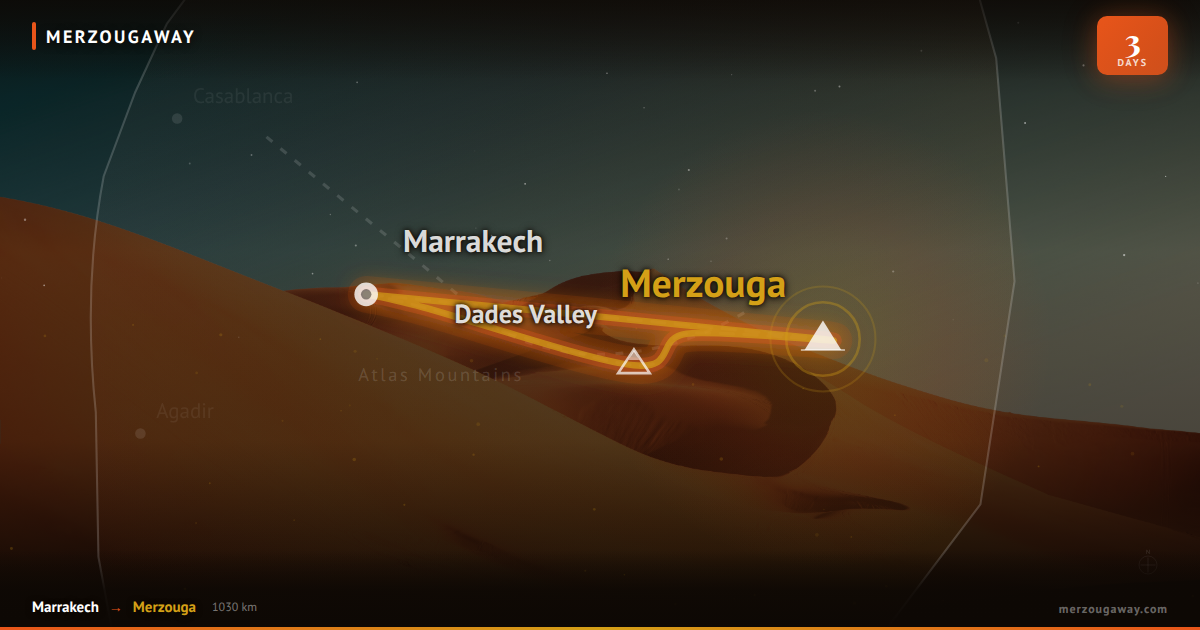
3-Day Marrakech to Merzouga Sahara Desert Astrophotography & Stargazing Tour
More Activities You'll Love
Explore more things to do in Morocco
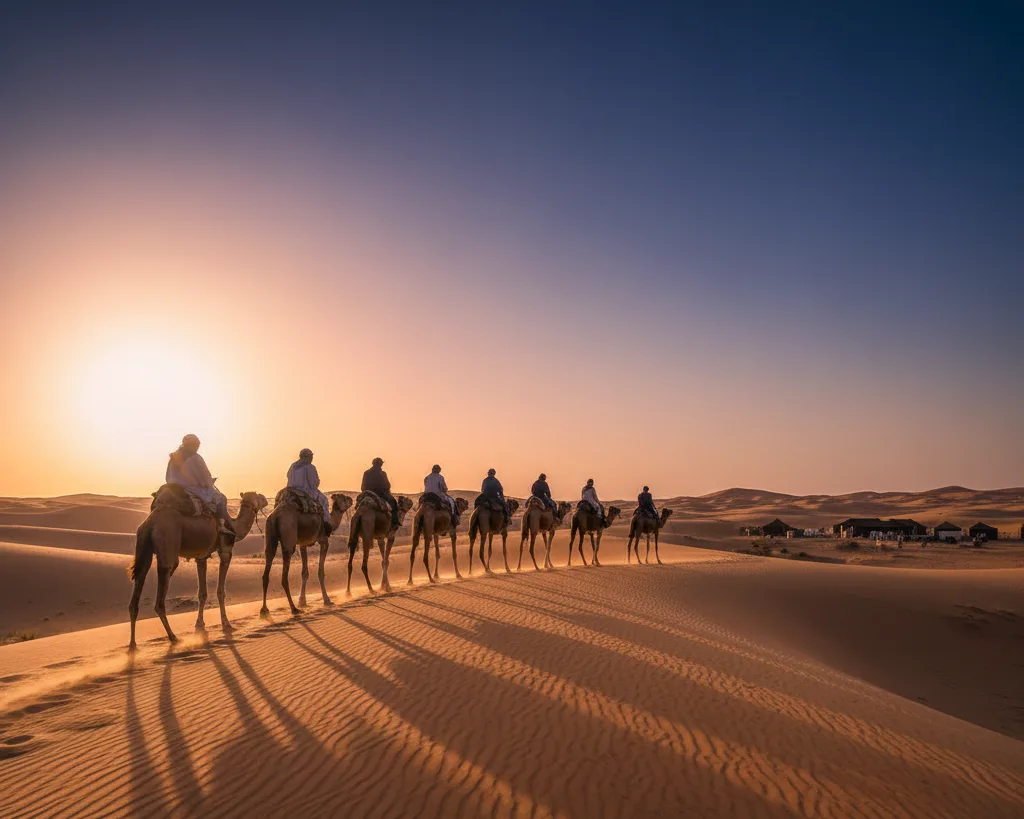
Camel Ride in the Sahara Desert
Experience the timeless magic of the Sahara on camelback. Watch the sun set over Erg Chebbi's golden dunes on a guided camel trek.
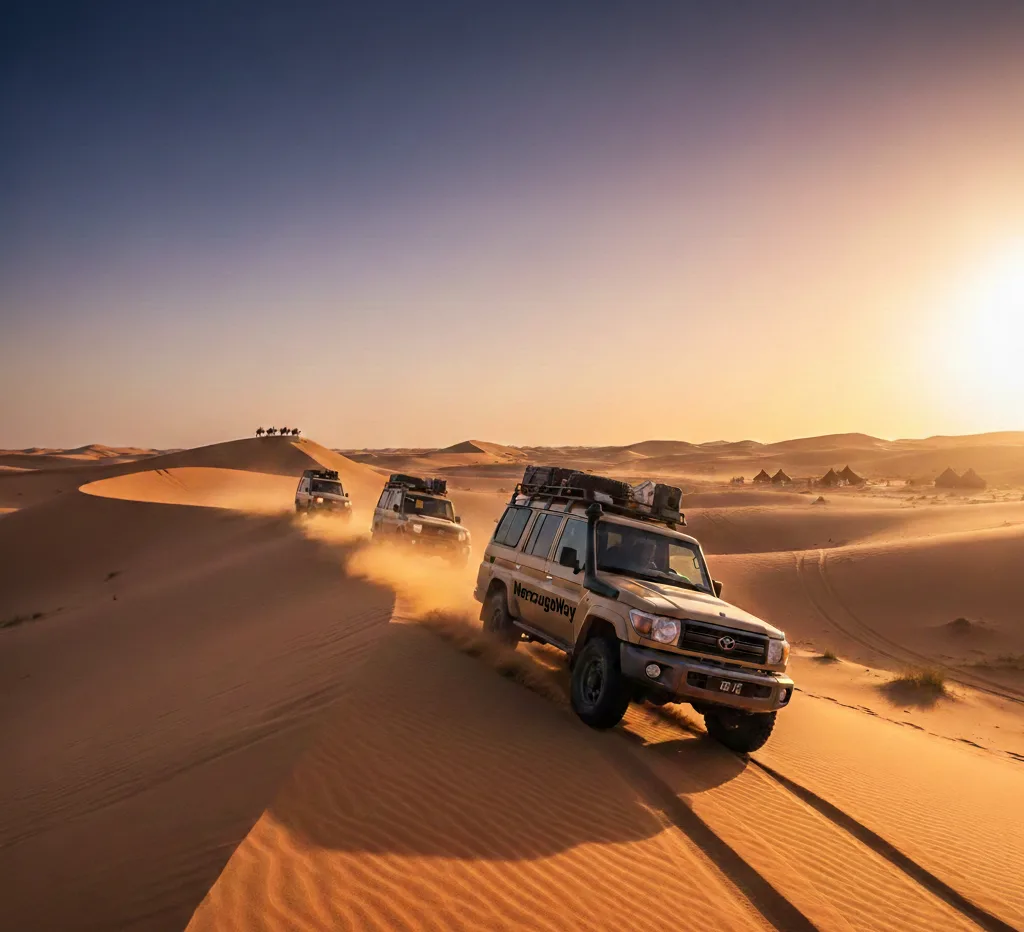
4x4 Dunes Tour in Erg Chebbi
Conquer the Erg Chebbi dunes in a powerful 4x4. An off-road adventure that takes you deep into the Sahara's most dramatic landscapes.
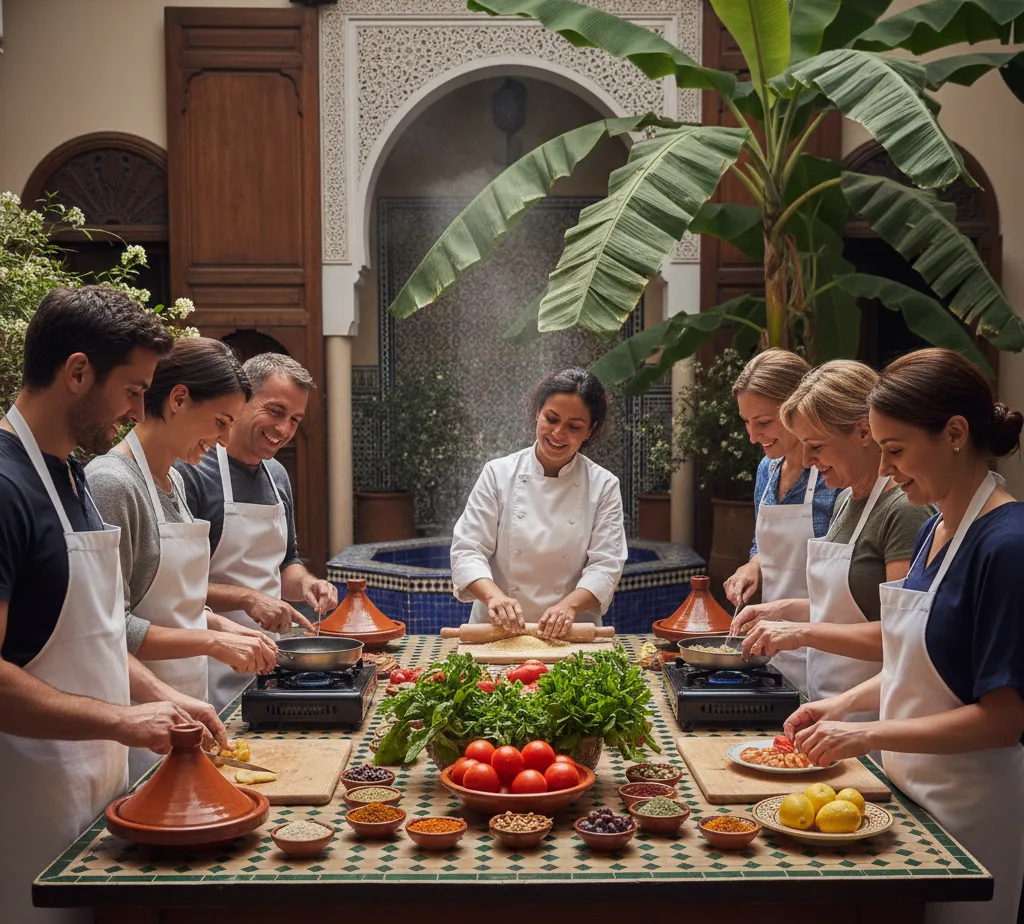
Moroccan Cooking Class in Marrakech
Learn to cook authentic Moroccan dishes — tagine, couscous, pastilla — with a local family in Marrakech. Visit the souk for spices, then cook and eat together.