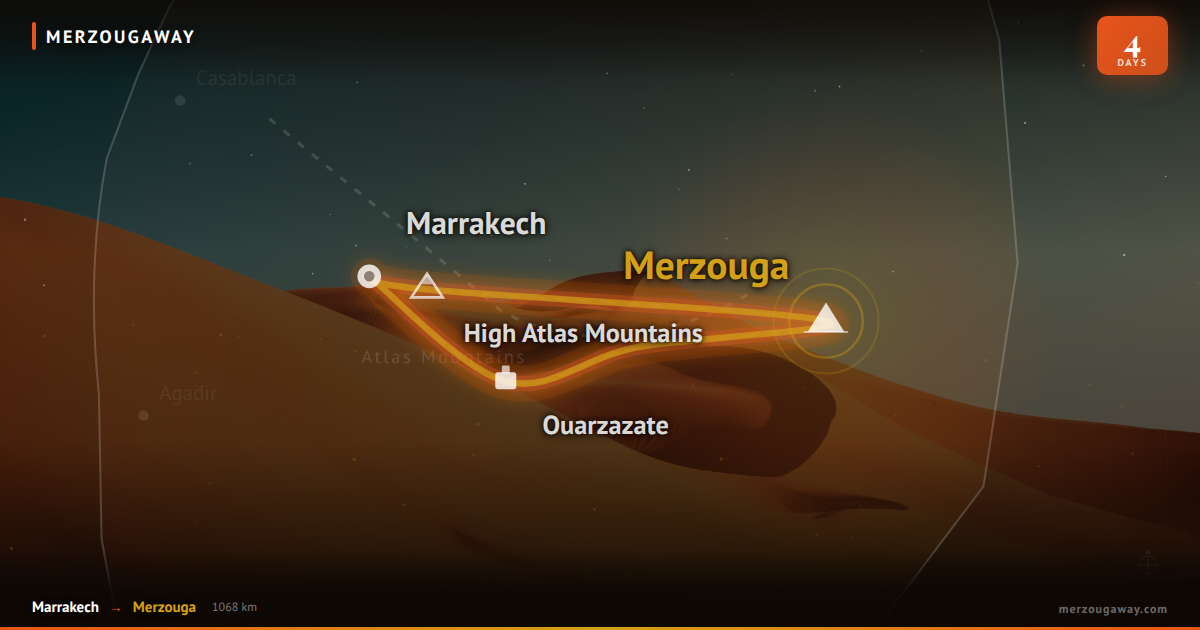
4-Day Spring Rose Valley & Sahara Desert Tour (April-May Seasonal)
🌟 Overview
Every spring, the Dades Valley transforms into one of Morocco's most extraordinary natural spectacles — a rolling sea of pink and red as millions of Damask roses bloom across the landscape between the High Atlas foothills and the edge of the Sahara. The air itself changes. Even driving through the valley with your window down, the floral fragrance reaches you before the fields come into view. This is rose season in Morocco, and it lasts only six weeks a year.
This seasonal tour combines the fragrant Rose Valley harvest with the golden dunes of the Sahara Desert — two completely different worlds, both at their most vivid in spring, woven together in one unforgettable four-day journey. You will walk through fields of blooming Damask roses at dawn, watch local Berber women harvest petals the same way their grandmothers did, step inside a traditional copper-still distillery, and if your timing aligns, experience the electric atmosphere of the annual Rose Festival in Kelaat M'Gouna.
Then, just hours later, the landscape shifts entirely — red rock gorges give way to open hammada plains, and the enormous amber dunes of Erg Chebbi rise from the horizon. By sunset you are on camelback, crossing the sand in silence.
Available only from April to mid-May during peak bloom, this tour takes you through rose fields, a traditional rose distillery, the annual Rose Festival, and then south to the Erg Chebbi dunes for the full desert camp experience. No other season makes this combination possible.
Tour Highlights
- Rose Valley in bloom: fields of pink and red Damask roses stretching across the valley floor
- Rose harvest experience: walk with local women picking roses at dawn before the heat sets in
- Rose distillery visit: see how rose water and rose oil are extracted using traditional copper stills
- Kelaat M'Gouna: the "City of Roses" and proud home of the annual Rose Festival
- Sunset camel trek across the iconic Erg Chebbi dunes
- Overnight in a luxury desert camp under a sky full of Saharan stars
- Limited season: only available April to mid-May — just six weeks each year
Why Choose This Tour?
- Seasonal & Exclusive: this tour simply cannot be replicated outside of rose season — the fields, the harvest, and the festival exist for six weeks and then they are gone
- Unique Combination: pink rose fields in the morning, golden Sahara dunes by evening — no other season in Morocco offers this contrast
- Sensory Experience: the fragrance of the rose fields is difficult to describe and impossible to forget; it stays with you long after the tour ends
- Cultural Depth: the rose harvest is a living tradition deeply embedded in Berber culture — this is not a tourist reconstruction but an authentic seasonal practice
- Instagram Gold: pink rose fields and golden desert dunes in one trip deliver a visual variety that few itineraries in Morocco can match
- Festival Dates: with careful planning, you can time your visit with the Rose Festival, one of Morocco's most celebrated regional events
Itinerary
Early Bloom — Late March to Early April
The first blush of pink begins to appear on the rose bushes lining the valley. Fields are not yet fully open, but the landscape starts to transform. Temperatures are mild and crowds are minimal. A good option for travelers who want a quieter experience and are happy with partial bloom.
Peak Bloom — Mid-April to Early May
This is the window most visitors travel specifically to experience. The fields are fully open, the colour is most intense, and the fragrance is at its peak. Early morning light turns the valley into something almost surreal. This is unquestionably the best time to visit.
Rose Harvest — Late April to Mid-May
Harvest season overlaps with the tail end of peak bloom. Local women begin picking petals before 9 AM while the flowers are cool and intact. The distilleries are running at full capacity. This is when you can most authentically engage with the working culture of the valley — not just observe the flowers, but understand the entire economy they support.
Rose Festival — Usually 2nd or 3rd Weekend of May
The festival in Kelaat M'Gouna marks the official celebration of the harvest season. It includes traditional music, dancing, the coronation of a Rose Queen, regional artisan markets, and a parade through the town. Dates shift slightly each year, so confirm current festival dates with us when booking.
Season Ends — Late May
By late May, the petals have fallen and the harvest is complete. The fields return to green. The distilleries slow down. The town quiets. The rose season is over for another year.
Included & Not Included
- • Private air-conditioned 4x4 or minivan
- • Professional English-speaking driver/guide
- • 3 nights accommodation (Rose Valley area, luxury desert camp, Ouarzazate)
- • Daily breakfast; dinners included at desert and kasbah accommodations only
- • Rose Valley guided visit and rose products tasting
- • Sunset camel trek in Erg Chebbi dunes
- • Pick-up and drop-off at your Marrakech accommodation
- • Sandboarding (optional)
- • Traditional Berber cheche (turban/scarf) — yours to keep
- • Polished fossil souvenir from Erfoud
- • Lunches and drinks
- • Entrance fees to monuments and attractions
- • Tips for guides and drivers
- • Rose products purchases
Who Is This Tour For?
This tour is designed for a specific kind of traveler — one who wants more than a standard desert circuit. Use this table to see if it is the right fit for you.
| Traveler Type | Is This Tour Right for You? |
|---|---|
| Nature lovers who follow seasonal events | ✅ Perfect — this is one of Morocco's great natural spectaculars |
| First-time visitors to Morocco | ✅ Yes — it covers desert, mountains, kasbahs, and culture in four days |
| Couples looking for a romantic itinerary | ✅ Highly recommended — rose fields at dawn, desert camp at night |
| Solo female travelers | ✅ Absolutely — guided throughout, and many of our solo guests choose this tour |
| Photographers and content creators | ✅ Exceptional variety — soft morning light over rose fields, dramatic dune light at sunset |
| Travelers visiting outside April–May | ⚠️ This specific tour runs April–May only — see below for off-season alternatives |
| Travelers with tight schedules | ✅ Four days is manageable; five-day extension available on request |
Detailed Itinerary
Day 1 — Marrakech → Atlas Mountains → Rose Valley
Your driver meets you at your Marrakech accommodation at 7:30 AM — an early start that makes all the difference as you cross the High Atlas while morning light still plays across the peaks. The road climbs steadily through Berber villages draped in terracotta and ochre, past argan trees and almond groves, toward the Tizi n'Tichka Pass at 2,260 metres. In spring the mountains hold a particular clarity — the air is cool and clean, the light sharp, and occasional patches of late snow still dust the highest ridges.
By mid-morning you descend toward Aït Ben Haddou, the UNESCO World Heritage ksar that has appeared in more films than almost any other site in Africa. Your guide walks you through the mud-brick labyrinth, explaining its history as a trading post on the old Saharan caravan route. Allow ninety minutes here before continuing to Ouarzazate — the so-called "door of the desert" — where you stop briefly for lunch.
The afternoon drive east follows the Draa Valley before turning into the Dades, and it is here, roughly forty minutes before Kelaat M'Gouna, that the first rose bushes appear along the roadside. By the time you reach Kelaat M'Gouna itself, the valley walls on both sides are studded with pink. Arrive late afternoon. After settling into your accommodation, take an evening walk along the valley paths while the light softens and the fragrance of the fields is at its most concentrated. Dinner is at a local restaurant serving traditional Moroccan tagine, with an early night in preparation for a predawn start.
Day 2 — Rose Valley → Rose Harvest → Merzouga Desert
Your alarm goes off before light. This early start is not optional — it is the point. The Damask rose harvest runs from approximately 5:00 AM to 9:00 AM, before the sun climbs high enough to cause the petals to wilt and lose their essential oils. This is the rule that has governed the harvest for generations, and it explains why the fields are busy with movement before most tourists are awake.
Walking into a rose field at dawn is an experience that defies easy description. The colour in early morning light is extraordinary — deep pink against dark soil, row upon row, stretching toward the valley walls. Local Berber women work methodically along the rows, their hands moving quickly through the bushes, filling woven baskets with petals. Your guide introduces you to the family hosting this part of the visit and explains how the harvest cooperative functions, how the petals are weighed, and how the economics of the industry — some 3,000 to 4,000 tonnes of roses harvested annually across the valley — support hundreds of families here.
By mid-morning the harvest is winding down, and your group moves to a traditional rose distillery. Inside, copper stills are already running, fed by the morning's petals and producing the steam-distilled rose water for which the valley is famous. Watch the condensation collect, smell the concentrated floral steam, and speak with the producer about the difference between rose water, rose oil (attar), and the cosmetic creams derived from both. You can purchase products directly at source here — authentically local and significantly better value than anything sold in Marrakech's medina.
After lunch, the landscape begins its dramatic transition. The road runs east through Boumalne Dades and then south through open rocky plains as the elevation drops and the sky widens. By late afternoon, the distinctive red crest of Erg Chebbi appears on the horizon. You arrive in Merzouga with just enough time to mount your camel for a sunset trek into the dunes. The contrast with this morning's rose fields could not be more complete — the silence, the scale, the copper and amber of the light on the sand. Dinner at your luxury desert camp is served by lantern light, followed by Berber music around the fire before a night in a well-appointed tent with en-suite bathroom facilities.
Day 3 — Merzouga → Dades Valley → Ouarzazate
Wake before sunrise and climb the dune behind camp on foot. The effort takes twenty minutes and rewards you with one of the most photographed moments in Moroccan travel — the Sahara waking up, colour shifting from grey to gold to blinding orange as the sun clears the Algerian border. The silence at this hour is complete.
Breakfast is served back at camp, and there is time for sandboarding on the face of the dune before your camel escort or 4x4 return to Merzouga. The drive west retraces part of yesterday's route before turning north into the Dades Gorges — a series of towering red limestone formations carved over millennia by the Dades River. Stop here to walk along the canyon floor, photograph the dramatically folded rock layers, and take lunch at one of the simple restaurants perched on the gorge edge. In spring, the gorge walls are dotted with wildflowers and the river runs fast and clear with snowmelt from the Atlas.
The afternoon continues through the Dades Valley, which has a completely different character at this latitude — wider, greener, populated with kasbahs and palm groves. Arrive near Ouarzazate by evening for dinner and an overnight rest.
Day 4 — Ouarzazate → Marrakech
After a relaxed breakfast, the final drive begins — back through the world you entered four days ago. The High Atlas crossing never becomes routine: the scale of the mountains, the switchbacks of Tizi n'Tichka, the sudden appearance of Marrakech's palm-filled basin on the other side. Your driver makes scenic stops along the way, including a final view of the Atlas before the descent. You arrive back in Marrakech in the mid-to-late afternoon, dropped directly at your accommodation. Most guests find they have enough time to return to the medina for a final evening before onward travel.
🌹 Rose Season Calendar
- Early bloom: late March to early April — fields turning pink, quieter experience
- Peak bloom: mid-April to early May — maximum colour, maximum fragrance, best overall timing
- Rose harvest: late April to mid-May — distilleries running, authentic harvest access
- Rose Festival: usually 2nd or 3rd weekend of May in Kelaat M'Gouna — confirm dates when booking
- Season ends: late May — petals gone, harvest complete, valley returns to green
📅 Book your seasonal rose & desert tour — this experience is only available 6 weeks a year.
What Happens If I Miss the Roses?
The rose season is real and finite. If your travel dates fall outside April to mid-May, the fields will not be in bloom and the distilleries will not be running. We will always be honest about this.
If you are travelling in March, the pre-bloom valley is still beautiful — the rose bushes form a distinctive landscape even without flowers, and the Atlas crossing in early spring has its own dramatic quality. We can run a modified itinerary that removes the harvest and distillery visit and replaces them with additional gorge and kasbah stops.
If you are travelling in June through September, the Rose Valley becomes a green, quiet corridor rather than a seasonal spectacle. The desert experience remains fully available and is in some ways more dramatic in terms of heat and light. We offer our standard Sahara circuit as an alternative, which many guests find equally compelling.
If you are travelling in autumn or winter, the Dades Valley is at its calmest and the desert in October through February offers cooler nights and exceptional stargazing. The roses are entirely dormant, but the overall journey from Marrakech to Merzouga is just as worthwhile for a different set of reasons.
Contact us with your travel dates and we will honestly recommend the best version of the itinerary for your specific window.
Frequently Asked Questions
When exactly do the roses bloom, and how do I know the timing is right?
The Damask rose bloom in the Dades Valley typically runs from mid-April to mid-May, with peak bloom — meaning the maximum number of fully open flowers — usually falling in the last two weeks of April and the first week of May. However, the exact timing shifts slightly each year based on winter rainfall totals and spring temperature patterns. We monitor the valley conditions each season and update our guidance accordingly. When you contact us to book, tell us your proposed dates and we will give you an honest assessment of what stage the bloom is likely to be at.
What exactly is the Rose Festival and should I plan my tour around it?
The Rose Festival (Festival des Roses) is held annually in Kelaat M'Gouna, usually during the second or third weekend of May. It is one of Morocco's most authentic regional festivals — not a tourist production but a genuine local celebration of the harvest season. The festival includes traditional Amazigh music and dance performances, a procession through town, the ceremonial crowning of a Rose Queen from among the local community, and a large artisan market featuring rose-based products from across the valley. If your dates are flexible, aligning your visit with the festival weekend adds a significant cultural dimension to the tour. Confirm the exact festival dates for the current year with us before booking, as they are announced by local authorities in the weeks prior.
What rose products should I buy at the distillery, and how do I know they are genuine?
The distillery visit gives you access to products purchased directly from the producer — this is the most reliable guarantee of authenticity available. Look for rose water (used in cooking, skincare, and as a household fragrance), rose oil or attar (a highly concentrated essential oil — even a small bottle is potent and expensive, so be cautious of very cheap versions), rose cream (a popular cosmetic product), and dried rose petals sold by weight. Avoid purchasing rose products from souvenir shops in Marrakech or Fez without checking labels carefully — many products marketed as "rose" contain synthetic fragrance rather than genuine Damask rose extract. Buying at source in the valley is both more authentic and more economical.
What should I pack for this tour?
Layering is the key principle for a spring desert tour. Days in the rose valley can reach 25–28°C, but desert nights drop sharply — temperatures below 10°C are common at the Erg Chebbi camp in April and May. Bring comfortable walking shoes suitable for uneven paths between rose bushes and for climbing soft sand. A lightweight scarf or shemagh is useful for wind protection on the dunes. Sunscreen, quality sunglasses, and a wide-brimmed hat are essential for the desert portion. A small headlamp or flashlight is practical for navigating camp at night. If you are attending the Rose Festival, the event is relaxed in terms of dress code, but modest clothing is appreciated in the town environment.
Can you accommodate special dietary needs?
Yes — please inform us of any dietary requirements, allergies, or preferences at the time of booking so we can communicate these to all accommodation providers in advance. Traditional Moroccan cuisine is naturally well-suited to a range of needs: tagines and couscous are easily prepared in vegetarian and vegan versions, and most dishes are naturally gluten-light. The desert camp kitchen can adjust meals with sufficient notice. We ask guests with severe allergies to also carry personal medication, as remote locations have limited medical access.
Can I modify the route or add extra stops?
All private tours are fully flexible and we actively encourage guests to personalise their itinerary. Popular additions on this route include a morning visit to the Todra Gorge on the return leg, an extra night at the desert camp for guests who want a full free day among the dunes, or a stop at the Taourirt Kasbah in Ouarzazate if you have an interest in Moroccan film history. Just let us know your preferences when booking and we will build the itinerary around the rose season without disrupting the timing that makes the harvest and festival visits possible.
Duration
4 Days, 3 Nights
Group Type
Private
Transportation
4×4 or Minibus
Payment Methods
PayPal
Bank Transfer (IBAN)
Only 10% deposit required
Email:
[email protected]What Our Travelers Say
Real reviews from Google and TripAdvisor
We traveled to Morocco in a group of 6 adults, including my parents, who are already seniors, in the middle of summer. For my family it was a leap of faith to trust an agency we found online for the first time, but it turned out to be a wonderful surprise. Hamid, the trip organizer, was very kind and attentive both before and throughout the whole tour. It was a fully personalized tour - we got to do everything we wanted, from visiting the Sahara to enjoying the beach. He always looked out for our comfort, especially my parents': comfortable transport, well-timed stops at places with restrooms, beautiful air-conditioned hotels, and varied, plentiful food. Thanks to his organization we were able to enjoy the trip with real peace of mind. It was a great experience we would absolutely recommend.
Last week I did a self-drive trip from Fes to Merzouga, leaving the car rental, the riad in Merzouga, the desert camp, and the guided desert activities all in the hands of MerzougaWay and Hamid, and I can only say that everything was perfectly organized, right on time. Thanks to everyone at the riad we stayed at and the desert camp, as well as the guides who joined us for the 4x4 experience, Berber culture, and the camel transfer. Thanks to Hamid and MerzougaWay for that quad-bike ride back to the riad from the camp - what an experience, riding a quad across the dunes early in the morning. If you're thinking of traveling to Merzouga, I definitely recommend Hamid as the organizer of your adventure.
Excellent!! We loved the tour. Thank you Hamid for everything. Everything well organized, the guide Eljo (Elhousain) was very attentive, highly recommend. Everything super clean, we had a great driver, we felt very safe with him. Unbeatable desert excursion. Thanks MerzougaWay!
Trustworthy tour agency. I wrote Hamid what I wanted and he just made it happen. He arranged everything so quick and smooth. We had a 3-day Merzouga tour from Marrakech. Said was our guide and he made me and my wife very comfortable. He took us from our riad and carried us in his modern 4x4 Toyota to magnificent places. He gave us the confidence to ask him whatever we wanted to do and wherever we wanted to drive - like old friends. He is open-minded and respectful. I recommend asking the agency for Said to be your driver. In the 3-day tour you cross the Atlas mountains, stay one night in a perfect hotel in Dades with great food, then stay one night in Erg Chebbi dunes in a luxury glamp camp. One night wasn't enough for a real desert experience - if you have time, take two nights in the desert.
Unforgettable holiday. An 8-day itinerant tour in Morocco, including 3 days organized by Hamid - MerzougaWay: a route from Fes to Marrakech, spending a night in the desert and in Ouarzazate. Our guide Youssef, who drove us all along the way, was very professional and took us to try real experiences that not all tourists get to see. Breathtaking landscapes - Morocco amazed and fascinated us. We drove many miles but still traveled comfortably. Absolutely recommend it - they are a highly professional agency and managed to take us to unique places, like a Berber village in the desert where we were the only tourists. A spectacular, unforgettable experience.
Morocco from the heart with MerzougaWay. Heartfelt congratulations to Hamid, who organized our trip impeccably - present, correct, and extremely helpful. A special mention for our driver Ali, who was by our side through 3 intense days toward the desert: attentive, polite, discreet, and a genuinely good, nice driver. We found snow in the Atlas range and then sun in Ait Ben Haddou, visited women's cooperatives working argan oil and roses, saw the Dades Gorges, and finally reached the Sahara dunes by camel before sleeping in a tented desert camp. 3 intense and exciting days. Next time in Morocco I'll rely on you again, inshallah!
Read more reviews on
Ready to Start Your Adventure?
Contact us today and let's plan your perfect Moroccan desert experience
MerzougaWay Team
We are a passionate team of local guides dedicated to sharing the beauty and culture of our home, Morocco. Our journey began with a simple desire to offer authentic, memorable experiences that go beyond the typical tourist trails.
Complete Your Morocco Trip
Two more services from our team, based in Marrakech.
You Might Also Like
Discover more amazing tours in Morocco
3-Day Marrakech to Merzouga Honeymoon Escape
3-Day Marrakech to Merzouga Sahara Desert Astrophotography & Stargazing Tour
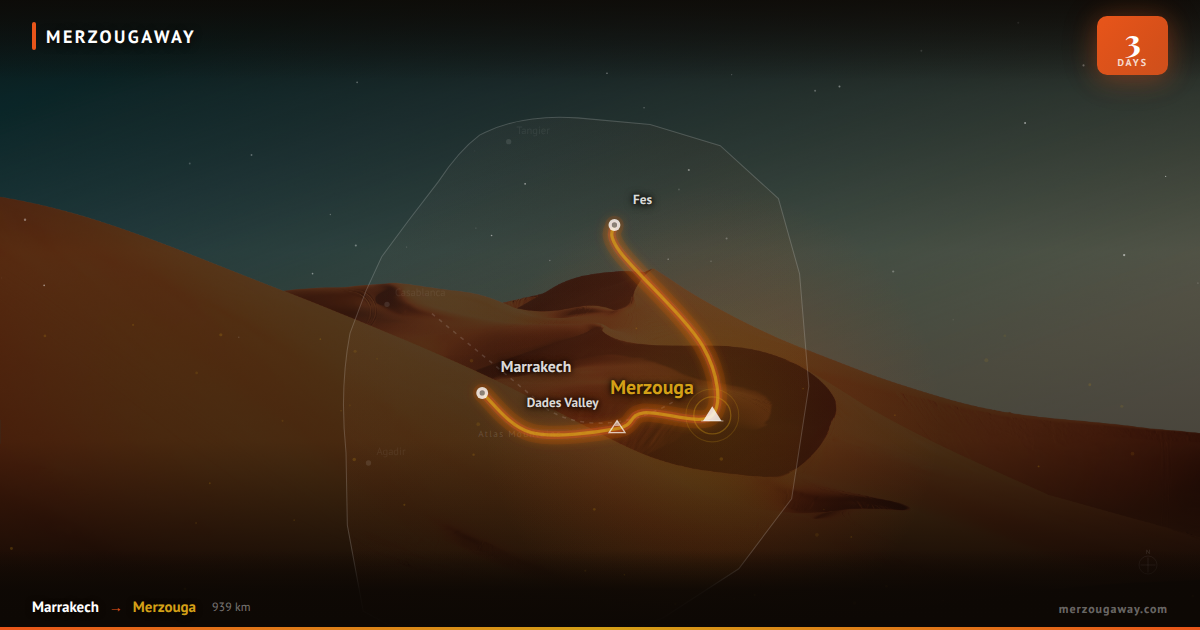
3-Day Marrakech to Merzouga to Fes One-Way Desert Tour
More Activities You'll Love
Explore more things to do in Morocco
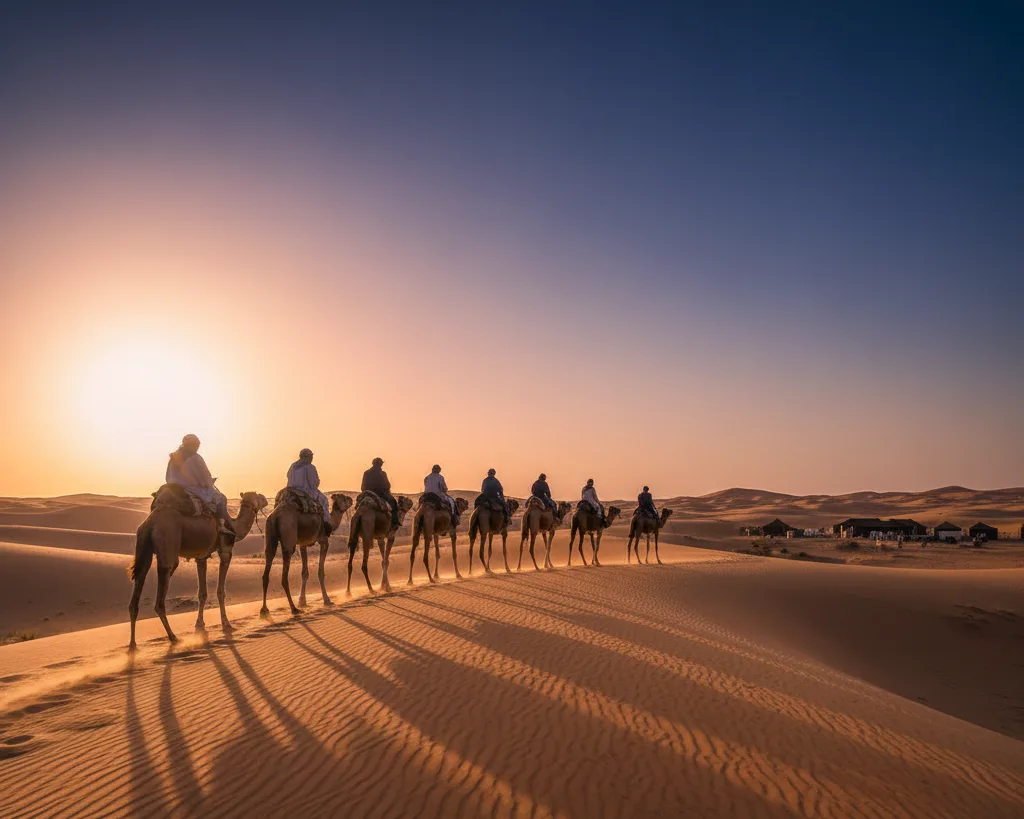
Camel Ride in the Sahara Desert
Experience the timeless magic of the Sahara on camelback. Watch the sun set over Erg Chebbi's golden dunes on a guided camel trek.
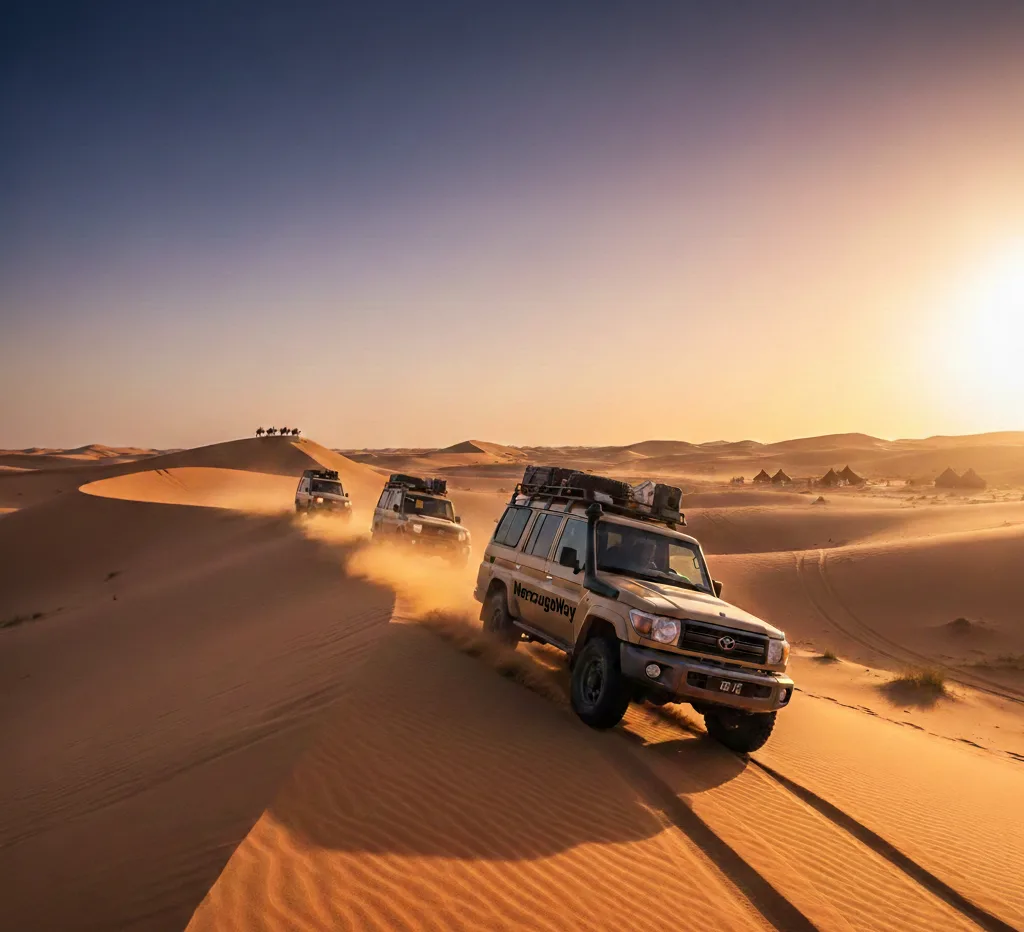
4x4 Dunes Tour in Erg Chebbi
Conquer the Erg Chebbi dunes in a powerful 4x4. An off-road adventure that takes you deep into the Sahara's most dramatic landscapes.
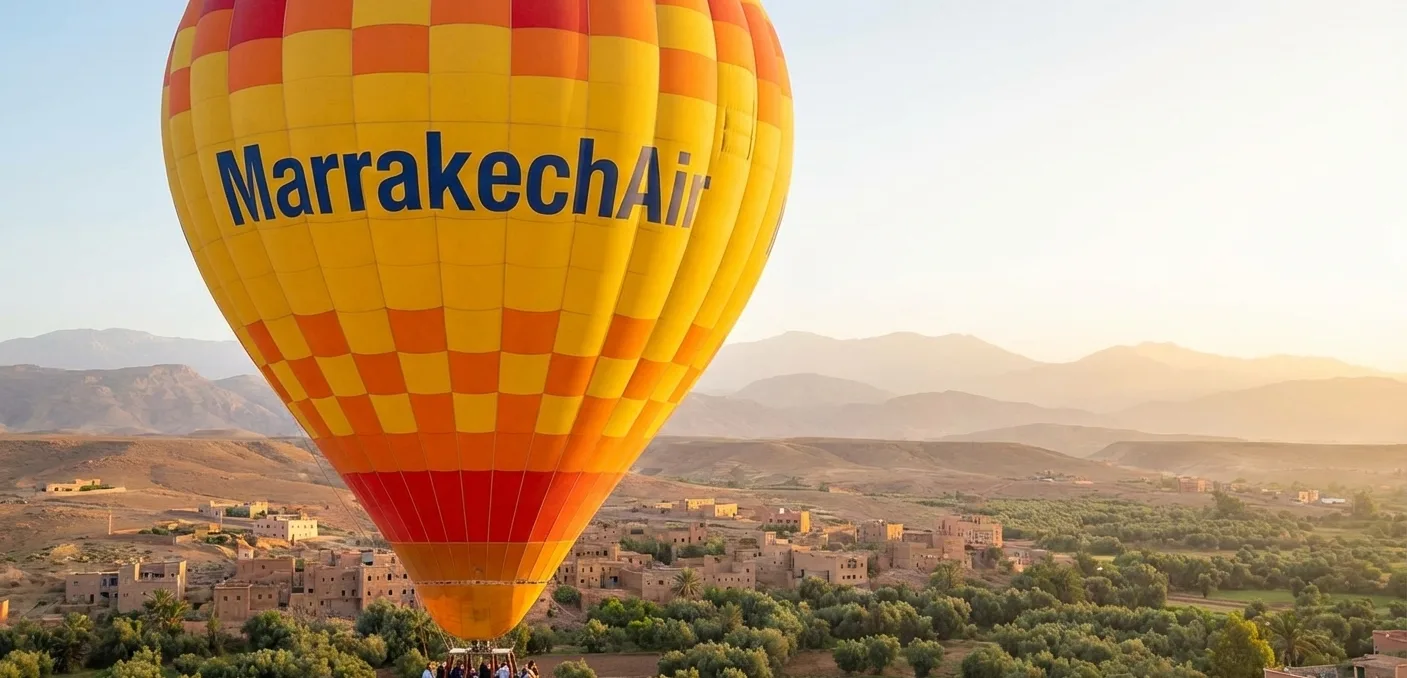
Hot Air Balloon Ride over Marrakech
Float silently above the ancient city of Marrakech at sunrise. A hot air balloon over the Palmeraie and Atlas Mountains offers an unforgettable perspective of Morocco.