Budget Camel Rides in Merzouga: What a Lower-Cost Trek Actually Looks Like
What genuinely affects the price of a Merzouga camel trek, what a modest budget realistically buys, and how to keep costs down without cutting corners on safety.
A camel trek into Erg Chebbi doesn't have to be expensive to be worth doing. The experience that actually matters — riding out across the dunes as the light changes at sunrise or sunset, and later sitting under a genuinely dark sky — is available at a range of price points, and the cheapest version of it is often only a modest step down from the mid-range one. What does move the price a lot more is duration, camp comfort level, and season, so it's worth understanding those before assuming "budget" means a worse experience.
[!NOTE] Fast-Facts & Direct Answer Summary
What genuinely affects the price of a Merzouga camel trek, what a modest budget realistically buys, and how to keep costs down without cutting corners on safety.
- Destination Focus: Authentic Moroccan culture, scenic routes, and local travel insights
- Currency & Payments: Moroccan Dirham (MAD; ~10 MAD ≈ €1 / $1.08 USD). Cash is essential outside major hotels
- Best Travel Window: October through April offers ideal temperate weather across Morocco and the desert
- Local Hospitality: Berber culture is renowned for warm hospitality, mint tea welcoming rituals, and rich musical heritage.
What actually drives the price
A short ride of an hour or two around the dunes near camp sits at the low end of the market and is genuinely enough to get the core experience — camel riding, dune views, photos — without the cost of an overnight stay. Add an overnight in the desert and the price rises to cover a tent, dinner, and breakfast, but this is where the real trade-off is: a basic shared-facility tent costs meaningfully less than a private en-suite one, while giving you the same camel ride, the same stars, and the same sunrise. If comfort matters less to you than the core experience, a simple tent is a completely reasonable way to save money — it isn't a lesser version of the trip, just a plainer one.
Season also moves prices more than people expect. Camps and guides charge more in the December-February peak (when booking further ahead matters too) and less in the quieter shoulder months of May and September, when the desert is still comfortable but demand has dropped. If your dates are flexible, shifting a trip a few weeks outside peak season is a more reliable way to lower the cost than trying to negotiate a lower price during high season.
What "under 500 MAD" actually buys
Put real numbers on it: a short sunrise or sunset ride of an hour or two, no overnight, typically runs somewhere around 150-250 MAD per person — comfortably under budget and enough on its own for the core experience. Add a night in a simple, shared-facility tent with dinner and breakfast included and you're generally looking at something in the 350-500 MAD range per person, which is where most genuinely budget overnight treks land. Step up to a private en-suite tent or a smaller, more attentive camp and the price moves past 500 MAD, often into the 600-900 MAD range — still far short of the luxury tier, but no longer a strict budget trip. These are market ranges, not a fixed price list; always confirm what a specific quote includes before paying.
Where the money actually goes
A camel trek price covers a handful of real costs: the camel and its handler, the guide, the tent and bedding if you're staying overnight, and meals. When a price looks unusually low, it's worth asking what's been cut — often it's the guide's experience, the condition of the tent, or the quality and freshness of the food, rather than anything about the camel ride itself. It's reasonable to ask directly what's included before booking: is the guide staying with you the whole time, is the tent private or shared, is dinner and breakfast part of the price. A clear answer to all of that is a better signal of value than the number alone.
Keeping costs down without cutting corners
The most reliable way to save money is the boring one: book a shorter or simpler version of the same well-run trip rather than the cheapest thing you can find informally. A short sunrise or sunset ride without an overnight stay, or an overnight in a simple tent instead of a private luxury one, both meaningfully lower the price while keeping the same guide standards and camel welfare. Traveling in the shoulder season does the rest. What we'd steer you away from is chasing a price so low it's hard to explain — a guide with no way to reach help if something goes wrong, a camel that looks visibly overworked, or an operator who won't tell you clearly what's included before you pay. None of that is a real saving if something goes wrong partway through, and a well-run budget-tier trek shouldn't need to cut any of it.
A simple, affordable trip
If your budget is genuinely tight, a good shape for the trip is: a short sunrise or sunset camel ride, one night in a simple (not luxury) tent, and straightforward local meals — tagine or couscous, bread, mint tea. That combination gets you the full arc of the experience — the ride out, the color change at sunset or sunrise, dinner, a night under a dark sky — without paying for the extras (private bathroom, gourmet meals, entertainment programs) that drive up the luxury-tier price without changing what you actually came for.
The Real Economics of Budget Camel Trekking in Merzouga
Riding a dromedary camel into the soaring 150-meter golden sand dunes of Erg Chebbi is an iconic bucket-list adventure that does not require an extravagant budget. Frugal backpackers, students, and independent overland travelers can experience authentic Saharan camel caravans for under 500 Moroccan Dirhams (approximately $50 USD or €46 EUR) per person.
Understanding how camel trekking is priced in Merzouga prevents paying excessive middleman markups to foreign aggregate booking portals. The following master price matrix breaks down real local costs:
| Camel Ride Format & Experience | Duration on Camel | Approximate Direct Cost (MAD / EUR) | What is Included in the Price | Best Booking Strategy | | :--- | :--- | :--- | :--- | :--- | | Short Dune Introduction Walk | 45 to 60 Minutes | 100 – 150 MAD (~€9 – €14 EUR) | Dromedary rental, local Amazigh handler, low-dune photo pause | Walk into any local auberge in Hassi Labied or Merzouga village | | Sunset or Sunrise Camel Trek | 1.5 to 2.0 Hours | 150 – 250 MAD (~€14 – €23 EUR) | Camel trek to high ridge, sunset/dawn viewing, mint tea break | Book directly via local camp or village guest house | | Budget Overnight Desert Trek | 2 Days / 1 Night (90m ride each way) | 350 – 500 MAD (~€32 – €46 EUR) | Sunset ride to camp, rustic nomadic tent bed, dinner, breakfast, return ride | Book directly with local Amazigh families or village auberges | | Full-Day Nomadic Desert Trek | 5 to 6 Hours (with lunch pause) | 450 – 600 MAD (~€42 – €55 EUR) | Deep dune crossing, picnic lunch under acacia trees with guide | Custom direct request at local Merzouga guide desks |
Booking Directly in the Village vs International Web Platforms
Where you book your camel ride determines who actually receives your travel money:
- Third-Party Online Platforms: International reseller websites and booking portals frequently advertise "budget" sunset camel rides for €40 to €70 EUR ($45 to $75 USD). In reality, these international platforms take a 30% to 50% commission, subcontracting the actual ride to local handlers who receive only a fraction of the fee.
- The Direct Village Strategy: Walk directly into any family-run auberge or guest house along the main dirt lane in Hassi Labied (the relaxed village situated 4 km north of Merzouga). You can speak directly with the Amazigh camel owner, negotiate a fair rate of 150 to 200 MAD for a sunset trek, and ensure that 100% of your money directly supports the local family and their animals.
Managing Expectations on Budget Overnight Camps (< 500 MAD)
If you select an overnight camel trek priced between 350 and 500 MAD, understanding the physical amenities prevents disappointment:
- Rustic Nomadic Tents: Budget camps utilize traditional black goat-hair and wool nomadic tents pitched directly on the sand. Beds consist of foam mattresses placed on wooden frames or raised desert rugs with heavy woolen blankets.
- Shared Communal Sanitation: Bathrooms are located in a detached cement block 30 to 50 meters away, featuring shared squat or western toilets and cold or solar-warmed bucket showers.
- Wholesome Home-Cooked Dining: Dinner is a generous, hearty communal meal—a piping hot tagine of chicken, potatoes, and carrots, fresh khobz flatbread, and seasonal melon, followed by traditional Amazigh drumming around the central campfire under the stars.
Camel Health, Welfare, and Tipping Customs
Ethical travelers should always verify that working animals are treated humanely:
- Assessing Dromedary Well-Being: Healthy camels have bright, clear eyes, clean nostrils, an alert upright posture, and a firm, upright fat hump (a floppy, depleted hump indicates malnutrition or exhaustion). Check that the wooden saddle (Rahla) is well-padded with clean blankets and that girth straps do not cause open sores.
- Tipping Your Camel Handler (Gamalier): Camel guides walk barefoot across hot sand dunes for hours to ensure your safety. If your guide was attentive, helped you mount and dismount safely, and took wonderful photos of you on the crests, a tip of 50 MAD (~$5 USD) per rider is customary and deeply appreciated.
Physical Preparation and What to Wear on a Budget Camel Trek
Maximizing your comfort during a budget camel ride requires thoughtful preparation, especially since rustic tours do not provide luxury amenities:
- Pants and Saddle Chafing: Never ride a dromedary camel wearing shorts or thin leggings. The friction of the wooden saddle (Rahla) and coarse woolen saddle blanket against bare skin causes uncomfortable chafing during a 90-minute trek. Wear loose-fitting, durable cotton trousers or lightweight denim jeans.
- Footwear Strategy for Cold or Hot Sand: Wear lightweight, closed-toe walking sneakers or running shoes for the ride. Once you reach the high dunes, you can easily remove your shoes to walk barefoot on the sand. During midsummer, midday sand surface temperatures exceed 60°C (140°F), making barefoot walking impossible; during winter mornings, sand is freezing cold, requiring thick woolen socks.
- Protecting Cameras and Smartphones: Airborne desert sand particles are microscopic and abrasive. Never carry cameras swinging freely around your neck on a camel. Store phones and camera bodies inside sealed zip-lock plastic bags or silicone cases, extracting them only when your camel has halted and your guide assists you in holding the reins.
Ethical Treatment: Choosing Humane Operators
Budget travel should never come at the expense of animal welfare. Insist on ethical standards before handing over your money:
- Observe the Camel Herd: Before mounting, look at the animals resting in the village paddock. Are they calm and alert? Do they have clean nostrils and bright eyes? Are their humps firm and upright? Avoid any operator whose camels show bleeding sores from tight cinch ropes, protruding hip bones, or visible signs of exhaustion.
- Gentle Handlers: True Amazigh camel handlers treat their dromedaries with quiet respect, using soft vocal clicks and gentle halter tugs rather than sticks or aggressive shouting. Supporting ethical local families ensures that traditional desert pastoralism remains humane and sustainable.
Sand Dune Etiquette: Respecting the Fragile Desert Ecosystem
Traveling on a budget should always be paired with conscientious ecological awareness:
- Zero-Trace Camping: Pack out every single scrap of trash, plastic water bottle caps, and snack wrappers. Desert winds can easily blow lightweight plastic across the sand, where grazing camels and desert wildlife mistake it for food, leading to fatal digestive impactions.
- Water Conservation in Oases: Desert communities rely on fragile subterranean aquifers. When using shared bathroom blocks or washing facilities in village auberges, practice strict water conservation: turn off taps while brushing teeth and keep showers short and mindful.
- Respecting Local Nomad Dwellings: If your budget camel trek passes near nomadic family tents in the desert, maintain respectful distance and never photograph dwellings or families without explicit permission from your guide.
Essential Water and Hydration Tips on Budget Treks
Staying properly hydrated in the desert requires mindful personal discipline:
- Carry Ample Water: Budget camel treks do not include complimentary bottled water. Always purchase at least two 1.5-liter bottles of mineral water (such as Sidi Ali or Ain Atlas) from a village grocery shop (hanout) in Hassi Labied before mounting your camel (typically costing 6 to 8 MAD per bottle).
- Insulate Your Bottles: The desert sun can warm bottled water quickly. Wrap your water bottle inside a lightweight wool sock or scarf inside your backpack to keep the liquid refreshingly cool throughout your 90-minute ride across the sun-drenched dunes.
Frequently Asked Questions (FAQ)
Can you book a camel ride in Merzouga for under 500 MAD?
Yes! A standard 1.5 to 2-hour sunset or sunrise camel trek directly into the Erg Chebbi dunes costs between 200 and 350 MAD (~€20–€32) per person when booked directly with local operators in Merzouga village.
Are camels well cared for in Merzouga?
At MerzougaWay, animal welfare is paramount. Our camels (properly called dromedaries, with one hump) work moderate hours, carry humane padded saddles, receive nutritious alfalfa and grain feed, and rest during the hottest daytime hours in shaded stables with fresh water.
Is riding a camel comfortable or difficult?
The rhythm is gentle and rocking once the camel stands up. The initial mounting and standing up (the camel straightens its hind legs first, leaning you forward, then front legs) is the only tricky moment; hold the saddle handle firmly and lean back slightly.
Can children ride camels safely?
Yes. Children aged 6 and older can ride their own calm camel led on a rein by an experienced camel guide (chamlier). Younger toddlers can sit safely in the lap of an adult in a tandem saddle.
Plan an affordable desert night
Tell us your budget and how much comfort matters to you, and we'll put together a private trip — simple tent or luxury, short ride or full overnight — that fits it, with a guide and camel welfare standards that don't change no matter which tier you pick.
- WhatsApp: +212 675 203 319 / +212 668 534 981
- Email: [email protected]
Last updated: August 2026.
Sahara Route & Drive-Time Estimator
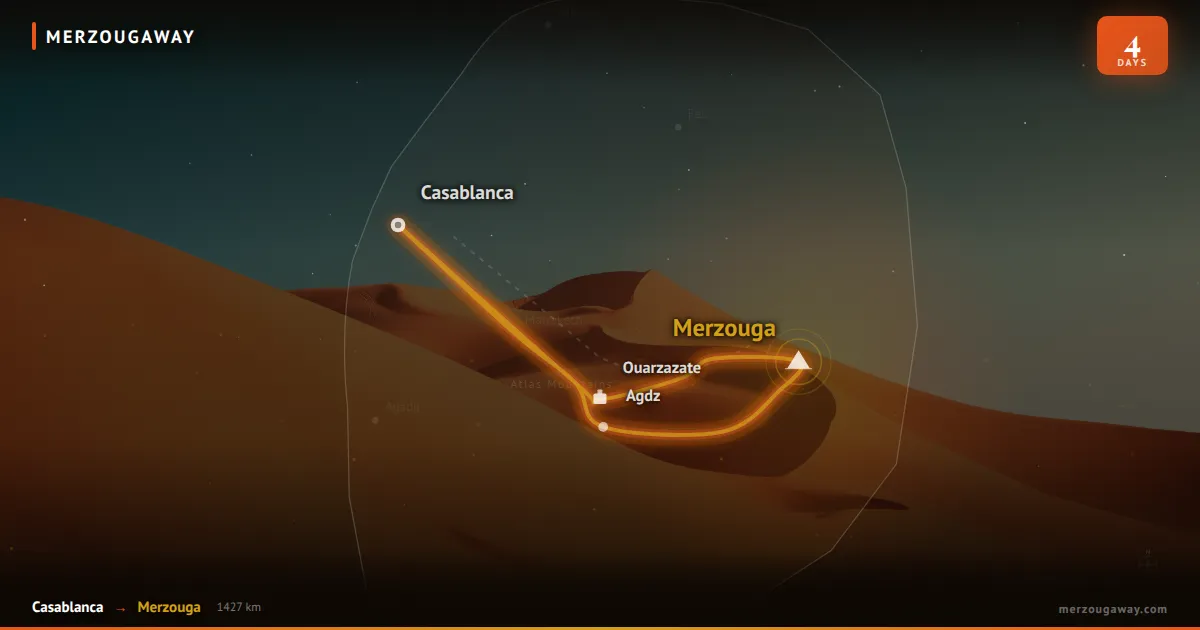
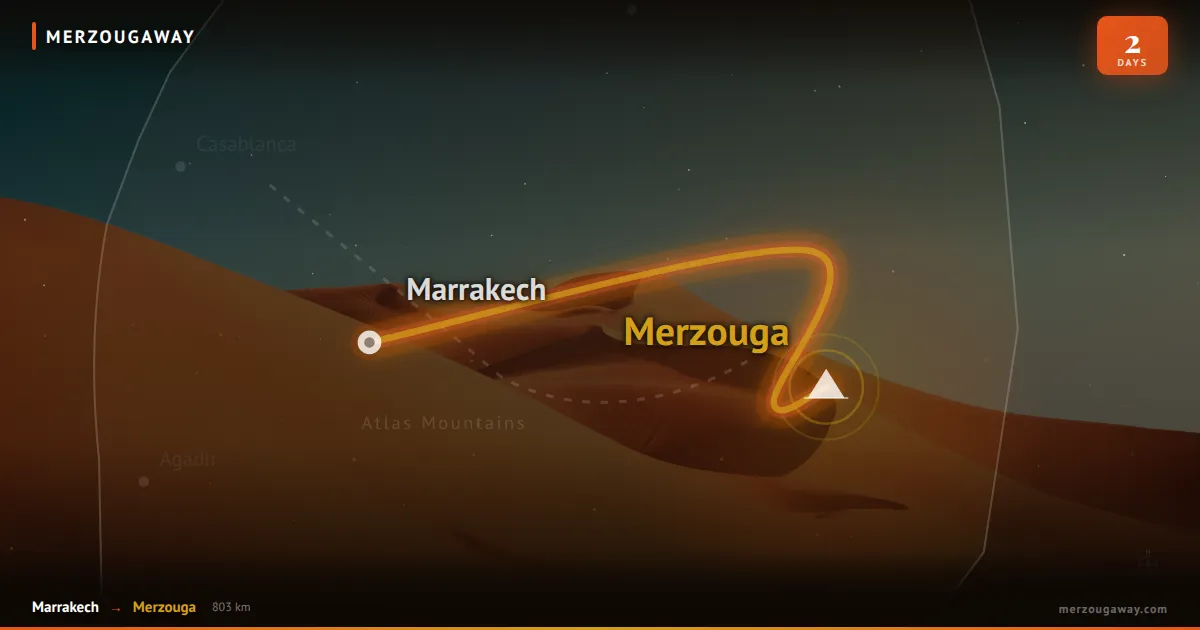
Calculate realistic driving hours across the High Atlas (Tizi n'Tichka pass), compare scenic stops (Dadès, Todra, Ziz), and plan your custom desert itinerary.
MerzougaWay Team
We are a passionate team of local guides dedicated to sharing the beauty and culture of our home, Morocco. Our journey began with a simple desire to offer authentic, memorable experiences that go beyond the typical tourist trails.