Driving from Marrakech to Merzouga: Complete Self-Drive Road Trip Guide (2026)
Can you drive to Merzouga? Complete self-drive road trip guide from Marrakech. Road conditions on Highway N9, Tizi n'Tichka pass, police checkpoints, fuel, and car rental tips.
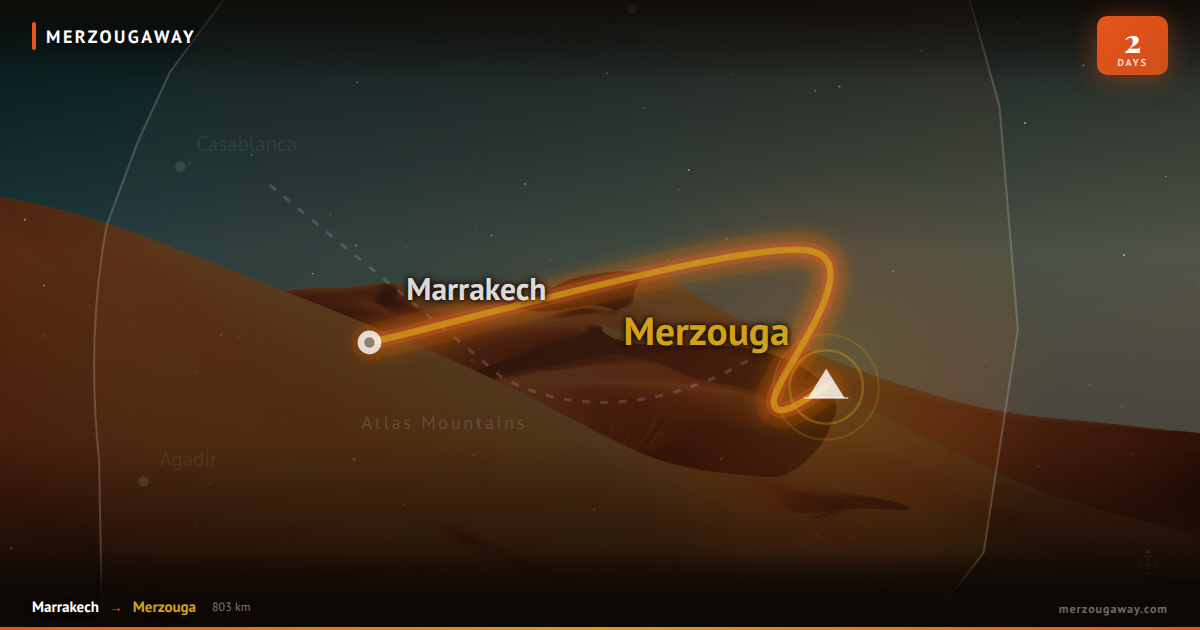
Can you drive to Merzouga yourself? Yes, absolutely. Driving yourself from Marrakech across the High Atlas Mountains into the towering Sahara dunes of Erg Chebbi in Merzouga is one of the most rewarding and visually spectacular road trips in Africa.
The entire 560-kilometer (348-mile) route is 100% paved on modern national highways (N9, N10, and N13), meaning you do NOT need an expensive 4x4 vehicle to reach Merzouga—a standard 2WD rental car handles the journey easily. However, because the road climbs through high alpine passes (2,260m elevation), traverses narrow river gorges, and features frequent police radar checkpoints, understanding the real on-the-ground driving conditions is essential for a safe, stress-free road trip.
In this comprehensive 2026 driving guide, our local desert team at MerzougaWay provides the complete step-by-step route breakdown, fuel stops, police checkpoint protocols, parking advice, and safety essentials for your self-drive Sahara expedition.
⚡ Quick Summary: Marrakech to Merzouga Drive at a Glance
[!NOTE] At a Glance — Marrakech to Merzouga Self-Drive Essentials
- Total Route Distance: 560 km (348 miles) one-way via Highways N9, N10 & N13
- Realistic Driving Time: 8.5 to 10 hours continuous driving (Always break it with an overnight stay!)
- Recommended Overnight Stop: Dades Valley / Boumalne Dades (Night 1) on the outbound leg
- Road Condition: 100% paved asphalt with lane markings and steel guardrails over mountain passes
- Vehicle Required: Standard 2WD Compact / Sedan (4x4 is only needed for driving ON sand dunes)
- Estimated Fuel Cost: ~800 to 1,100 MAD (€75 to €100) round-trip Diesel / Unleaded
- Navigation: Download offline maps in advance via Google Maps or Maps.me (mobile signal is strong, but mountains have blind spots)
┌─────────────────────────────────────────────────────────────────────────────────┐
│                 MARRAKECH TO MERZOUGA SELF-DRIVE TIMELINE                       │
├─────────────────────────┬─────────────────────────────┬─────────────────────────┤
│ LEG                     │ DISTANCE & DRIVE TIME       │ KEY DRIVING HIGHLIGHTS  │
├─────────────────────────┼─────────────────────────────┼─────────────────────────┤
│ Marrakech ➔ Tizi Pass   │ 100 km / ~2.0 hours         │ Mountain switchbacks N9 │
├─────────────────────────┼─────────────────────────────┼─────────────────────────┤
│ Tizi Pass ➔ Aït Benhaddou│ 85 km / ~1.5 hours          │ Ounila Valley descent   │
├─────────────────────────┼─────────────────────────────┼─────────────────────────┤
│ Aït Benhaddou ➔ Dades   │ 145 km / ~2.5 hours         │ N10 Skoura & Roses      │
├─────────────────────────┼─────────────────────────────┼─────────────────────────┤
│ Dades ➔ Todra Gorges    │ 75 km / ~1 hour 15 min      │ Tinghir palm oasis      │
├─────────────────────────┼─────────────────────────────┼─────────────────────────┤
│ Todra Gorges ➔ Merzouga │ 195 km / ~2.5 to 3.0 hours  │ N13 flat desert highway │
└─────────────────────────┴─────────────────────────────┴─────────────────────────┘
Visual Route Map & Elevation Profile
ELEVATION (Meters)
 2,500m ──┐               ▲ Tizi n'Tichka Pass (2,260m / 7,415 ft)
          │              / \
 2,000m ──┼             /   \
          │            /     \
 1,500m ──┼           /       \                                     ▲ Dades Gorges (1,600m)
          │          /         \                                   / \
 1,000m ──┼  Marrakech          \  Aït Benhaddou (1,160m)         /   \  Todra Gorges (1,350m)
          │   (466m)             \  Ouarzazate (1,150m)          /     \ / \
   500m ──┼───●───────────────────●──────●──────────────────────●───────●───●──────● Merzouga
          │                                                                      (Erg Chebbi 700m)
     0m ──┴──────┬──────────────────┬──────────────┬────────────────┬──────────┬───────────►
               0 km               100 km         200 km           330 km     450 km      560 km
Part 1: Step-by-Step Highway Route Walkthrough
Leg 1: Marrakech to Tizi n'Tichka Pass (100 km / 2 Hours / Highway N9)
Leaving Marrakech, follow National Highway N9 southeast toward Ouarzazate. The first 40 kilometers across the Haouz plains are straight and flat. After the town of Ait Ourir, the road begins its dramatic ascent into the High Atlas Mountains.
- Road Quality: Excellent, newly widened 2-to-3-lane paved highway with modern retaining walls and steel guardrails.
- Driving Conditions: Multiple hairpin switchbacks climbing from 466m to 2,260m (7,415 ft). Watch for slow-moving commercial trucks climbing uphill; use designated passing lanes (voies lentes) to overtake safely.
- Key Stop: The summit of Tizi n'Tichka Pass features panoramic roadside pull-offs with souvenir stalls, cafes, and sweeping mountain views.
Leg 2: Tizi n'Tichka to Aït Benhaddou & Ouarzazate (85 km / 1.5 Hours)
Descending the southern side of the Atlas, the landscape transitions from green alpine valleys to arid red-ochre canyons.
- Scenic Detour (P1506): At the town of Amerzgane (or via the Telouet junction), you can take the secondary paved road through the Ounila Valley to visit the famous Telouet Kasbah before reaching Aït Benhaddou.
- Main Landmark: Turn off the N9 onto the short 9 km access road to Aït Benhaddou (UNESCO World Heritage Site). Park in the designated visitor lot (10–20 MAD parking fee) and walk across the river footbridge to explore the 11th-century clay fortress.
- Ouarzazate: Rejoin the N9 to reach Ouarzazate ("The Hollywood of Africa"). This is the largest modern city on the route—an ideal place to withdraw cash from ATMs, buy groceries at the Carrefour Market, and fill your gas tank.
Leg 3: Ouarzazate to Dades Valley (145 km / 2.5 Hours / Highway N10)
From Ouarzazate, take National Highway N10 eastward along the famous "Road of a Thousand Kasbahs."
- Skoura Oasis: Pass through the lush date palm groves of Skoura, stopping to visit the 17th-century Kasbah Amridil.
- Kelaat M'Gouna (Valley of the Roses): Famous for Damask rose distillation. Roadside shops sell rose water, lotions, and soaps.
- Boumalne Dades & Dades Gorges: Turn north off the N10 at Boumalne Dades to drive 25 km up the Dades River canyon, passing the surreal "Monkey Fingers" rock formations and the famous serpentine switchbacks. This is the recommended overnight location (Night 1) for self-drive road trippers.
Leg 4: Dades Valley to Todra Gorges & Tinghir (75 km / 1 Hour 15 Min / Highway N10)
Return to the N10 and drive east to Tinghir, turning north into the awe-inspiring Todra Gorges.
- The Gorges: Drive directly to the canyon floor where vertical red limestone walls tower 300 meters (985 ft) overhead. Park in the visitor lot (free or 10 MAD tip) and enjoy a 45-minute walk along the shallow riverbed.
Leg 5: Tinghir to Merzouga & Erg Chebbi (195 km / 2.5 to 3 Hours / Highway N13)
Leaving Tinghir, the road heads southeast across flat desert plains toward the Sahara:
- Tinjdad & Touroug: Flat, open desert highway. Stop in Tinjdad for authentic Berber Medfouna ("Berber Pizza") for lunch.
- Erfoud: The fossil capital of Morocco. The road transitions into Highway N13.
- Rissani: The final historic market town before the desert. Pass through the grand ornamental city gates.
- Arrival in Merzouga: Follow the smooth asphalt of Highway N13 for the final 35 km straight into the village of Merzouga. As you arrive, the colossal 150-meter-high golden sand dunes of Erg Chebbi rise dramatically on your left horizon.
Part 2: Do You Really Need a 4x4 to Drive to Merzouga?
One of the most persistent myths about traveling to Merzouga is that you must rent an expensive 4x4 vehicle.
┌─────────────────────────────────────────────────────────────────────────────────┐
│                     2WD RENTAL CAR vs 4X4: THE REALITY                          │
├─────────────────────┬──────────────────────────┬────────────────────────────────┤
│ DRIVING SCENARIO    │ STANDARD 2WD RENTAL CAR  │ 4X4 (TOYOTA PRADO / SUV)       │
├─────────────────────┼──────────────────────────┼────────────────────────────────┤
│ Marrakech to Merzouga│ 100% Paved Highway (Easy)│ 100% Paved Highway (Easy)      │
│ Mountain Passes (N9)│ Handles completely fine  │ Extra horsepower on inclines   │
│ Parking in Merzouga │ Park safely in hotel lot │ Park safely in hotel lot       │
│ Driving on Sand Dunes│ NEVER (Will get stuck!) │ Only with experienced dune tire│
│                     │                          │ deflation & desert sand skills │
│ Daily Rental Cost   │ **€30 – €55 / day**      │ **€85 – €150 / day**           │
└─────────────────────┴──────────────────────────┴────────────────────────────────┘
Where Do You Leave Your Rental Car in Merzouga?
If you drive a standard 2WD rental car to Merzouga, you do not drive your car into the sand dunes. Instead:
- Drive into Merzouga village or Hassi Labied (the twin village at the base of the dunes).
- Park your vehicle in the secure, guarded private parking lot of your desert camp's base auberge/hotel (typically free for guests or 20–30 MAD/day).
- Your desert camp hosts will meet you at the parking lot with camels for your sunset trek, and transport your heavy luggage across the dunes in their private camp 4x4!
Part 3: Navigating Moroccan Police Checkpoints & Driving Laws
Driving in Morocco is highly regulated, and you will encounter several police checkpoints (Barrages de Police / Gendarmerie Royale) along the route.
┌─────────────────────────────────────────────────────────────────────────────────┐
│                     POLICE CHECKPOINT PROTOCOL FOR TOURISTS                     │
├─────────────────────────────────────────────────────────────────────────────────┤
│ 1. Mandatory Stop: Always come to a complete dead stop at the "HALTE POLICE"    │
│    or "HALTE GENDARMERIE" sign, usually located 50 meters before the officer.  │
│ 2. Wait for the Wave: Do NOT drive forward until the officer makes eye contact  │
│    and waves you forward with their hand.                                       │
│ 3. Friendly Greeting: Smile and greet the officer with "Bonjour" or "Salam      │
│    Alaykum". Tourist drivers are treated with exceptional courtesy.            │
│ 4. Documents to Present: Driving License, Rental Contract (*Contrat de Location*)│
│    and Vehicle Registration & Insurance Card (*Carte Grise*).                  │
│ 5. Speed Cameras: Strict radar traps operate in 60 km/h village entry zones.     │
└─────────────────────────────────────────────────────────────────────────────────┘
Essential Driving Rules to Avoid Fines:
- Speed Limits: 60 km/h in towns and villages, 100 km/h on open national highways (N9, N10, N13), and 120 km/h on express tollways. Speed cameras are common on the approaches to Ouarzazate, Tinghir, and Erfoud.
- Roundabout Priority Rule: Unless traffic lights or a "Give Way" sign are present, traffic already inside the roundabout has priority. In rural town roundabouts with a "Yield" sign (Cédez le Passage), watch carefully.
- Seatbelts & Phones: Wearing seatbelts is strictly mandatory for all front and rear passengers. Touching a mobile phone while driving incurs an immediate 400 MAD fine.
Part 4: Fuel, Navigation & Roadside Logistics
Fuel (Gas Stations):
- Fuel Types: Diesel (Gasoil) is the most common fuel in Morocco (~12.50 to 14.00 MAD per litre / ~€1.15 to €1.30), while Unleaded Gasoline (Sans Plomb) runs ~14.50 to 15.50 MAD per litre.
- Gas Station Availability: Major international fuel stations (Afriquia, Total, Shell, Winxo) are located in every town: Ait Ourir, Ouarzazate, Kelaat M'Gouna, Tinghir, Erfoud, and Rissani. There are also two modern gas stations directly in Merzouga village.
- Payment: Always carry cash in Moroccan Dirhams (MAD) for fuel; rural fuel stations frequently have offline card terminals. Tipping the fuel pump attendant 2 to 5 MAD is customary.
Navigation Apps:
- Google Maps: Download the offline map area covering Marrakech, Ouarzazate, and Errachidia/Merzouga in the Google Maps app before departing your riad.
- Maps.me or Waze: Both apps work reliably offline using satellite GPS.
- Mobile SIM Cards: We recommend purchasing an Inwi, Orange, or Maroc Telecom e-SIM or physical SIM card at Marrakech airport (20 GB of high-speed 4G LTE data costs ~100 to 150 MAD / ~€10 to €14). 4G coverage is remarkably strong across 95% of the highway route.
Part 5: Self-Drive vs Private 4x4 Tour Comparison
Is it better to drive yourself or hire a private driver?
| Factor | Self-Drive Rental Car | Private 4x4 Tour with Driver | | :--- | :--- | :--- | | Pacing Freedom | ⭐⭐⭐⭐⭐ Stop anywhere for photos | ⭐⭐⭐⭐⭐ Stop anywhere upon request | | Driver Fatigue | ⭐⭐ High (18+ hours behind wheel) | ⭐⭐⭐⭐⭐ Zero (Relax, sleep & enjoy views) | | Mountain Pass Safety | You navigate trucks & steep drops | Professional driver with 10+ yrs Atlas experience | | Off-Road Sand Access | Cannot drive on dunes (Must park) | 4x4 drives directly into dunes & camps | | Local Cultural Insight| Limited to your guidebooks | Native Berber driver shares history & translations | | Estimated Total Cost | €280 – €450 (Rental + Fuel + Hotels) | €220 – €430 per person (All-inclusive) |
❓ Frequently Asked Questions (FAQ)
Can I drive from Marrakech to Merzouga in one day?
While it is technically possible to drive the 560 km in 9.5 to 10 continuous hours, we strongly advise against it. The mountain crossing over Tizi n'Tichka requires high concentration, and driving through unlit desert roads after dark is hazardous due to pedestrians and stray animals. Breaking the drive with an overnight stay in the Dades Valley makes the road trip relaxing and enjoyable.
What kind of driving license do I need in Morocco?
Most foreign driver's licenses printed in English, French, or Spanish (including US, UK, EU, Canadian, and Australian licenses) are legally accepted for renting a car for up to 90 days. An International Driving Permit (IDP) is recommended but rarely requested by police if your primary license has Latin characters.
What happens if my rental car breaks down on the road?
All major car rental companies in Morocco provide 24/7 roadside assistance (Assistance Dépannage). The national highways (N9 and N10) are active commercial corridors with mechanics (garages) and tire repair shops (vulcanisateurs) in every town along the route.
Can you drive across the dunes of Erg Chebbi yourself?
No. Standard rental contracts strictly prohibit driving off paved roads. Driving across sand dunes requires specialized tire deflation (lowering pressure to 12–15 PSI), sand recovery tracks, high-clearance 4x4 vehicles, and expert desert driving skills. If you get stuck in the dunes, recovery tow fees can exceed 2,000–3,000 MAD.
Is driving in Morocco during Ramadan difficult?
Driving during Ramadan is completely safe. However, driving around sunset (Iftar or Ftour) can be frantic as local drivers rush home to break their fast. Plan your driving so you are checked into your hotel or off the road 45 minutes before sunset.
How much are highway tolls between Marrakech and Merzouga?
There are zero toll roads between Marrakech and Merzouga. Toll highways (Autoroutes du Maroc) only exist in the north (connecting Casablanca, Rabat, Tangier, and Marrakech). The route to Merzouga follows National Highways (Routes Nationales), which are completely free to drive.
🇲🇦 Plan Your Sahara Road Trip with MerzougaWay
Prefer to sit back, relax, and let an experienced local Berber driver navigate the mountain passes? MerzougaWay offers private 3-day and 4-day all-inclusive Sahara expeditions starting from Marrakech, Fes, and Casablanca.
- Explore Private Tour Options: All Marrakech to Merzouga Tour Packages
- Direct WhatsApp Consultation: +212 675 203 319 / +212 668 534 981
- Email Customer Support: [email protected]
Guide updated and verified for 2026 travel season.
Sahara Route & Drive-Time Estimator
Calculate realistic driving hours across the High Atlas (Tizi n'Tichka pass), compare scenic stops (Dadès, Todra, Ziz), and plan your custom desert itinerary.
MerzougaWay Team
We are a passionate team of local guides dedicated to sharing the beauty and culture of our home, Morocco. Our journey began with a simple desire to offer authentic, memorable experiences that go beyond the typical tourist trails.