Merzouga Tour: The Ultimate Desert Experience in 2026
What a Merzouga desert tour actually involves — the Erg Chebbi dunes, the camel trek, the desert camp, and how to choose between a 2-day escape and a longer, slower private itinerary.
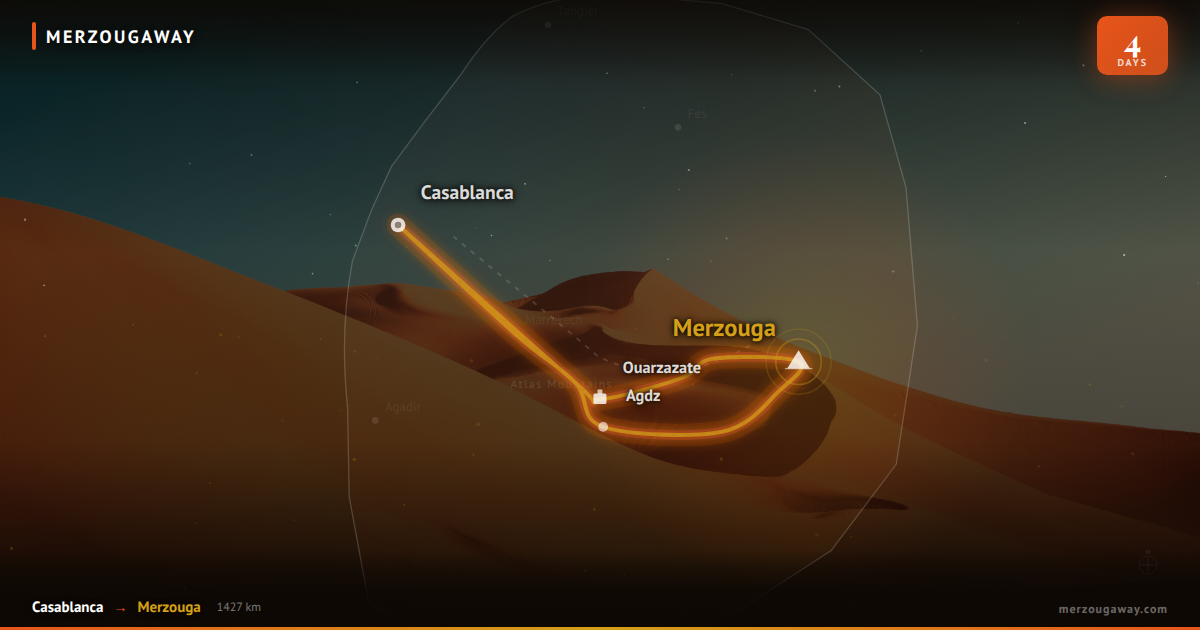
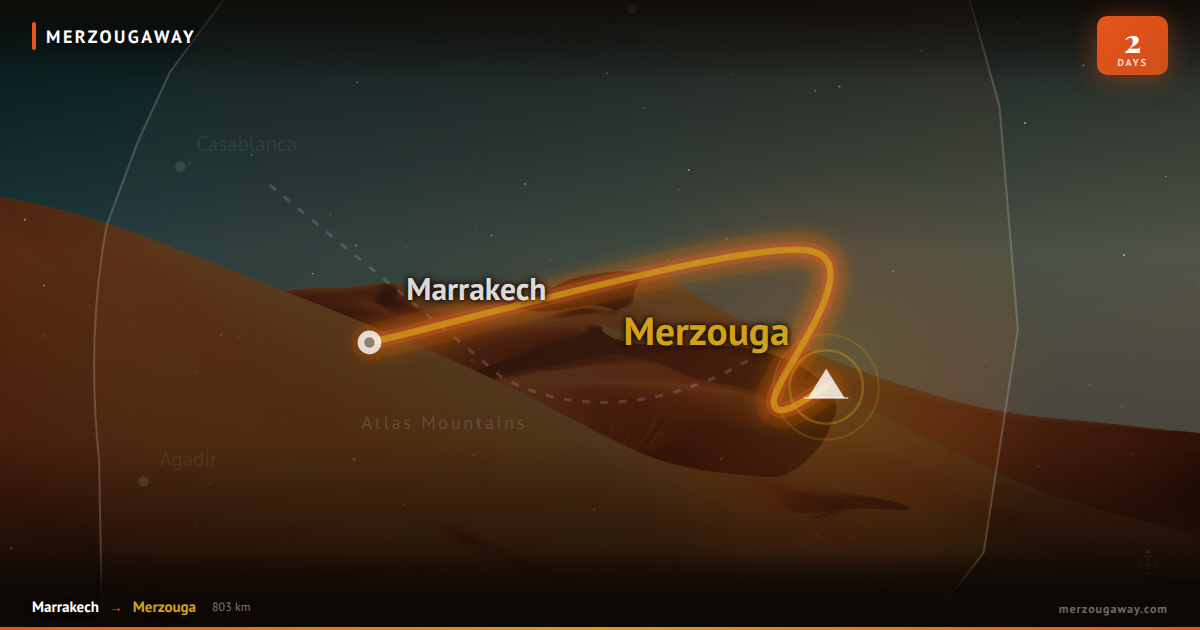
Merzouga sits right at the edge of Erg Chebbi, the tallest and most photographed dune field in Morocco — some crests reach roughly 150 metres, and the light on them at sunrise and sunset is the reason most people put a Sahara trip on their itinerary in the first place. It's also a genuinely remote destination: there's no airport in Merzouga itself and no direct train, so every version of this trip involves a road journey, usually as part of a multi-day tour rather than a quick add-on to a city stay. The nearest airport is Errachidia (ERH), still around two hours away by road, with Marrakech and Ouarzazate as the more common — if longer — starting points for the overland route in.
[!NOTE] Fast-Facts & Direct Answer Summary
What a Merzouga desert tour actually involves — the Erg Chebbi dunes, the camel trek, the desert camp, and how to choose between a 2-day escape and a longer, slower private itinerary.
- Destination Focus: Authentic Moroccan culture, scenic routes, and local travel insights
- Currency & Payments: Moroccan Dirham (MAD; ~10 MAD ≈ €1 / $1.08 USD). Cash is essential outside major hotels
- Best Travel Window: October through April offers ideal temperate weather across Morocco and the desert
- Local Hospitality: Berber culture is renowned for warm hospitality, mint tea welcoming rituals, and rich musical heritage.
What makes Merzouga worth the trip
Beyond the dunes themselves, the area around Merzouga is home to Berber and, in nearby Khamlia, sub-Saharan Gnawa communities whose music and hospitality are as much a part of the experience as the landscape — a stop in Khamlia for a Gnawa performance is one of the more memorable, less-expected parts of most itineraries. The activities cluster around a few core experiences: the camel trek into the dunes at sunset or sunrise, a 4x4 excursion out to nomad settlements and oasis towns, sandboarding and quad biking for a more physical add-on, and stargazing, which needs no equipment or booking at all given how dark the skies are this far from any city lighting.
When to go
Spring (March-May) and autumn (September-November) are the most comfortable seasons, with warm days, cooler nights, and — in spring particularly — a chance of desert bloom after rain. Winter (December-February) brings genuinely cold nights, cold enough that a heated tent with proper blankets matters far more than it would elsewhere in Morocco, though the days themselves stay pleasant and the clear winter skies make for some of the best stargazing of the year. Summer (June-August) is the one season worth planning around carefully: daytime temperatures can climb toward 45-50°C, uncomfortable enough that camel treks and camp activities shift to early morning and evening, with the hottest hours spent resting at camp. Sandstorms are occasional rather than common, more likely in late spring, and rarely disruptive enough to cancel a trip outright.
The different ways to do this trip
Every tour we run to Merzouga is private — your own vehicle and driver-guide, not a shared bus with a fixed schedule — but the length and style still vary a fair amount. A standard 2-3 day tour from Marrakech or Fes covers the essentials: the mountain or Middle Atlas crossing, a sunset camel trek, one night in a desert camp, and a sunrise before heading back. A longer, more immersive version adds a second night in the desert, deeper 4x4 exploration, or extra stops along the route like Todra Gorge or the Dades Valley's rock formations, and works well if you'd rather move slowly than tick boxes. At the upper end, some travelers add a private camp upgrade — proper en-suite tents, more elaborate camp dining — without changing the underlying itinerary much at all.
A typical 2-3 day version runs roughly like this: day one covers the drive itself with stops at kasbahs, valleys, or gorges along the way, arriving in Merzouga in time for a sunset camel trek into Erg Chebbi and a night at camp with a traditional dinner and Berber music around the fire. Day two starts before dawn for those who want the dune sunrise (worth setting an alarm for), followed by a Berber breakfast at camp, a visit to a nomad family or Khamlia village, and optional sandboarding or a 4x4 excursion, before the return drive or a continuation on to Fes. A third day, where included, is usually a slower return leg with additional stops rather than new activities.
What to pack
Desert packing comes down to managing a wider temperature swing than the daytime heat suggests: light, breathable clothing for the day, a genuinely warm layer for camp evenings, and a scarf or shesh that does double duty against sun and blown sand. Comfortable closed shoes matter more than sandals once you're off the main paths, and a headlamp is worth having since desert camps are dimly lit after dinner. Sunglasses with real UV protection, a high-SPF sunscreen, a reusable water bottle, and a charged camera or phone round out the list — the night sky and the dune sunrise are the two moments people most regret not being ready to photograph.
Frequently Asked Questions (FAQ)
What makes a Merzouga desert tour the ultimate Morocco experience?
It combines dramatic mountain crossings through the High Atlas, walking between the 300-meter sheer cliffs of Todra Gorge, camel trekking across towering golden dunes, authentic Amazigh campfire music, and sleeping under a canopy of millions of stars.
What should I pack for a desert tour in Merzouga?
Essential packing items include sunglasses, sunscreen, a warm fleece jacket for night, breathable long cotton pants, closed sneakers, portable power bank, lip balm with SPF, and a Berber cotton scarf.
Are bathroom facilities available during long drives to Merzouga?
Yes. Drivers pause every 2 to 2.5 hours at clean roadside cafés, restaurants, and service stations that offer clean restrooms, bottled water, espresso coffee, and fresh orange juice.
Can I visit nomad families living in the desert?
Yes. MerzougaWay tours include a respectful visit to indigenous nomad families living in traditional handwoven wool tents behind the dunes, where you can share mint tea and learn about their traditional pastoral way of life.
Booking your Merzouga tour
If you want the full range of options — 2-day, 3-day, or longer, with either a standard or upgraded desert camp — our 3-day Marrakech to Merzouga tour is the most popular starting point and can be adjusted to a shorter or longer itinerary depending on your dates.
Contact Us
Ready to book, or want a custom itinerary built around your travel dates and starting city? Get in touch and we'll put together a plan and quote.
- WhatsApp: +212 675 203 319 / +212 668 534 981
- Email: [email protected]
Last updated: July 2026.
Sahara Route & Drive-Time Estimator
Calculate realistic driving hours across the High Atlas (Tizi n'Tichka pass), compare scenic stops (Dadès, Todra, Ziz), and plan your custom desert itinerary.
MerzougaWay Team
We are a passionate team of local guides dedicated to sharing the beauty and culture of our home, Morocco. Our journey began with a simple desire to offer authentic, memorable experiences that go beyond the typical tourist trails.