Things to Do in Casablanca: Beyond the CAN 2025 Stadium
Casablanca hosted matches at Stade Mohammed V during CAN 2025. Beyond the stadium, here's what actually makes the city worth a few days: the Hassan II Mosque, the corniche, the old medina, and day trips along the coast.
Things to Do in Casablanca: Beyond the CAN 2025 Stadium
Casablanca hosted matches at Stade Mohammed V during CAN 2025, Morocco's turn as Africa Cup of Nations host across the 2025-26 season. It's Morocco's largest city and economic capital, and it's a different kind of destination from Marrakech or Fez — less obviously "postcard Morocco," more a genuinely lived-in, modern North African city with its own distinct sights. If you're spending a few days here, whether stadium-adjacent or not, it's worth treating it as its own destination rather than a stopover.
The Hassan II Mosque is the reason most people come
It's the third-largest mosque in the world, built on a promontory jutting into the Atlantic, with a minaret rising over 200 meters — and unusually for Morocco, where most mosques are closed to non-Muslim visitors, it offers guided tours to the public. The setting is what makes it: a working mosque with the ocean crashing against its foundations, especially striking around sunset. Dress modestly (shoulders and knees covered) and expect the interior tour to run under an hour, covering the prayer hall and some of the building's genuinely enormous scale.
The corniche and the old medina are two different sides of the city
Ain Diab, Casablanca's corniche, is a few kilometers of beach clubs, cafés, and promenade along the Atlantic — the city's version of a relaxed afternoon, and a good contrast to the density of the center. The old medina, smaller and less touristy than Marrakech's or Fez's, still has genuine souks, everyday shops, and local street food rather than a purely tourist-oriented layout. Quartier Habous, sometimes called the "new medina," is a different thing altogether — a French colonial-era neighborhood built in a deliberately traditional Moroccan style, worth a couple of hours for its architecture and artisan workshops.
A bit of cultural depth beyond the obvious sights
The Museum of Moroccan Judaism, the only Jewish museum in the Muslim world, is a quiet and genuinely worthwhile stop covering a part of Moroccan history that doesn't get much attention elsewhere. Villa des Arts hosts contemporary Moroccan art in a restored art-deco building, a good option if you want a couple of hours indoors between other plans. And if you're after atmosphere over artifacts, Rick's Café — styled after the film "Casablanca," though the film itself was shot entirely in Hollywood — has become a genuine Casablanca institution in its own right, worth a dinner reservation as much for the setting as the menu.
Eating in Casablanca
Seafood is the thing to prioritize here, given the Atlantic setting — grilled sardines are everywhere and cheap, and seafood pastilla (a savory-sweet pastry more commonly made with pigeon or chicken elsewhere in Morocco) is a Casablanca specialty worth seeking out specifically. La Sqala, set in an 18th-century fortified garden near the port, is one of the city's best-known spots for classic Moroccan cooking in a genuinely striking setting. Harira soup and the usual round of Moroccan pastries are easy to find everywhere else, café culture especially.
Day trips if you have the time
Rabat is about an hour away by train, and pairs naturally with a Casablanca stay — the Kasbah of the Udayas, Hassan Tower, and a noticeably calmer old town than Casablanca's. El Jadida, roughly 90 minutes down the coast, has a UNESCO-listed Portuguese old town and a genuinely striking underground cistern. Oualidia, about two hours away, is a lagoon town known for oyster farming and a quieter beach scene than Casablanca's own corniche.
Getting around
Petit taxis handle short trips around the city and are metered (or should be — confirm the meter is running, or agree a fare before you get in if it isn't). Grand taxis cover longer intercity routes on a shared basis. Casablanca's tramway is a genuinely useful way to move between the center, the medina area, and other main points without dealing with traffic, and ride-hailing apps are a reliable backup if you'd rather not negotiate a taxi fare at all.
If Casablanca is one stop on a longer Morocco trip
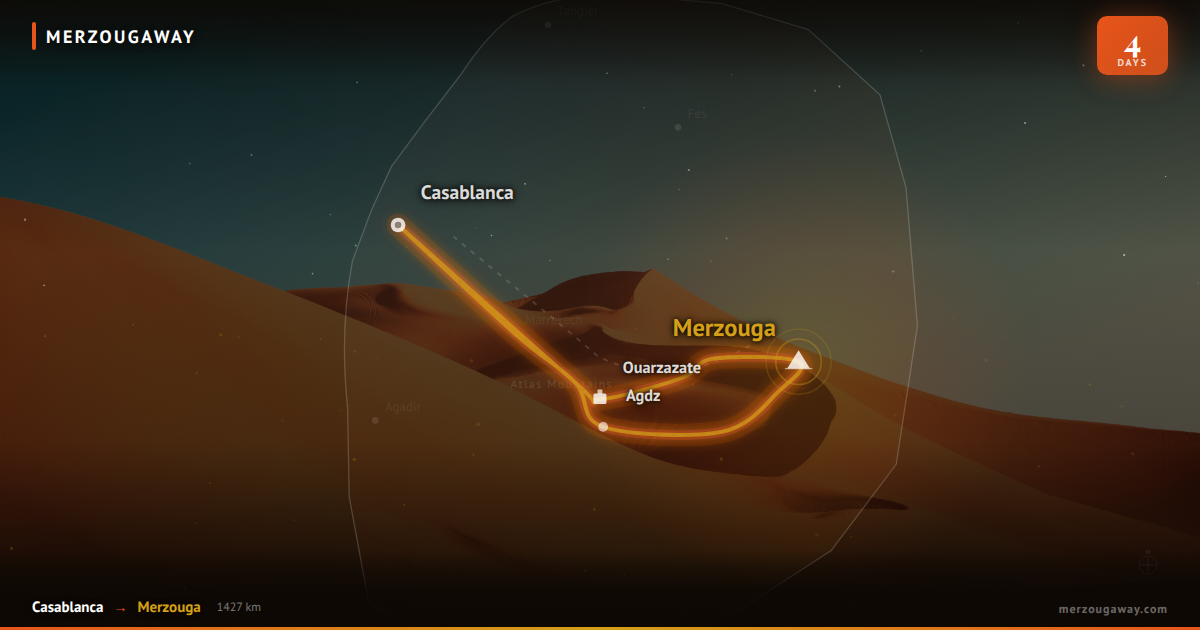
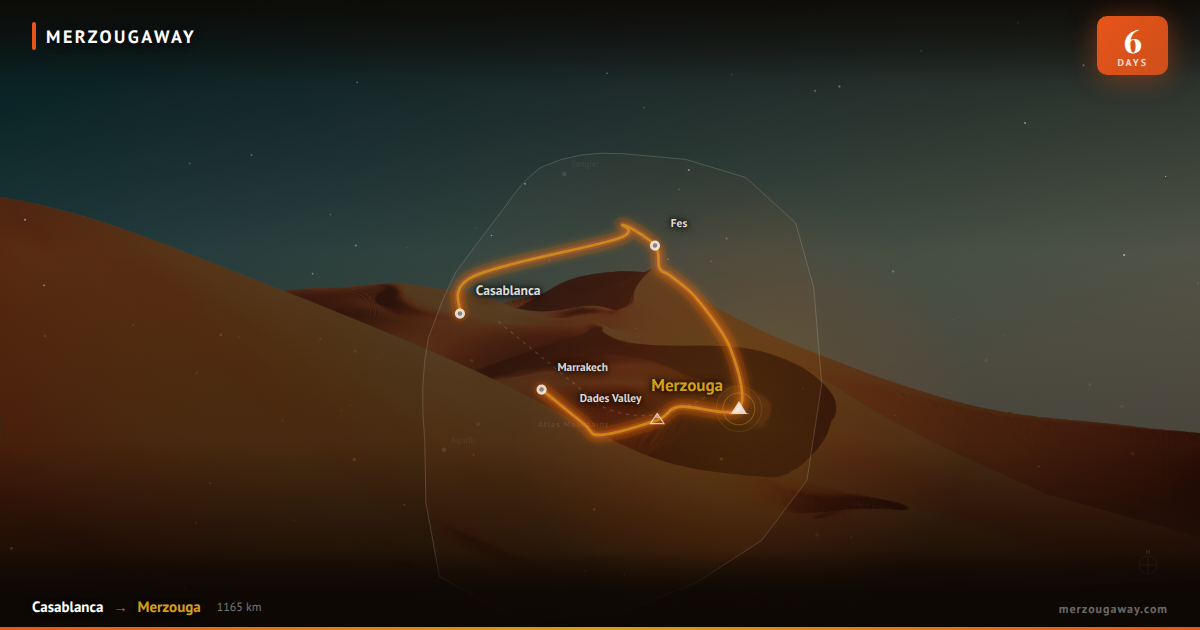
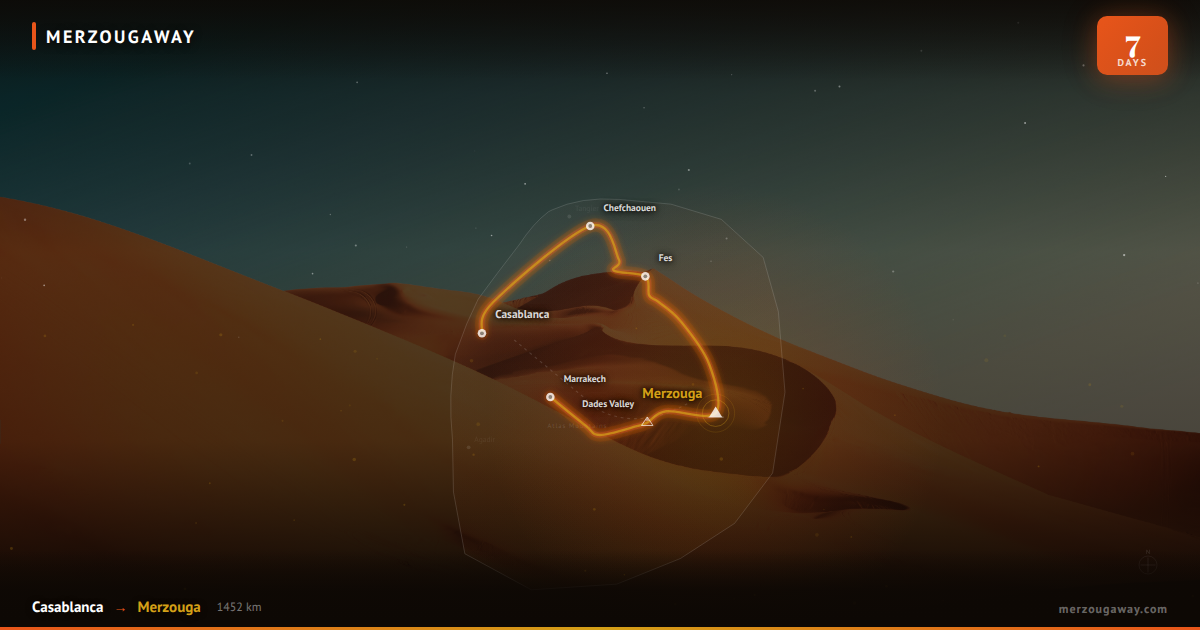
Casablanca doesn't connect directly to the Sahara — there's no realistic day-trip desert option from here, and reaching Merzouga means a proper multi-day journey via Marrakech or Fez. If the desert is on your itinerary at all, it's worth planning it as its own leg rather than squeezing it in; our 3-day Marrakech to Merzouga tour is the most straightforward route into the Sahara if Casablanca is your starting point for a wider Morocco trip.
Plan Your Casablanca Stay
- Email: hello@merzougaway.com
- WhatsApp: +212 675 203 319 / +212 668 534 981
Our local team can help build out a Casablanca stay alongside a wider Morocco itinerary, including the desert leg if you want one.
This guide is regularly updated. Last updated: July 2026.

MerzougaWay Team
We are a passionate team of local guides dedicated to sharing the beauty and culture of our home, Morocco. Our journey began with a simple desire to offer authentic, memorable experiences that go beyond the typical tourist trails.