Marrakech to Merzouga Camel Tour: Complete Desert Trekking Guide 2026
What camel trekking on a Marrakech-to-Merzouga desert tour actually involves — how long it lasts, what it feels like, how to prepare, and honest answers to the questions first-timers ask most.
Camels have carried people across the Sahara for well over a thousand years, and riding one out to a desert camp near Merzouga is still, for most travelers, the single moment that defines a Morocco desert trip. It's worth knowing what to actually expect, though — the reality is gentler and shorter than the mental image of an epic desert crossing might suggest, and that's genuinely fine.
[!NOTE] Fast-Facts & Direct Answer Summary
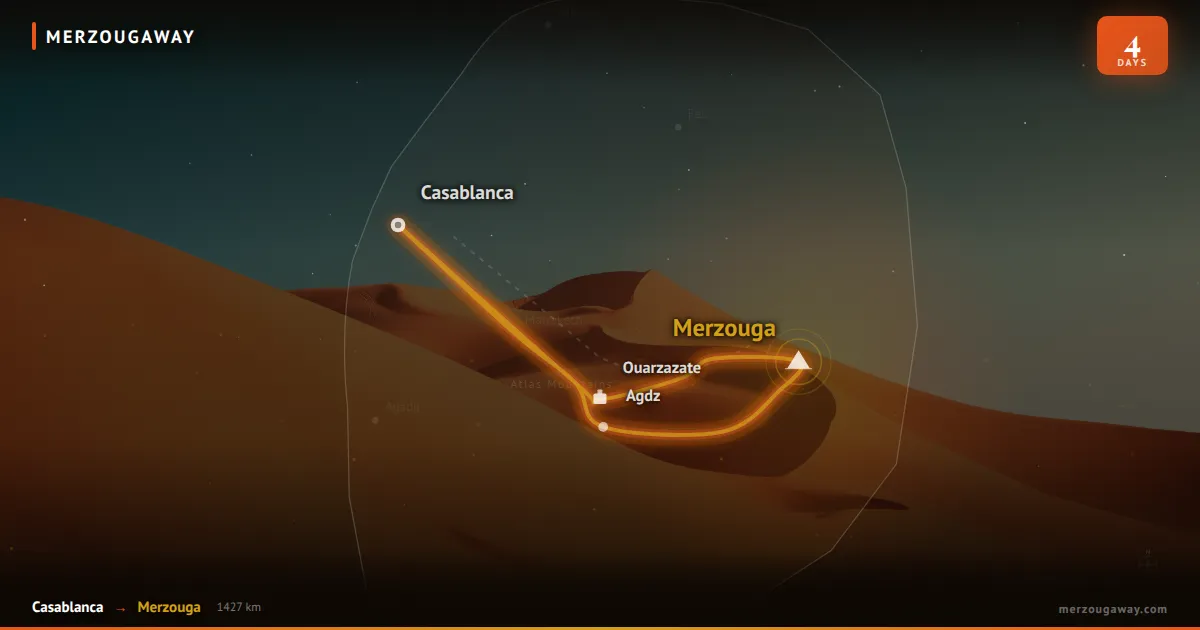
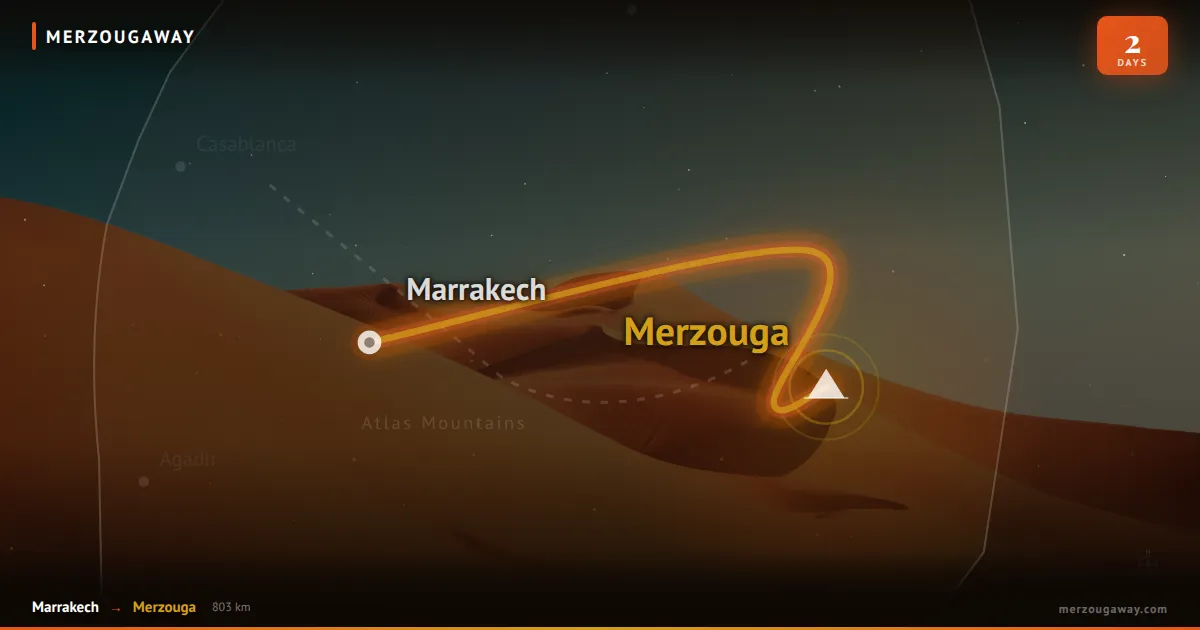
A desert journey from Marrakech to Merzouga spans ~560 km across the High Atlas Mountains (Tizi n'Tichka pass, 2,260m). The drive takes 9–10 hours, making a 3-Day or 4-Day tour the minimum recommended duration for safety and comfort.
- Recommended Duration: 3 Days (Classic) or 4 Days (Relaxed & In-Depth)
- Primary Road Routes: N9 across the Atlas ➔ N10 through Dadès Valley ➔ N13 to Erg Chebbi
- Realistic Pricing: 1,800–4,500 MAD (€180–€420) per person for private tours with luxury desert camp
- Key Highlights: Aït Benhaddou UNESCO ksar, Todra Gorge canyons, sunset camel trek, and Erg Chebbi dunes
- Local Expert Tip: Avoid 2-day Merzouga tours (18–20 hours driving in 48h). Opt for Agafay Desert if you only have 1–2 days.
How long a camel trek actually lasts
On a standard private tour, the camel trek is the ride from the edge of the dunes out to your desert camp, timed to arrive on a high ridge right around sunset — typically an hour to two hours each way, not a multi-hour expedition. If sunrise trekking is offered the next morning, it's a similar short ride back out to catch the light before breakfast. Longer treks exist as a specialty option for travelers who specifically want more time in the saddle, but for the vast majority of people doing a 3- to 5-day Marrakech-to-Merzouga tour, the standard sunset-and-optional-sunrise pattern is what you'll actually do — and it's enough to get the full experience without turning it into an endurance activity.
What it actually feels like
The pace is a slow, steady walk led by a local handler, not something you control yourself — you sit, hold on, and let the camel do the work. The first twenty minutes or so can feel a little unbalanced if you've never ridden one before, but most people settle into the rhythm quickly, and by the time you're a few dunes in it starts to feel more like a slow, meditative way to watch the landscape change than a physical challenge. Where it does catch people off guard is afterward: inner thighs, lower back, and hip flexors are the areas that tend to be sore the next day, simply from using muscles in an unfamiliar way. It's mild, it's normal, and it's gone within a few days — worth expecting rather than worrying about.
Getting ready beforehand
You don't need to train for this the way you might for a hike, but a bit of general preparation makes the first ride more comfortable: regular walking in the weeks before your trip, some basic stretching (hamstrings and hips especially), and going in with the expectation that some soreness afterward is normal rather than a sign anything went wrong. If you have a bad back, are pregnant, or have had recent surgery, it's worth mentioning to your guide beforehand — most people can still ride, but a shorter trek or riding at a gentler pace is usually the sensible adjustment.
What to bring
Loose, breathable clothing that covers your legs (both for sun protection and out of respect for local custom), a hat, sunglasses, and high-SPF sunscreen — the desert sun is stronger than it looks even outside summer. Bring more water than you think you need. Worn-in shoes rather than anything stiff or new, since you'll be walking in sand around camp as well as riding. A light jacket for the evening temperature drop is worth packing even if the day was hot. Leave valuables and anything you're precious about behind — sand gets everywhere, and there's no need to risk it.
Etiquette and safety
Camel handlers are experienced and the animals are used to tourists, so this is a genuinely low-risk activity when run by an established operator — falls are rare, and your handler adjusts pace for nervous or first-time riders without being asked. The basic etiquette is common sense: follow the handler's instructions, don't make sudden movements, and don't kick or startle the animal. Tipping the camel handler directly (a modest amount, in cash) is customary and appreciated, separate from any tip you give your main guide.
Dromedary Physiology & Animal Welfare Standards
The camels used for desert trekking throughout Merzouga are Arabian dromedaries (Camelus dromedarius), distinguished by their single fat-storing hump. These resilient animals have supported trans-Saharan trade for millennia, thanks to evolutionary adaptations suited to desert survival:
- Padded Feet: Dromedaries do not have hard hooves. Instead, they walk on wide, flexible two-toed pads connected by an elastic web. This distributes their weight evenly and keeps them from sinking into soft sand.
- Nictitating Eye Membranes: A clear third eyelid and a double row of interlocking eyelashes protect their eyes during sandstorms while maintaining visibility.
- Muscular Nostrils: Dromedaries can close their nostrils completely to block out blowing sand.
- Fat-Storage Hump: The hump contains up to 35 kilograms of dense adipose tissue, rather than water. Metabolizing this fat yields both energy and water, allowing them to travel for days in high heat without drinking.
At MerzougaWay, animal welfare is a foundational commitment. Our camel team (jamala) are indigenous nomadic Berbers from the Ait Khebbach tribe who raise their herds with care. Our working camels work limited shifts with regular rest rotations, carry strictly regulated weight loads, and graze freely across desert scrub pastures between tours.
The Riding Experience: Posture, Mounting, and Movement
Riding a dromedary feels very different from riding a horse. The camel stands between 1.8 and 2.1 meters tall at the shoulder, meaning the mounting and dismounting process requires a few specific techniques:
+---------------------+---------------------------------------------------------------+
| Phase               | Rider Action & Technique                                      |
+---------------------+---------------------------------------------------------------+
| 1. Mounting Position| Swing your leg over the padded wool saddle (*rahla*) while the|
|                     | camel rests calmly on the sand with legs folded underneath.   |
+---------------------+---------------------------------------------------------------+
| 2. Rear Legs Rise   | Hold the metal saddle handle firmly and **lean back**. As the |
|                     | camel extends its long hind legs, your body pitches forward.  |
+---------------------+---------------------------------------------------------------+
| 3. Front Legs Rise  | **Lean forward** slightly as the front legs straighten to an  |
|                     | upright position. Keep a relaxed, balanced grip on the reins. |
+---------------------+---------------------------------------------------------------+
| 4. The Rhythmic Gait| Camels pace by moving both legs on one side simultaneously.   |
|                     | Relax your core and sway gently with the rolling motion.      |
+---------------------+---------------------------------------------------------------+
| 5. Dismounting      | Reverse the process: **lean back** as the front knees drop,  |
|                     | then remain upright as the rear legs fold down onto the sand. |
+---------------------+---------------------------------------------------------------+
The key to a comfortable ride is relaxing your lower back and letting your hips sway naturally with the camel's rolling gait. Wearing flexible pants or linen trousers prevents chafing against the woven wool saddle pad.
Gear Checklist: Dressing for Camel Trekking
A successful camel trek requires the right clothing for sun, wind, and blowing sand:
+-------------------+---------------------------+-----------------------------------+
| Gear Item         | Recommended Specification | Functional Purpose                |
+-------------------+---------------------------+-----------------------------------+
| Headwear          | 4-meter cotton *cheche*   | Shields neck, ears, and mouth     |
|                   | (Berber turban)           | from blowing sand and sun         |
+-------------------+---------------------------+-----------------------------------+
| Eyewear           | Polarized sunglasses      | Blocks intense glare reflected off|
|                   | with UV400 protection     | high-quartz golden dune slopes    |
+-------------------+---------------------------+-----------------------------------+
| Trousers          | Breathable long trousers  | Prevents friction chafing against |
|                   | (linen, cotton, or cargo) | coarse wool saddles (no shorts!)  |
+-------------------+---------------------------+-----------------------------------+
| Footwear          | Closed-toe trail shoes    | Comfortable for climbing steep,   |
|                   | or secure sneakers        | slip-face sand dunes on foot      |
+-------------------+---------------------------+-----------------------------------+
| Camera Protection | Sealed dry-bag or sleeve  | Protects camera sensors and phone |
|                   |                           | ports from fine abrasive silica   |
+-------------------+---------------------------+-----------------------------------+
A traditional cotton cheche (turban) is superior to a baseball cap in the dunes. Your camel guide will gladly show you how to wrap the fabric around your head and lower face, creating a breathable barrier that keeps out desert dust during afternoon breezes.
Trans-Saharan Trade Caravans: The Ancient Heritage of the Dromedary
Riding a camel through the dunes of Erg Chebbi connects you to an ancient history of trans-Saharan trade that shaped North African civilization:
+-----------------------+-----------------------------+---------------------------------+
| Historical Route      | Key Trading Commodities     | Journey Duration                |
+-----------------------+-----------------------------+---------------------------------+
| Timbuktu to           | Gold dust, ivory, ostrich   | 52 days across open Sahara      |
| Sijilmassa (Rissani)  | feathers, Saharan rock salt | using dromedary caravans        |
+-----------------------+-----------------------------+---------------------------------+
| Sijilmassa to Fes     | Silks, olive oil, glazed    | 12 to 14 days over the Middle   |
| & Mediterranean Coast | ceramics, dates, leather    | Atlas mountain passes           |
+-----------------------+-----------------------------+---------------------------------+
The ancient city of Sijilmassa (whose ruins lie beside modern-day Rissani, just north of Merzouga) was the northern terminus of the great trans-Saharan gold trade. Historic caravans comprised thousands of laden camels led by experienced Tuareg and Berber desert navigators (takshif). These navigators relied on star positions, prevailing wind patterns, and dune formations to cross waterless desert expanses.
When you mount your camel at the base of Erg Chebbi, your indigenous Berber guide follows traditional pathways through the sand ridges, honoring centuries-old desert traditions passed down through generations.
Sandboarding on the Erg Chebbi Slopes
Sandboarding has become one of the most exciting activities during a desert camel trek. Erg Chebbi offers slopes rising up to 150 meters, creating ideal conditions for sliding down the sand:
+-------------------+-----------------------------------------------------------------+
| Sandboarding Step | Proper Technique for Dune Gliding                               |
+-------------------+-----------------------------------------------------------------+
| Wax Application   | Rub candle wax or parafin onto the board base to reduce friction|
|                   | against quartz sand crystals.                                   |
+-------------------+-----------------------------------------------------------------+
| Foot Positioning  | Strap your feet securely into the soft bindings; keep knees     |
|                   | slightly bent and weight centered over your back foot.          |
+-------------------+-----------------------------------------------------------------+
| Ridge Selection   | Choose the steep, soft slip-face of the dune rather than the    |
|                   | windward packed slope for smooth, safe gliding.                 |
+-------------------+-----------------------------------------------------------------+
| Braking & Falling | To slow down, lean gently into the slope; if falling, roll onto |
|                   | the soft sand and avoid sticking your hands straight out.       |
+-------------------+-----------------------------------------------------------------+
Sandboarding equipment is provided complimentary to all MerzougaWay guests. For travelers who prefer not to stand upright, boards can also be ridden like a traditional toboggan or sled while seated.
Sunrise vs. Sunset Camel Treks: What to Expect
A complete Sahara experience features both evening and morning camel treks:
+-----------------------+-----------------------------+-----------------------------+
| Feature               | Sunset Camel Trek           | Sunrise Camel Trek          |
+-----------------------+-----------------------------+-----------------------------+
| Timing                | 17:00 to 18:30              | 06:15 to 07:15              |
| Light Characteristics | Warm golden amber glow;     | Crisp pastel pink & violet; |
|                       | long dramatic shadows       | clear clean horizontal rays |
| Sand Temperature      | Warm underfoot from the sun | Cool, firm sand with crisp  |
|                       |                             | morning wind ripples        |
| Route Direction       | Heading from desert edge    | Heading from deep camp back |
|                       | inward toward luxury camp   | to village base lodge       |
| Atmosphere            | Anticipation, celebratory,  | Serene, quiet, reflective,  |
|                       | energetic evening mood      | peaceful morning fresh air  |
+-----------------------+-----------------------------+-----------------------------+
During the sunset trek, you ride from the base meeting point into the dunes, dismounting atop a high dune crest to watch the sun sink below the horizon in a wash of gold and crimson. The morning trek takes place in quiet dawn twilight, with the cool desert breeze making the ride back remarkably peaceful.
Alternative 4x4 Access for Non-Riders
If members of your party prefer not to ride camels due to back issues, joint stiffness, or mobility concerns, MerzougaWay provides seamless 4x4 luxury transport directly to camp. While the camel caravan rides across the high ridges, non-riders travel comfortably in an air-conditioned Toyota Land Cruiser across the level desert sand tracks, arriving at the camp lounge in 15 minutes to welcome the camel riders with fresh mint tea upon arrival.
Hydration and Wellness in the Dunes
Camel trekking through arid desert sands requires mindful hydration:
- Electrolyte Balance: Dry desert air accelerates sweat evaporation before you feel thirsty. Drink plenty of water and consider adding an electrolyte tablet or pinch of salt and lemon to your water bottle.
- Sunset Mint Tea Ceremony: Upon arriving at camp, your Berber hosts welcome you with piping hot gunpowder green tea brewed with fresh spearmint leaves (hierbabuena) and cane sugar. Served in traditional glass tumblers, this hot beverage helps your body regulate internal temperature naturally.
- Post-Trek Stretching: Riding a camel works your inner thigh and core muscles. Doing a few simple leg and hip stretches on the soft sand outside your tent helps prevent stiffness the next morning.
Caring for Your Gear After the Desert Trek
Fine Saharan sand tends to settle into clothing seams, camera bags, and footwear:
- Footwear Cleaning: Invert your shoes and tap them firmly outside your tent to shake out sand before stepping onto the camp carpets. Allow wet sand to dry completely before brushing it off.
- Washing Fabrics: Shake shirts and trousers vigorously outdoors before placing them in the laundry. Run desert trekking clothes on a gentle cold cycle to remove fine silica without embedding dust into the fabric fibers.
Frequently Asked Questions (FAQ)
Is riding a camel difficult or dangerous for beginners?
Not at all. Desert dromedaries are docile, sure-footed animals led in single file by experienced Berber camel handlers. The only sudden movement is when the camel stands up or kneels down; simply hold tight to the saddle handle and lean backward.
How long does the camel ride into the Merzouga desert camp take?
The sunset camel trek typically takes 1 to 1.5 hours each way across the dunes of Erg Chebbi, timed perfectly to arrive at the camp right as the sun dips below the horizon.
What should I wear for a camel trek in Erg Chebbi?
Wear long, breathable trousers to prevent chafing against the saddle, closed shoes or sneakers, sunglasses, and a traditional cotton desert scarf (cheche) to protect your face from sun and blowing sand.
What if someone in our group cannot or does not want to ride a camel?
Guests who prefer not to ride camels can be transferred directly to the desert camp inside a comfortable, air-conditioned 4x4 vehicle over the sand at no extra charge.
Sahara Route & Drive-Time Estimator
Calculate realistic driving hours across the High Atlas (Tizi n'Tichka pass), compare scenic stops (Dadès, Todra, Ziz), and plan your custom desert itinerary.

MerzougaWay Team
We are a passionate team of local guides dedicated to sharing the beauty and culture of our home, Morocco. Our journey began with a simple desire to offer authentic, memorable experiences that go beyond the typical tourist trails.