Marrakech to Merzouga to Agadir: Multi-City Desert Route Guide
Planning a Marrakech-Merzouga-Agadir loop: why the desert-to-coast leg is the hard part, realistic timing, and when this route is worth the driving.
This route strings together Morocco's three signature experiences — the medina energy of Marrakech, the dunes of Merzouga, and the Atlantic coast at Agadir — into one loop covering roughly 900-950 km. It's a genuinely appealing combination on paper: city, desert, and beach in a single trip. The honest caveat is the middle-to-end leg. Merzouga sits inland to the south, Agadir is on the coast to the southwest, so getting between them isn't a short hop — it's a real driving day, and that's the part of this itinerary worth planning around rather than glossing over.
[!NOTE] Fast-Facts & Direct Answer Summary
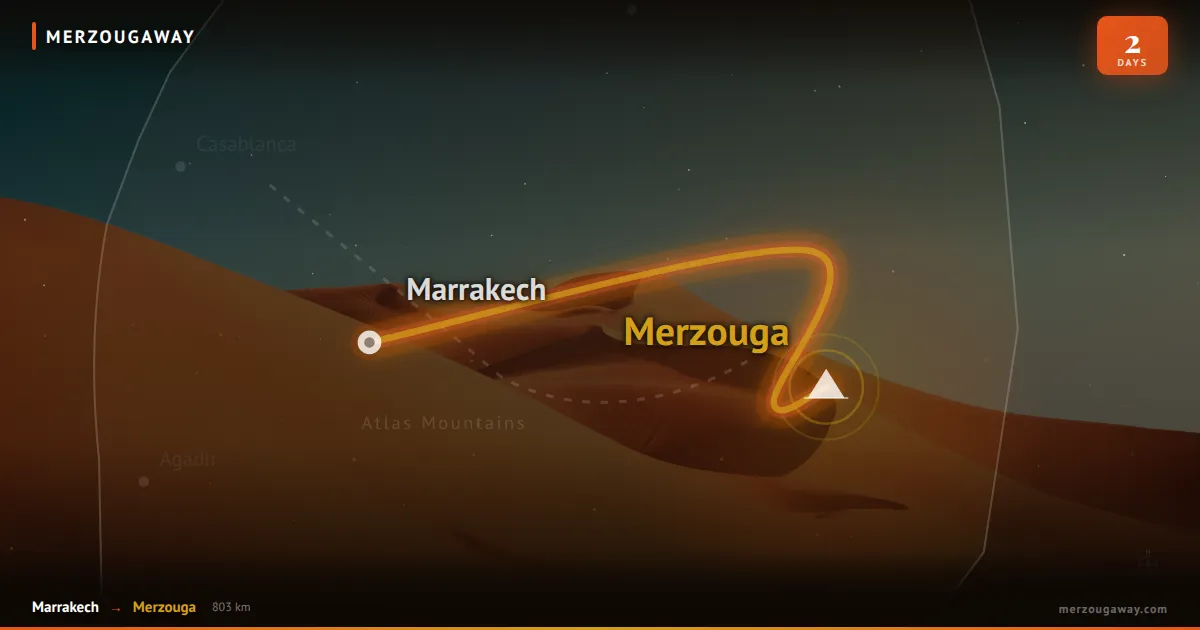
A desert journey from Marrakech to Merzouga spans ~560 km across the High Atlas Mountains (Tizi n'Tichka pass, 2,260m). The drive takes 9–10 hours, making a 3-Day or 4-Day tour the minimum recommended duration for safety and comfort.
- Recommended Duration: 3 Days (Classic) or 4 Days (Relaxed & In-Depth)
- Primary Road Routes: N9 across the Atlas ➔ N10 through Dadès Valley ➔ N13 to Erg Chebbi
- Realistic Pricing: 1,800–4,500 MAD (€180–€420) per person for private tours with luxury desert camp
- Key Highlights: Aït Benhaddou UNESCO ksar, Todra Gorge canyons, sunset camel trek, and Erg Chebbi dunes
- Local Expert Tip: Avoid 2-day Merzouga tours (18–20 hours driving in 48h). Opt for Agafay Desert if you only have 1–2 days.
What you're signing up for
Done at a reasonable pace, this is a 6-7 day trip; five days is possible but rushed enough that you're mostly seeing landscapes through a car window rather than experiencing any one place properly. The appeal is real — three distinct settings, good photography at every stage, and each leg can technically be booked on its own if your schedule doesn't allow the full loop. The tradeoff is also real: over the course of five or six days you're looking at something like 11-13 hours of driving in total, several of the transitions eat most of a day, and by the time you reach the coast you'll likely feel the accumulated travel fatigue. That's fine if you go in expecting it.
Marrakech first
A day or two here works well as the opening chapter — the medina, Jemaa el-Fna, Bahia Palace, a hammam if you want to unwind before the desert leg. A 3-4 star riad runs roughly €40-80 a night, and medina meals are inexpensive, typically €10-30 depending on where you eat. If you have a second day to spare in Marrakech, a trip out to the Agafay desert or a short Atlas Mountains hike is a good way to ease into the landscape shift before the real desert leg begins.
The drive to Merzouga
This is the leg most people already know is long: about 560 km and 9-10 hours behind the wheel, crossing the High Atlas via the Tizi n'Tichka pass. Treat it as its own full day rather than something to combine with sightseeing elsewhere — most itineraries leave Marrakech early, stop at Ait Ben Haddou for an hour or two along the way (the UNESCO kasbah is worth the detour on its own merits), break for lunch around Ouarzazate, and arrive in Merzouga with enough daylight left for a sunset camel trek into the dunes.
A full day in the desert
One night in Merzouga gets you a sunset trek, dinner at camp, and a sunrise — worthwhile, but a second full day opens things up considerably: time to properly explore the dunes, visit the natural spring at Hassi Labiad, take a 4x4 out into the desert in the afternoon, and stop by a Berber village for a more grounded sense of the region than the tourist camps alone provide. If Khamlia's Gnawa music tradition interests you, it's a worthwhile half-day detour from Merzouga itself.
Merzouga to Agadir: the part that needs real planning
This is where the route stops being a straight line. It's roughly 700 km and 11-12 hours of driving, running back through Ouarzazate and Taroudant before reaching the coast — genuinely the hardest single day of the whole loop, and worth splitting into two days with an overnight in Taroudant rather than pushing straight through. Taroudant is sometimes called "little Marrakech" for its own walled medina and red ramparts, and it's a perfectly pleasant place to break the journey rather than just a waypoint. If the drive itself sounds unappealing, it's worth checking whether a flight from Ouarzazate to Agadir makes more sense for your dates — it can save the better part of a day of fatigue for a modest cost.
Agadir: the reward at the end
After the desert crossing, Agadir's long sandy beach is exactly the kind of unstructured relaxation the trip needs by that point — mornings on the sand, fresh seafood for lunch, and if you want a change of pace from Agadir's more modern waterfront, Taghazout nearby has a laid-back surf-town feel that a lot of travelers end up preferring. With a extra day, Essaouira is a worthwhile add-on, though it's a further haul from this direction (upwards of 800 km and several hours if reached directly from Merzouga rather than via Marrakech), so it suits a 7-day version of this trip more than a tight 5-day one.
Getting the logistics right
The most straightforward way to handle this route is booking the Marrakech-Merzouga desert leg as one private multi-day tour — which is what we run — then arranging a separate transfer or flight on to Agadir and booking coastal accommodation independently once you're there. That splits a complex three-leg trip into two manageable bookings instead of trying to coordinate every transfer yourself. If you'd rather do it entirely independently, public buses do connect Marrakech, Ouarzazate, Rissani, and on toward Agadir, but that route trades comfort and time for a meaningfully lower cost, and suits travelers who are already comfortable navigating Moroccan bus logistics rather than first-timers.
Roughly what it costs
Budget travelers piecing this together independently can expect somewhere in the €350-450 range for six days covering basic accommodation, food, and transport. A mid-range trip — a proper 3-day desert tour plus a comfortable coastal stay — tends to land around €550-700. A more comfortable version with private transport throughout and nicer accommodation runs closer to €900-1,200. These are planning ranges, not quotes; actual costs shift with season, group size, and how far ahead you book.
When to go
October through April brings the most comfortable weather across all three stops — expect daytime temperatures in the 20-25°C range, though it's also the busiest and most expensive stretch of the year, so book accommodation ahead. May through September pushes desert temperatures into genuinely extreme territory (40°C and above isn't unusual in Merzouga), which limits outdoor activity to early morning and evening, though the coast at Agadir stays pleasant and the crowds thin out. If your trip overlaps with Ramadan, expect some restaurants to close during the day and services to run on a different rhythm — plan meals accordingly and be mindful of fasting hours in public.
What to pack
Between the desert nights and coastal days, layering matters more than any single item: lightweight, long-sleeved clothing for sun protection in the desert, a proper warm layer for the cold that sets in after dark at camp, swimwear and modest cover-ups for the beach, and comfortable walking shoes that also work in sand. Sunscreen and a hat aren't optional in either the desert or on the coast, and it's worth bringing any medication you might need for motion sickness on the mountain roads or an unsettled stomach, since options are limited once you're away from the bigger towns.
🗺️ The Southern Traverse: Connecting the Sahara to the Atlantic Ocean
Rather than returning north to Marrakech or Fes after visiting Erg Chebbi, travelers can embark on the Southern Traverse westward to Agadir and the Atlantic coast via highway N10:
┌─────────────────────────────────────────────────────────────────────────────────────────────┐
│                    MERZOUGA TO AGADIR (N10) WAYPOINTS & LOGISTICS                           │
├─────────────────────┬────────────┬─────────────┬────────────────┬───────────────────────────┤
│ ROUTE LEG / TOWN    │ DISTANCE   │ DRIVE TIME  │ ROAD ROUTE     │ KEY HIGHLIGHTS & SIGHTS   │
├─────────────────────┼────────────┼─────────────┼────────────────┼───────────────────────────┤
│ Merzouga ➔ Rissani  │ 35 km      │ 30 Mins     │ N13 (Paved)    │ Alawite dynastic cradle   │
├─────────────────────┼────────────┼─────────────┼────────────────┼───────────────────────────┤
│ Rissani ➔ N'Kob     │ 195 km     │ 2h 45m      │ N12 (Desert)   │ Acacia plains; 45 kasbahs │
├─────────────────────┼────────────┼─────────────┼────────────────┼───────────────────────────┤
│ N'Kob ➔ Agdz        │ 70 km      │ 1h 00m      │ N12 ➔ N9       │ Lush Draa Valley palms    │
├─────────────────────┼────────────┼─────────────┼────────────────┼───────────────────────────┤
│ Agdz ➔ Taznakht     │ 85 km      │ 1h 15m      │ N9 ➔ N10       │ Berber carpet weaving hub │
├─────────────────────┼────────────┼─────────────┼────────────────┼───────────────────────────┤
│ Taznakht ➔ Taliouine│ 85 km      │ 1h 15m      │ N10 (Mountain) │ Organic saffron harvest   │
├─────────────────────┼────────────┼─────────────┼────────────────┼───────────────────────────┤
│ Taliouine ➔ Taroud  │ 120 km     │ 1h 45m      │ N10 (Souss)    │ Ancient mud ramparts      │
├─────────────────────┼────────────┼─────────────┼────────────────┼───────────────────────────┤
│ Taroudant ➔ Agadir  │ 80 km      │ 1h 00m      │ A3 / N10       │ Argan groves; Atlantic    │
└─────────────────────┴────────────┴─────────────┴────────────────┴───────────────────────────┘
Cultural Treasures of the Anti-Atlas Corridor
- Taznakht Tribal Rug Cooperatives: Taznakht is Morocco's premier weaving center for indigenous Ouaouzguite carpets. Handcrafted by Berber women using 100% natural virgin sheep's wool, these carpets feature bold geometric patterns dyed with natural saffron, henna, and wild indigo. Visiting village workshops allows you to purchase certified museum-quality rugs directly from the weavers at fair producer prices.
- Taliouine Organic Saffron Fields: Nestled between the High Atlas and Anti-Atlas mountains at 1,500 meters elevation, Taliouine produces 90% of Morocco's saffron. In autumn, delicate purple crocus blossoms are picked by hand at dawn before the sun wilts the fragile crimson stigmas. Stop at the Coopérative Souktana du Safran to purchase certified organic Grade-1 saffron for 30 to 45 MAD per gram.
- Taroudant: The Ancient Walled Capital: Surrounded by 7.5 kilometers of 16th-century Saadian mud-brick ramparts, Taroudant ("Little Marrakech") offers an authentic, uncommercial medina experience. Hire an open-air horse carriage (calèche) to tour the ramparts, and explore the tranquil artisan souks without high-pressure sales pitches.
- The Dramatic Anti-Atlas Mountain Pass (Tizi n'Taghatine): Driving from Taznakht to Taliouine on highway N10 crosses the scenic mountain pass of Tizi n'Taghatine at 1,700 meters elevation. The landscape features dramatic volcanic basalt ridges, deep canyons, and terraced mountain villages where hardy almond and olive trees cling to rocky slopes.
- Relaxing in Coastal Agadir After Desert Travel: After days of dusty desert driving and camel trekking, arriving in Agadir provides refreshing coastal relaxation. Rejuvenate along the 10-kilometer golden sand beach, enjoy a traditional argan oil massage at a seaside spa, and feast on fresh Atlantic seafood at the beachfront marina promenade.
🚗 Vehicle Selection & Route Logistics for the High Atlas to Ocean Traverse
Traversing over 1,100 kilometers across contrasting Moroccan landscapes demands smart transportation planning:
┌─────────────────────────────────────────────────────────────────────────────────────────────┐
│                    MARRAKECH ➔ MERZOUGA ➔ AGADIR TRANSIT COMPARISON                         │
├─────────────────────┬──────────────┬──────────────┬───────────────┬─────────────────────────┤
│ TRANSIT METHOD      │ MOUNTAIN     │ DESERT TRACK │ LUGGAGE       │ OVERALL COMFORT &       │
│                     │ PASS SAFETY  │ CAPABILITY   │ SECURITY      │ PRACTICAL RATING        │
├─────────────────────┼──────────────┼──────────────┼───────────────┼─────────────────────────┤
│ Private 4x4 Tour    │ ★★★★★ (Top   │ ★★★★★ (Full  │ ★★★★★ (Locked │ ★★★★★ (Superior comfort,│
│ (MerzougaWay)       │ native pilot)│ dune access) │ rear cargo)   │ tailored pacing & stops)│
├─────────────────────┼──────────────┼──────────────┼───────────────┼─────────────────────────┤
│ Self-Drive Rental   │ ★★★☆☆ (Pass  │ ★☆☆☆☆ (Strict│ ★★★★☆ (Locked │ ★★★☆☆ (High driver      │
│ (2WD Compact Car)   │ fatigue/traps│ paved N13/N10│ in car trunk) │ fatigue across 1,100 km)│
├─────────────────────┼──────────────┼──────────────┼───────────────┼─────────────────────────┤
│ Public Intercity    │ ★★☆☆☆ (Rigid │ ☆☆☆☆☆ (No    │ ★★☆☆☆ (Bags on│ ★★☆☆☆ (Multiple depot   │
│ Buses (Supratours)  │ timetable)   │ camp access) │ roof/in hold) │ connections required)   │
└─────────────────────┴──────────────┴──────────────┴───────────────┴─────────────────────────┘- Overcoming Route Driver Fatigue: Driving from Marrakech across the High Atlas, south into the Sahara dunes, and then west across the Anti-Atlas to Agadir represents over 22 hours of behind-the-wheel mountain and desert navigation. Hiring a professional private 4x4 driver from MerzougaWay allows you to sit back, photograph stunning mountain gorges, and absorb cultural history while an expert driver handles road hazards.
- Packing for Extreme Altitude Shifts: In a single week, you will cross the sub-zero summits of Tizi n'Tichka (2,260m), ride camels across 30°C desert dunes, and swim in the 22°C Atlantic ocean waves. Pack versatile layers: breathable linen for desert afternoons, warm fleece and thermal layers for cold desert nights, and swimwear with a light windbreaker jacket for the Atlantic coast.
- The Tiout Oasis & Palm Grove Detour: When passing near Taroudant on the approach to Agadir, take an hour detour to the lush Tiout Oasis, home to over 20,000 date palms. Stroll through the shaded palm groves along historic stone irrigation canals, and visit the hilltop Kasbah Tiout (famous as a filming location for Fernandel's 1954 classic Ali Baba and the 40 Thieves) for sweeping panoramas over the Souss valley. Savor fresh mint tea and homemade tagines on the scenic terrace before completing the final hour of driving down the Atlantic motorway into Agadir, reflecting on an epic journey that spanned snowcapped mountains, golden desert sands, and the crashing waves of the ocean. Whether traveling by private 4x4 or self-driving, this southern traverse connects Morocco's greatest cultural and natural treasures in one seamless, unforgettable holiday circuit. Take your time at each cultural waypoint, sample fresh local specialties along the road, and savor the dramatic contrasts of Morocco's south.
Frequently Asked Questions (FAQ)
What is the driving distance from Merzouga to Agadir?
The distance from Merzouga to Agadir is approximately 660 km (410 miles) via highway N12 and N10. It takes roughly 9 to 10 hours of driving, making an overnight stop in Taroudant or Taznakht highly recommended.
Which route direction is better: Marrakech-Merzouga-Agadir or Agadir-Merzouga-Marrakech?
Both directions work equally well. Most travelers choose Marrakech to Merzouga to Agadir so they can finish their desert adventure with relaxing oceanfront days and surfing on the Atlantic coast.
How many days should I allocate for a Marrakech-Merzouga-Agadir loop?
Plan for a minimum of 5 to 6 days. This allows for 3 days to reach and explore the Sahara dunes, 1 day for the scenic southern transit via the saffron capital of Taliouine and Taroudant, and 1–2 days relaxing in Agadir.
Planning this route
A workable shape for most people: two days in Marrakech, two days around Merzouga, and the remainder on the coast at Agadir or nearby. Contact us and we can help put together the desert leg as a private tour and point you toward sensible options for the coastal transfer, rather than you having to coordinate every piece separately.
WhatsApp: +212675203319 / +212668534981 Email: [email protected]
Last updated: August 2026.
Sahara Route & Drive-Time Estimator
Calculate realistic driving hours across the High Atlas (Tizi n'Tichka pass), compare scenic stops (Dadès, Todra, Ziz), and plan your custom desert itinerary.

MerzougaWay Team
We are a passionate team of local guides dedicated to sharing the beauty and culture of our home, Morocco. Our journey began with a simple desire to offer authentic, memorable experiences that go beyond the typical tourist trails.