Why is Marrakech Famous? Exploring the Red City's Global Allure
What actually makes Marrakech famous — its UNESCO-listed medina, Jemaa el-Fnaa, the souks, riads, gardens, and its role as gateway to the Atlas Mountains and the Sahara.
Marrakech is often called the "Red City" for the terracotta-pink walls that ring its old town, and it's one of Morocco's most recognizable destinations by a wide margin. Founded in the 11th century at the foot of the Atlas Mountains, it has drawn travelers for centuries on the strength of a fairly rare combination: a genuinely well-preserved medieval city that's also a living, working place rather than a museum piece. Its fame comes from several distinct things stacking together, not any single landmark.
[!NOTE] Fast-Facts & Direct Answer Summary
Marrakech is world-famous for its UNESCO-listed medieval Medina, the vibrant open-air theater of Jemaa el-Fnaa, traditional courtyard riads, stunning Islamic palaces (Bahia and Ben Youssef), Yves Saint Laurent's Jardin Majorelle, and its role as the premier historic gateway to the Atlas Mountains and Sahara Desert.
- Nicknames: The "Red City" (Al-Hamra) due to its salmon-pink clay and beaten-earth ramparts.
- Founded: 1062 AD by the Almoravid Berber leader Abu Bakr ibn Umar.
- UNESCO Status: Inscribed as a World Heritage Site in 1985; Jemaa el-Fnaa inscribed for Intangible Cultural Heritage in 2008.
- Key Highlights: Koutoubia Mosque, Bahia Palace, Saadian Tombs, Medina souks, Jardin Majorelle, and traditional hammams.
The walled medina itself, a UNESCO World Heritage Site since 1985, is the core of it — a labyrinth of narrow streets where medieval architecture and daily life run side by side. Inside it, the Koutoubia Mosque and its 77-meter minaret are the city's most recognizable silhouette, visible from most of the medina and much of the new town beyond it. The Ben Youssef Madrasa is one of the finest examples of Islamic architecture in Morocco, its courtyard covered in carved cedar and zellij tilework. The El Badi Palace, once described as the most magnificent palace in the Islamic world, now stands in ruins — stripped of its finery by a later sultan, but its scale is still striking. And the Saadian Tombs, a 16th-century royal necropolis, were sealed off and forgotten for centuries until a French aerial survey rediscovered them in 1917.
At the medina's center sits Jemaa el-Fnaa, arguably the most famous public square in Africa and a UNESCO-recognized cultural space in its own right — not because of any single building, but because of what happens in it. The square genuinely changes character through the day: orange juice stalls and the odd snake charmer in the morning, henna artists and street performers by afternoon, and by evening a transformation into a sprawling open-air food market thick with grilled-meat smoke, joined after dark by musicians and, less commonly than it once was, traditional storytellers. Branching off from it, the souks are organized loosely by trade — leather in one alley, dyed fabrics in another, jewelry and metalwork in a third — and wandering through them, half-lost, is as much the point as any specific purchase.
Marrakech is also where the riad — a traditional courtyard house built inward around a garden or fountain — became a hospitality format in its own right. Hundreds of old medina houses have been converted into small boutique hotels, often still family-run, and staying in one is a genuinely different experience from a standard hotel: an unassuming door on a narrow street opens onto an interior of carved cedar, zellij tile, and a quiet central courtyard that muffles the city outside almost completely.
For a desert city, Marrakech is also surprisingly green. The Majorelle Garden, with its saturated cobalt-blue buildings designed by French painter Jacques Majorelle and later restored by Yves Saint Laurent, is probably the best known, but the Menara Gardens and their large reflecting pool and the Agdal Gardens, historic royal orchards dating back centuries, are older and quieter alternatives. The Bahia Palace, a 19th-century vizier's residence built around a series of ornate courtyards, is arguably the most architecturally impressive of the city's palaces still standing.
Food is its own draw. Tagines — slow-cooked stews finished in their distinctive conical clay pots — and couscous, traditionally served on Fridays, anchor Moroccan cuisine, and mint tea functions less as a drink than as a ritual of hospitality, poured from height and offered to nearly every visitor. Street food ranges from snail soup stalls to fresh-baked bread, and cooking classes built around a market visit and a home-style tagine are a popular way to go a layer deeper than just eating.
The city's calendar adds to its reputation, too: the Marrakech International Film Festival draws an international film industry crowd most years, the Marrakech Biennale brings contemporary art across venues throughout the city, and the Popular Arts Festival showcases traditional Moroccan music and performance. (One thing worth correcting, since it's a common mix-up: the Rose Festival, celebrating the Valley of Roses' harvest, actually takes place in Kelaat M'Gouna in the Dades Valley, several hours from Marrakech — not in the city itself, however often the two get lumped together in general "Marrakech festivals" lists.)
Marrakech is also closely associated with hammam and spa culture — traditional steam-bathing rituals that are a genuine part of local life, not just a tourist add-on, alongside a large modern spa industry built around argan oil, a Morocco-specific product pressed from the kernels of the argan tree native to the region south of the city.
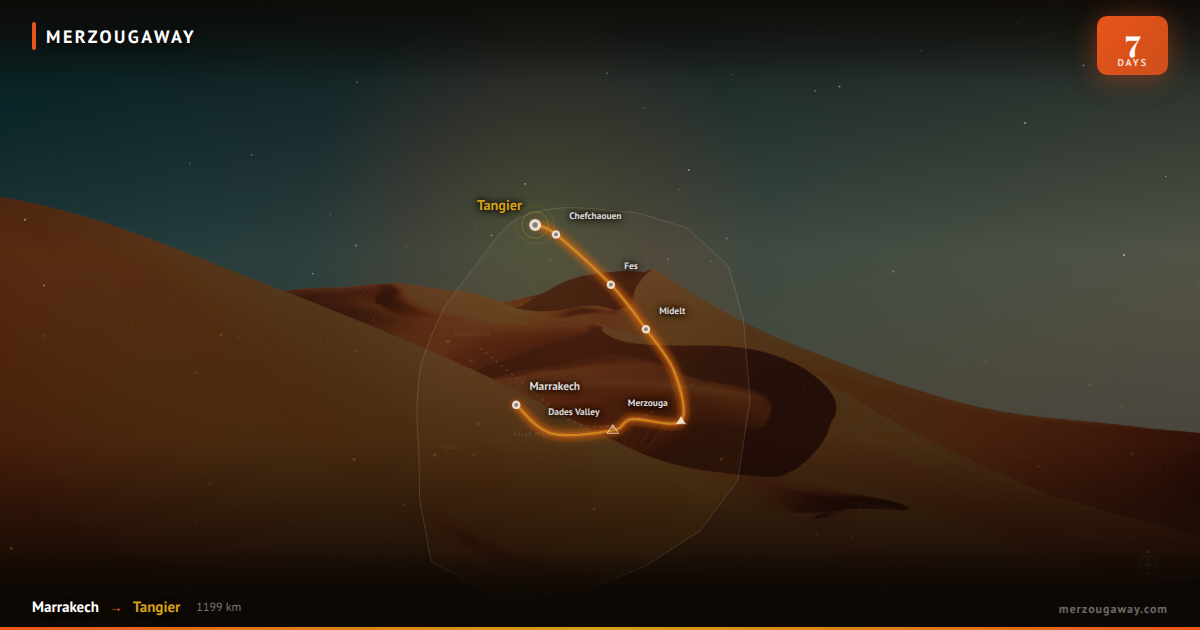
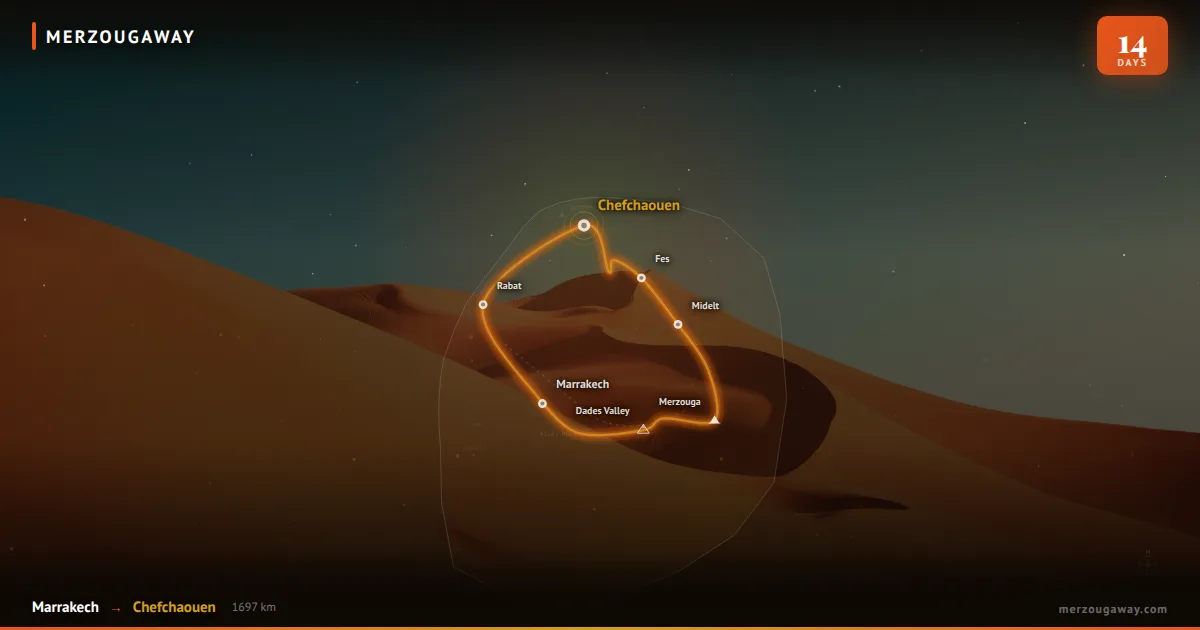
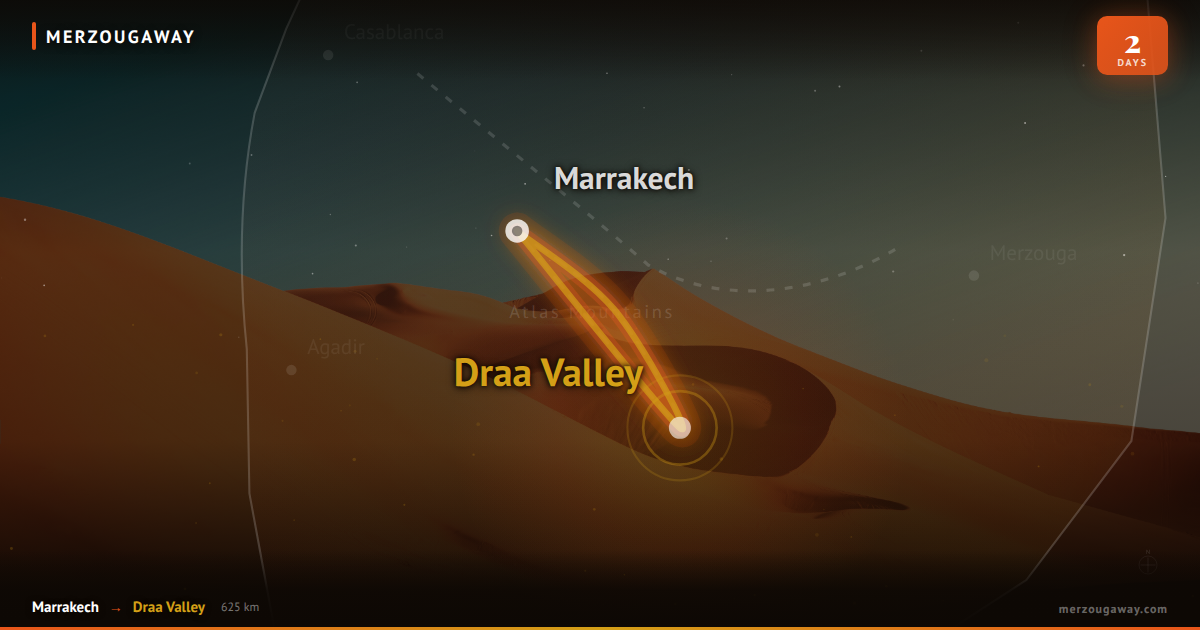
And finally, its location makes it the natural base for reaching the rest of southern and central Morocco: the Atlas Mountains for hiking and Berber villages are within a couple of hours, Ouzoud's waterfalls are a well-known day trip, and the Agafay desert sits close enough for a half-day out — with the true Sahara dunes near Merzouga a longer, multi-day trip further south for those with the time.
Frequently Asked Questions (FAQ)
Why is Marrakech called the Red City?
Marrakech is nicknamed the "Red City" (Al-Hamra or La Ville Rouge) because its 19 kilometers of ancient ramparts and historic medina buildings are constructed from red sandstone and local red clay mud (tabia). When the late-afternoon desert sun hits these walls, the entire city glows in deep terracotta and amber shades.
What is the most famous thing in Marrakech?
Jemaa el-Fnaa square is Marrakech's most famous attraction. It is a world-renowned open-air cultural arena where snake charmers, acrobats, Gnaoua musicians, herbalists, and open-fire barbecue food stalls create an unmatched sensory spectacle that has operated continuously for a millennium.
Why was Marrakech significant historically?
Founded in 1062 by the Almoravid dynasty, Marrakech served as an imperial capital for multiple Moroccan dynasties (Almoravids, Almohads, Saadians). It was the primary trading terminus for trans-Saharan camel caravans hauling gold, salt, and spices between sub-Saharan Africa, Timbuktu, and Mediterranean Europe.
What is the difference between Marrakech and Casablanca?
Casablanca is Morocco's economic, commercial, and financial powerhouse—a modern Atlantic coastal metropolis known for Art Deco architecture and the colossal Hassan II Mosque. Marrakech is Morocco's cultural, artisanal, and tourism capital, characterized by medieval mudbrick architecture, ancient souks, and traditional riads nestled beside the High Atlas Mountains.
Is Marrakech worth visiting?
Without question. Marrakech offers one of the most culturally immersive and sensory travel experiences on the planet. Its blend of historic palaces, exotic sensory souks, peaceful riad gardens, world-class gastronomy, and proximity to the Sahara Desert makes it Morocco's #1 must-visit city.
Plan your visit
We're MerzougaWay, a private tour operator based near the Sahara — happy to help build a Marrakech stay into a longer trip toward the desert if that's part of your plans.
WhatsApp: +212675203319 Email: [email protected]
Sahara Route & Drive-Time Estimator
Calculate realistic driving hours across the High Atlas (Tizi n'Tichka pass), compare scenic stops (Dadès, Todra, Ziz), and plan your custom desert itinerary.

MerzougaWay Team
We are a passionate team of local guides dedicated to sharing the beauty and culture of our home, Morocco. Our journey began with a simple desire to offer authentic, memorable experiences that go beyond the typical tourist trails.