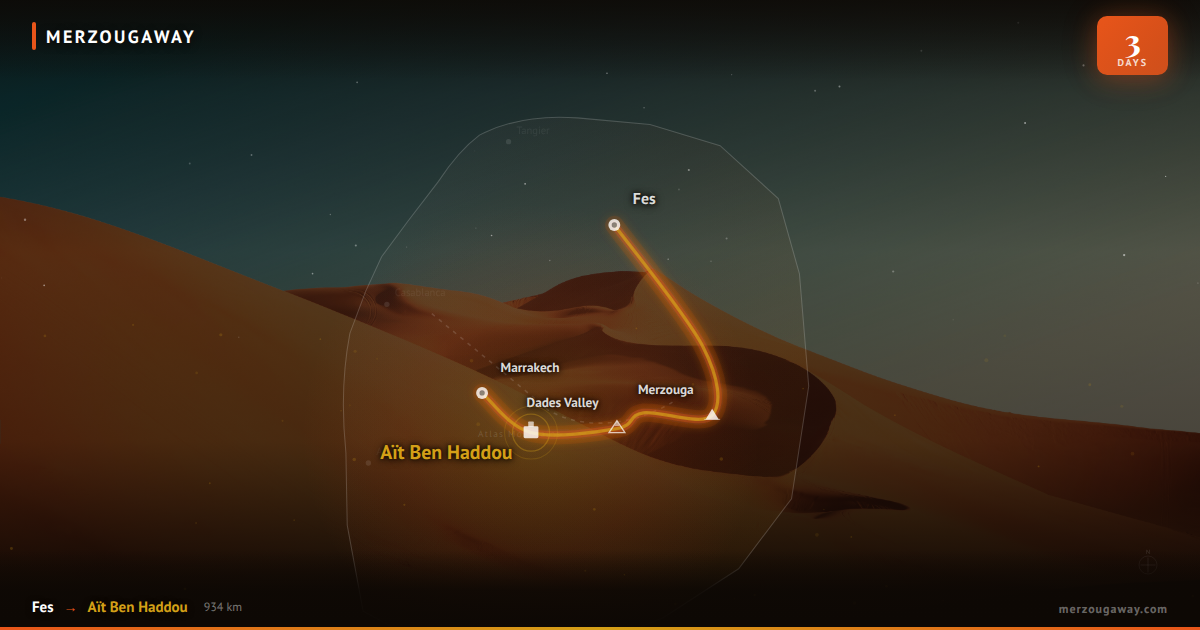
3-Day Fes to Merzouga to Marrakech One-Way Desert Tour
🌟 Overview
You've spent days losing yourself in the labyrinthine alleyways of Fes el-Bali — ducking beneath archways draped in drying fabric, following the call to prayer through the medina's ancient quarters, breathing in the mingled scents of spice stalls and tannery vats that have perfumed these streets for a thousand years. Now it's time to trade all of that for something entirely different: open sky, rolling dunes, and the vast silence of the Sahara. This three-day journey from Fes to Marrakech doesn't just connect two cities — it takes you on a southward plunge into the very soul of Morocco, through landscapes so varied they feel like different countries altogether.
Departing Fes in the early morning, you'll sense the journey shifting beneath you as the chaotic beauty of the imperial city gives way to pine-scented mountain air, cedar forest canopies, and the eerie cool of the Middle Atlas plateau. By afternoon, the world opens into the shimmering golden corridors of the Ziz Valley, and by sunset, you're standing at the edge of the Sahara itself — the great Erg Chebbi dunes catching the last light of day in shades of amber and rose. It is a full day that moves through geological time, each hour delivering a landscape more dramatic than the last. For travelers who arrived in Morocco via Tangier or Chefchaouen and made their way to Fes, this route feels like the natural continuation of a story that keeps getting richer.
By the time you cross the High Atlas Mountains on Day 3 and descend toward Marrakech, you'll arrive not as a tourist stepping off a plane, but as someone who has earned their understanding of this country — who has watched the Sahara sky fill with stars, who has walked the slot canyons of Todra Gorge, and who has stood before the ancient citadel of Aït Ben Haddou as a farewell to the desert world behind them. Marrakech becomes not merely a departure point but a grand finale: a sensory crescendo after three days of extraordinary landscapes. This is the one-way route that travels south before heading west, and there is nothing quite like it in North Africa (read our Marrakech vs Fes comparison for more on how the two cities compare).
Tour Highlights
- One-way route, zero backtracking — Every road is new, every horizon is a discovery. Fes to Marrakech with no repeated scenery and every kilometre earning its place in your itinerary.
- Middle Atlas cedar forests — Drive through the cool mountain plateau past Ifrane and Azrou, where ancient cedar trees tower above the road and wild Barbary macaques descend from the canopy to greet passing vehicles.
- Ziz Valley panoramic viewpoints — Pause at one of the most breathtaking natural viewpoints in Morocco, where the valley cuts deep into the limestone plateau in a cascade of palm groves, ksour, and river bends stretching toward the south.
- Sunset camel trek across Erg Chebbi — Mount your camel as the sun begins its descent and ride through the golden dunes in one of the most iconic experiences Morocco has to offer, the silence broken only by soft sand and the occasional Berber melody drifting from camp.
- Luxury desert camp overnight — Sleep beneath a canopy of thousands of stars in a beautifully furnished en-suite tent, with traditional Berber music, a lantern-lit dinner, and the cool desert air all around you.
- Todra Gorge canyon walk — Step between walls of rust-red rock that rise nearly 300 metres on either side, one of the most dramatic natural formations in all of Africa, best experienced in the clear morning light before the tour groups arrive.
- Dades Valley rock formations — Wind through the Valley of a Thousand Kasbahs, past sculpted monkey-fingers of rock and ancient earthen fortresses that have guarded this valley for centuries.
- Aït Ben Haddou, UNESCO World Heritage site — Stand before this extraordinary ksar as a farewell to the desert world, its layered clay towers reflecting the afternoon light before you begin the final ascent into the High Atlas.
- Tizi n'Tichka mountain pass — Cross Morocco's highest paved road at over 2,260 metres elevation, with panoramic views of snow-capped peaks and plunging valleys that make for an unforgettable final chapter before Marrakech.
Why Choose This Tour?
The most scenic way to reach Marrakech from Fes. Rather than taking a five-hour highway transfer northwest, this tour takes the long, spectacular way — south into the desert, then west and up over the mountains. The contrast between where you start (Fes, the medieval) and where you end (Marrakech, the vibrant) is made all the richer for everything you experience in between. You don't just connect two cities; you understand why they exist in the same country.
Perfect logistics for the south-to-north traveller. This route was designed for the traveller who entered Morocco from Europe or the Mediterranean — typically arriving through Tangier, spending time in Chefchaouen, and landing in Fes as their southern-most point before needing to return north or fly home from Marrakech. Rather than reversing your steps, this tour extends your adventure all the way to the Sahara before delivering you elegantly to Marrakech.
Experienced in this direction, the landscape tells a different story. When travellers do this route in reverse (Marrakech to Fes), they encounter the dunes as a crescendo. Coming from Fes, the desert is your middle chapter — a profound pause before the world opens again into the Atlas Mountains and the lush valley descents toward Marrakech. Aït Ben Haddou, experienced after two nights in the desert, feels like a farewell monument to the ancient world you're leaving behind, rather than a gateway to it. These emotional and visual rhythms make this direction feel genuinely distinct and deeply rewarding.
Private, flexible, and entirely your own. Our tours are not group buses with fixed timetables and rushed photo stops. Your driver-guide, your vehicle, your pace. If you want an extra hour in Todra Gorge, you stop. If you want to detour to the market at Rissani or spend time with musicians in Khamlia village, we make it happen. The itinerary is a framework, not a cage.
Seamless arrival in Marrakech. We drop you directly at your accommodation in Marrakech, whether that's a riad in the medina, a hotel near the Jemaa el-Fna, or an address near the airport for an early-morning departure. After three extraordinary days, the only thing left to do is decide whether you've seen enough of Morocco — or whether you need to come back.
Itinerary
Day 1 — Fes → Middle Atlas → Ziz Valley → Merzouga
Your driver will collect you from your Fes accommodation at 7:30 AM, giving you time for a final coffee in the medina before the city recedes in the rearview mirror. There is something quietly emotional about leaving Fes in the early morning — the medina waking slowly around you, the smell of bread from the communal ovens, the city that has been absorbing travellers for over a thousand years. You'll feel the energy shift the moment you clear the city gates and begin climbing into the Middle Atlas plateau.
The first major stop is the cedar forest near Azrou, roughly 90 minutes south of Fes. Here, the road winds through cathedral-like groves of ancient Atlas cedar, their bark silver-grey and their canopies filtering light in long green shafts. Pull over and within minutes, Barbary macaques will likely appear — Morocco's only native primate species, cheeky and sociable, accustomed to curious travellers. It's a world away from the medina you left this morning. Your guide will explain the conservation efforts in the region and the role these forests play in Morocco's water cycle.
From Azrou, the plateau descends gradually toward the pre-Saharan zone. The landscape transitions through scrubland and oasis towns as you approach one of the day's most rewarding viewpoints: the Ziz Valley gorge, where the land falls away dramatically into a lush palm-lined canyon that stretches south toward the desert. The contrast between the rocky plateau and the green ribbon of palms below is one of those views that photographs simply cannot prepare you for. Take your time here.
The final leg runs through Erfoud — gateway to the fossil-rich pre-Saharan plains — before the road straightens and the first dark shapes of dunes appear on the horizon. Arriving at Merzouga with the afternoon sun dropping toward the dunes, your timing is near-perfect. After a brief rest at your camp to freshen up and collect your senses, you'll mount a camel and begin the 45-minute sunset trek into the heart of Erg Chebbi. The dunes glow amber, then orange, then a deep burnished rose as the light fades. At the summit, the silence is complete. This is the Sahara. Dinner at camp is a traditional Moroccan feast eaten by lantern light, followed by live Berber music around a fire, and a sky so full of stars it can genuinely overwhelm first-time desert visitors.
Overnight: Luxury desert camp, en-suite tent, Merzouga.
Day 2 — Merzouga → Todra Gorge → Dades Valley
Rise before dawn. This is not negotiable — the Sahara sunrise is among the most singular experiences Morocco offers, and you're already in the best seat in the house. Your guide will wake you in time to climb the dune behind camp with a glass of mint tea in hand and watch the sky transition from deep indigo to violet to a spectacular cascade of gold. The cold desert air, the utter stillness, the gradual illumination of the dune sea below — this is the moment most travellers say they'll never forget.
After a relaxed breakfast at camp, the morning is yours to explore before departure. Sandboarding down the steep dune faces is popular (boards are provided), or you can arrange an optional 4x4 excursion into the deeper desert to visit nomadic families, the salt lake of Dayet Srji (seasonal home to flamingos), or the Gnawa musician village of Khamlia, where sub-Saharan rhythms have been kept alive for generations by descendents of ancient caravans. This is optional but highly recommended.
Departing Merzouga late-morning, the route heads northwest along the desert's edge before turning into the mountains. By midday, the walls of the Todra Gorge begin to close in — first gradually, then dramatically, until you're walking between sheer cliffs of rose-gold limestone that rise 290 metres on either side. The gorge is cool even on hot days, carved by millennia of river action, and the light that filters down into the narrow canyon creates extraordinary photographic conditions. Take at least an hour here to walk deeper into the gorge, past local vendors and rock climbers scaling the vertical faces above you.
The afternoon drive continues into the Dades Valley, known variously as the Valley of a Thousand Kasbahs and the Road of the Kasbahs. The landscape here is genuinely other-worldly: formations of reddish rock that local guides call "monkey fingers" jut from the earth at improbable angles, and ancient earthen kasbahs line the valley floor, many still inhabited, their pisé walls blending seamlessly with the geology around them. Arrive at your guesthouse in time for a sunset view over the valley. Dinner tonight is home-cooked Moroccan — tagine, harira, fresh-baked bread — and the evening is peaceful, the sound of the oued (river) below a gentle soundtrack to your rest.
Overnight: Guesthouse or boutique hotel, Dades Valley.
Day 3 — Dades Valley → Aït Ben Haddou → Marrakech
Wake to views that remind you why you chose the scenic route. The Dades Valley in morning light is all long shadows and terracotta warmth, the gorge walls catching the early sun while the valley floor is still in cool blue shade. Breakfast on the terrace, coffee in hand, is the correct way to begin this final day.
The morning drive continues along the Road of the Kasbahs through Skoura — famous for its palm grove and ancient rose cultivation — before reaching Ouarzazate, the so-called Hollywood of Africa, where dozens of major films and television series have been shot against its dramatic desert backdrop. There's no need to linger here, but your guide can point out the studios and their famous gate facades as you pass through.
Just 30 kilometres northwest of Ouarzazate sits the jewel of this entire route: Aït Ben Haddou. After two nights in the desert and a morning in the Dades Valley, arriving here feels profoundly different from encountering it as a first stop from Marrakech. You are leaving the desert world behind, and this UNESCO-listed ksar — its layered towers of pisé clay rising from the valley like something sculpted rather than built — stands as a monument to everything you've witnessed over the past three days. Walk across the ancient footbridge, climb through the narrow alleys to the granary at the summit, and take a long, slow look back at the landscape you're about to leave. The Sahara is behind you now. The mountains are ahead.
The ascent over the High Atlas via Tizi n'Tichka Pass is the final dramatic gesture of this tour — a winding, vertiginous climb to 2,260 metres above sea level, with panoramic views of snowfields, plunging gorges, and Berber villages clinging to impossibly steep slopes. The descent toward Marrakech brings a visible greening of the landscape, the air thickening with warmth and vegetation as you drop toward the Haouz Plain. By early evening, the ochre walls and minarets of Marrakech appear on the horizon. Your driver will take you directly to your accommodation, wherever that may be — riad, hotel, or airport transfer. The journey is complete.
Drop-off: Your Marrakech accommodation, approximately 6:00–7:00 PM.
Included & Not Included
- • Private air-conditioned 4x4 or minivan
- • Professional English-speaking driver/guide
- • 2 nights accommodation (Merzouga luxury desert camp, Dades area)
- • Daily breakfast; dinners included at desert and kasbah accommodations only
- • Sunset camel trek in Erg Chebbi dunes
- • Pick-up from Fes accommodation
- • Drop-off at your Marrakech accommodation
- • Sandboarding (optional)
- • Traditional Berber cheche (turban/scarf) — yours to keep
- • Polished fossil souvenir from Erfoud
- • Lunches and drinks
- • Entrance fees to monuments and attractions
- • Tips for guides and drivers
What Travelers Say
Unforgettable holiday. An 8-day itinerant tour in Morocco, including 3 days organized by Hamid - MerzougaWay: a route from Fes to Marrakech, spending a night in the desert and in Ouarzazate. Our guide Youssef, who drove us all along the way, was very professional and took us to try real experiences that not all tourists get to see. Breathtaking landscapes - Morocco amazed and fascinated us. We drove many miles but still traveled comfortably. Absolutely recommend it - they are a highly professional agency and managed to take us to unique places, like a Berber village in the desert where we were the only tourists. A spectacular, unforgettable experience.
What to Expect — Practical Information
Vehicle and driving comfort: All tours operate in private, air-conditioned 4x4 vehicles suitable for the varied terrain of this route, including mountain passes and desert pistes. Day 1 is the longest driving day (approximately 8–9 hours with stops), so an early start is important. Days 2 and 3 are more relaxed, with shorter transfers punctuated by longer stops at key sites.
Desert camp experience: Luxury camps at Erg Chebbi are properly furnished — expect real beds, en-suite bathrooms with hot showers, electricity for charging devices (in communal areas), and restaurant-quality meals. This is not roughing it. The experience is designed to be immersive without sacrificing comfort.
Camel trek: The sunset camel ride is approximately 45–60 minutes each way. It's a genuine highlight but can cause mild discomfort for those unaccustomed to riding. A 4x4 vehicle can take you directly to the camp if you'd prefer to skip it — there's no pressure either way.
Weather considerations: Desert nights are cold even in summer — temperatures can drop to 10°C or below after dark regardless of the season. Pack a warm layer even if you're visiting in July. The Tizi n'Tichka pass can occasionally be affected by snow in December–February, in which case routes may be adjusted.
Connectivity: Mobile signal is patchy throughout the desert and mountain regions. Your driver-guide will have emergency communication equipment, and camps typically have Wi-Fi in common areas. Consider this a welcome digital detox.
Frequently Asked Questions
Is the camel ride mandatory?
Not at all. The camel trek is a highlight for most guests and the most iconic way to arrive at camp, but it's entirely your choice. If you'd prefer a 4x4 transfer directly to the luxury camp, we arrange this without any fuss. The dunes, the stars, and the Berber dinner are exactly the same either way — you're not missing the experience, just the saddle.
What should I pack for this tour?
Pack in layers. Days can be warm to hot (especially in the desert and during the Tichka crossing in summer), but evenings and desert nights require a warm jacket or fleece. Essentials include: comfortable walking shoes with closed toes, a sun hat, high-SPF sunscreen, sunglasses, a reusable water bottle, and a small day bag. For the desert camp overnight, there's no need for a sleeping bag — tents are fully equipped with bedding and blankets. A headlamp is useful for moving around camp after dark.
Can the itinerary be customised?
Yes, and we actively encourage it. Our private tours are entirely flexible. Popular additions include: an extra night in Merzouga for a deeper desert experience, a detour to the Rissani souk (one of the most authentic markets in southern Morocco), a visit to the Gnawa musicians of Khamlia village, or an extended stay in Todra Gorge. If you have specific interests — photography, birding, Berber culture, cuisine — tell us in advance and we'll tailor accordingly.
What is the best time of year to do this tour?
October to May is ideal for this route. Spring (March–May) brings green valleys, mild desert temperatures, and clear mountain crossings, while autumn (October–November) offers warm days and comfortable evenings after the summer heat has broken. Winter (December–February) is beautiful for stargazing and quieter dunes, though desert nights are cold and the Tizi n'Tichka pass can occasionally see snow. Summer (June–September) is workable but demanding, with daytime desert temperatures regularly exceeding 40°C — still a rewarding trip with the right pacing, but not for travellers who prefer to avoid extreme heat.
Duration
3 Days, 2 Nights
Group Type
Private
Transportation
4×4 or Minibus
Payment Methods
PayPal
Bank Transfer (IBAN)
Only 10% deposit required
Email:
[email protected]What Our Travelers Say
Real reviews from Google and TripAdvisor
We traveled to Morocco in a group of 6 adults, including my parents, who are already seniors, in the middle of summer. For my family it was a leap of faith to trust an agency we found online for the first time, but it turned out to be a wonderful surprise. Hamid, the trip organizer, was very kind and attentive both before and throughout the whole tour. It was a fully personalized tour - we got to do everything we wanted, from visiting the Sahara to enjoying the beach. He always looked out for our comfort, especially my parents': comfortable transport, well-timed stops at places with restrooms, beautiful air-conditioned hotels, and varied, plentiful food. Thanks to his organization we were able to enjoy the trip with real peace of mind. It was a great experience we would absolutely recommend.
Last week I did a self-drive trip from Fes to Merzouga, leaving the car rental, the riad in Merzouga, the desert camp, and the guided desert activities all in the hands of MerzougaWay and Hamid, and I can only say that everything was perfectly organized, right on time. Thanks to everyone at the riad we stayed at and the desert camp, as well as the guides who joined us for the 4x4 experience, Berber culture, and the camel transfer. Thanks to Hamid and MerzougaWay for that quad-bike ride back to the riad from the camp - what an experience, riding a quad across the dunes early in the morning. If you're thinking of traveling to Merzouga, I definitely recommend Hamid as the organizer of your adventure.
Excellent!! We loved the tour. Thank you Hamid for everything. Everything well organized, the guide Eljo (Elhousain) was very attentive, highly recommend. Everything super clean, we had a great driver, we felt very safe with him. Unbeatable desert excursion. Thanks MerzougaWay!
Trustworthy tour agency. I wrote Hamid what I wanted and he just made it happen. He arranged everything so quick and smooth. We had a 3-day Merzouga tour from Marrakech. Said was our guide and he made me and my wife very comfortable. He took us from our riad and carried us in his modern 4x4 Toyota to magnificent places. He gave us the confidence to ask him whatever we wanted to do and wherever we wanted to drive - like old friends. He is open-minded and respectful. I recommend asking the agency for Said to be your driver. In the 3-day tour you cross the Atlas mountains, stay one night in a perfect hotel in Dades with great food, then stay one night in Erg Chebbi dunes in a luxury glamp camp. One night wasn't enough for a real desert experience - if you have time, take two nights in the desert.
Unforgettable holiday. An 8-day itinerant tour in Morocco, including 3 days organized by Hamid - MerzougaWay: a route from Fes to Marrakech, spending a night in the desert and in Ouarzazate. Our guide Youssef, who drove us all along the way, was very professional and took us to try real experiences that not all tourists get to see. Breathtaking landscapes - Morocco amazed and fascinated us. We drove many miles but still traveled comfortably. Absolutely recommend it - they are a highly professional agency and managed to take us to unique places, like a Berber village in the desert where we were the only tourists. A spectacular, unforgettable experience.
Morocco from the heart with MerzougaWay. Heartfelt congratulations to Hamid, who organized our trip impeccably - present, correct, and extremely helpful. A special mention for our driver Ali, who was by our side through 3 intense days toward the desert: attentive, polite, discreet, and a genuinely good, nice driver. We found snow in the Atlas range and then sun in Ait Ben Haddou, visited women's cooperatives working argan oil and roses, saw the Dades Gorges, and finally reached the Sahara dunes by camel before sleeping in a tented desert camp. 3 intense and exciting days. Next time in Morocco I'll rely on you again, inshallah!
Read more reviews on
Ready to Start Your Adventure?
Contact us today and let's plan your perfect Moroccan desert experience

MerzougaWay Team
We are a passionate team of local guides dedicated to sharing the beauty and culture of our home, Morocco. Our journey began with a simple desire to offer authentic, memorable experiences that go beyond the typical tourist trails.
Complete Your Morocco Trip
Two more services from our team, based in Marrakech.
You Might Also Like
Discover more amazing tours in Morocco
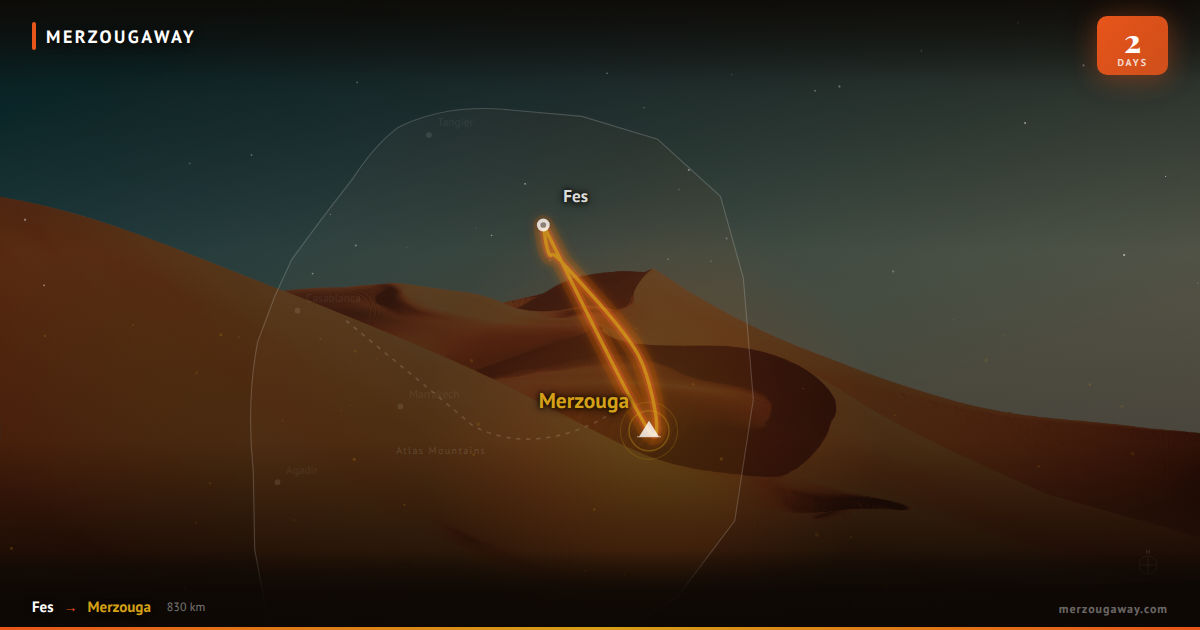
Express 2-Day Fes to Merzouga: Desert Adventure & Camel Trek
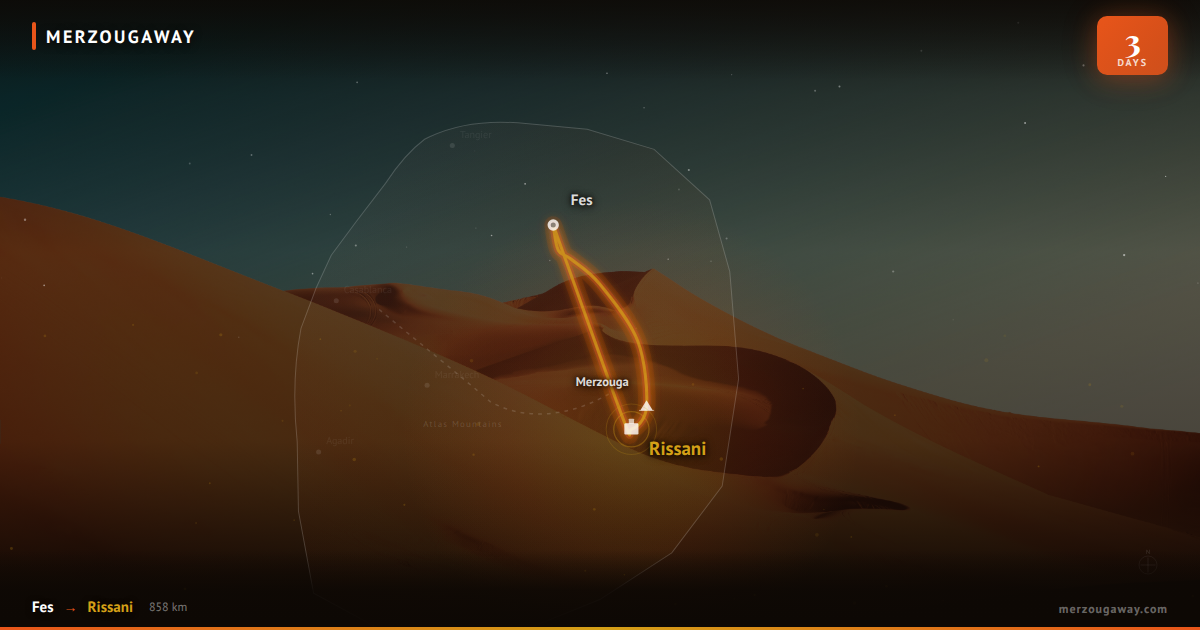
Classic 3-Day Fes to Merzouga: Camel Trek + Erg Chebbi Sunrise
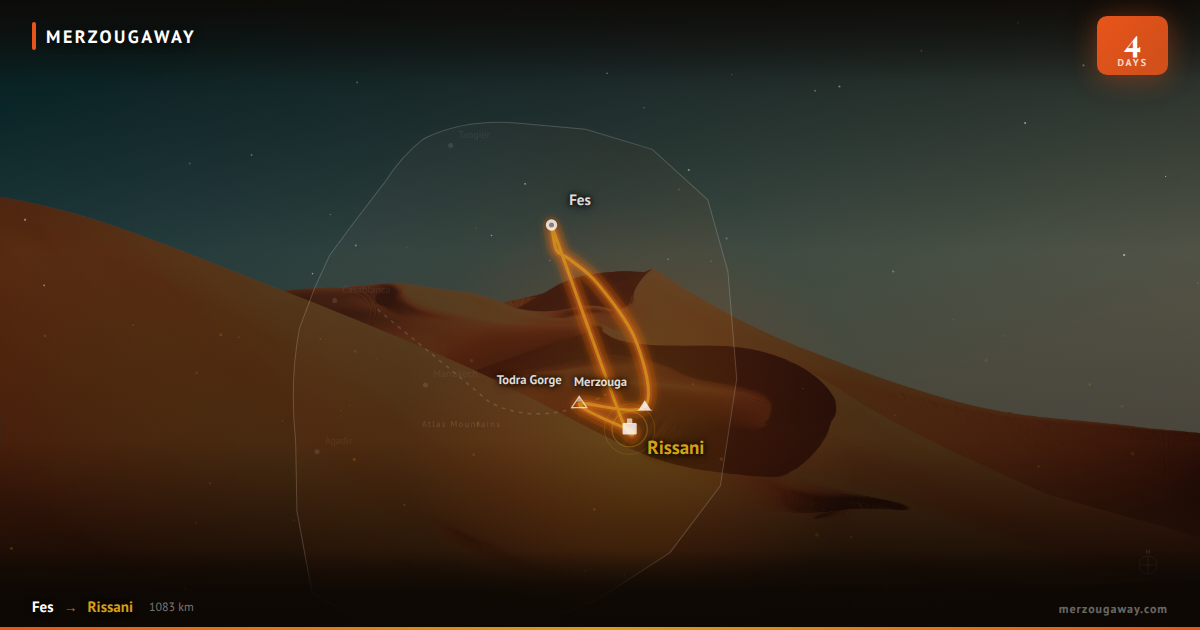
Premium 4-Day Fes to Merzouga: Sahara Desert & Todra Gorge Adventure
More Activities You'll Love
Explore more things to do in Morocco
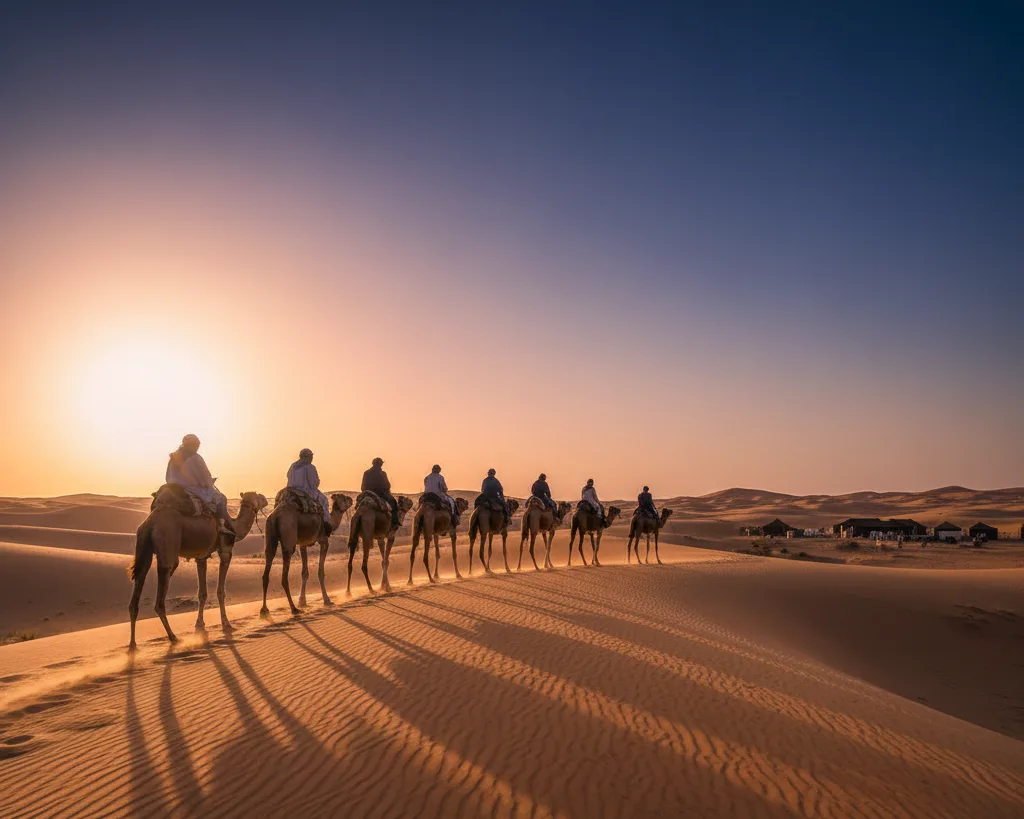
Camel Ride in the Sahara Desert
Experience the timeless magic of the Sahara on camelback. Watch the sun set over Erg Chebbi's golden dunes on a guided camel trek.
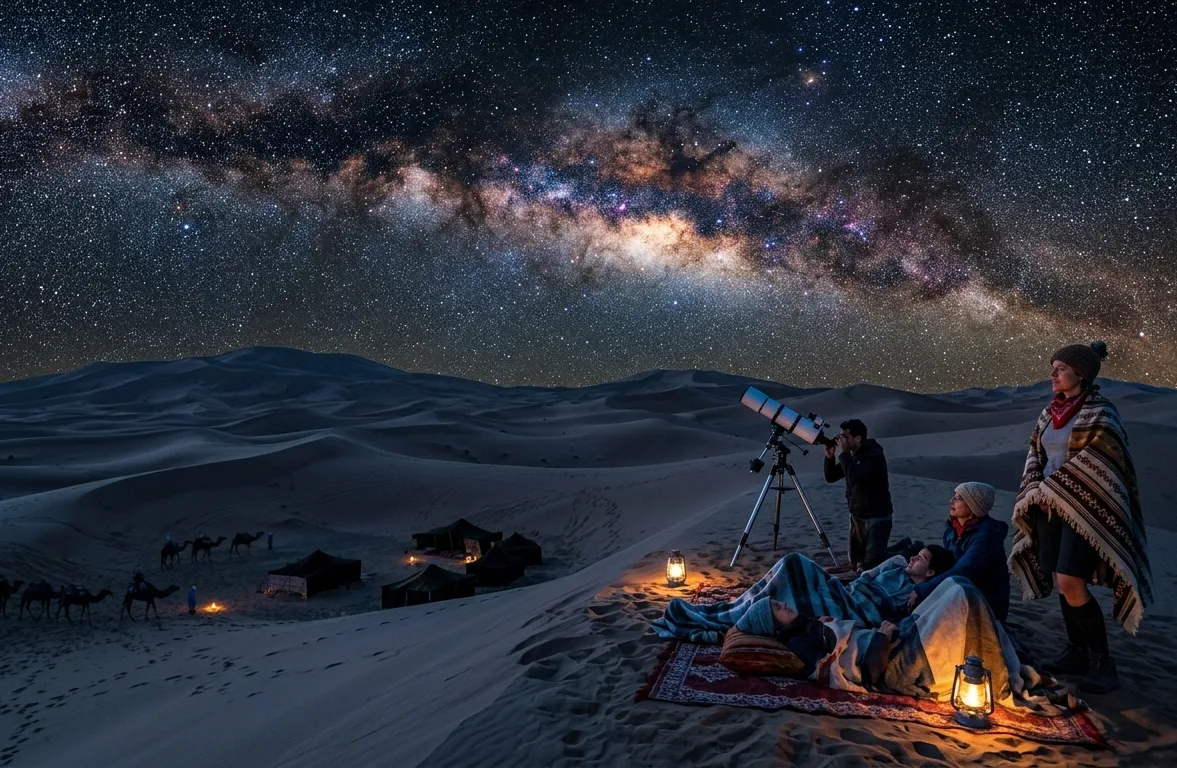
Sahara Stargazing Experience
The Sahara has zero light pollution and one of the clearest skies on Earth. A guided stargazing night in Merzouga is an astronomical experience you won't forget.
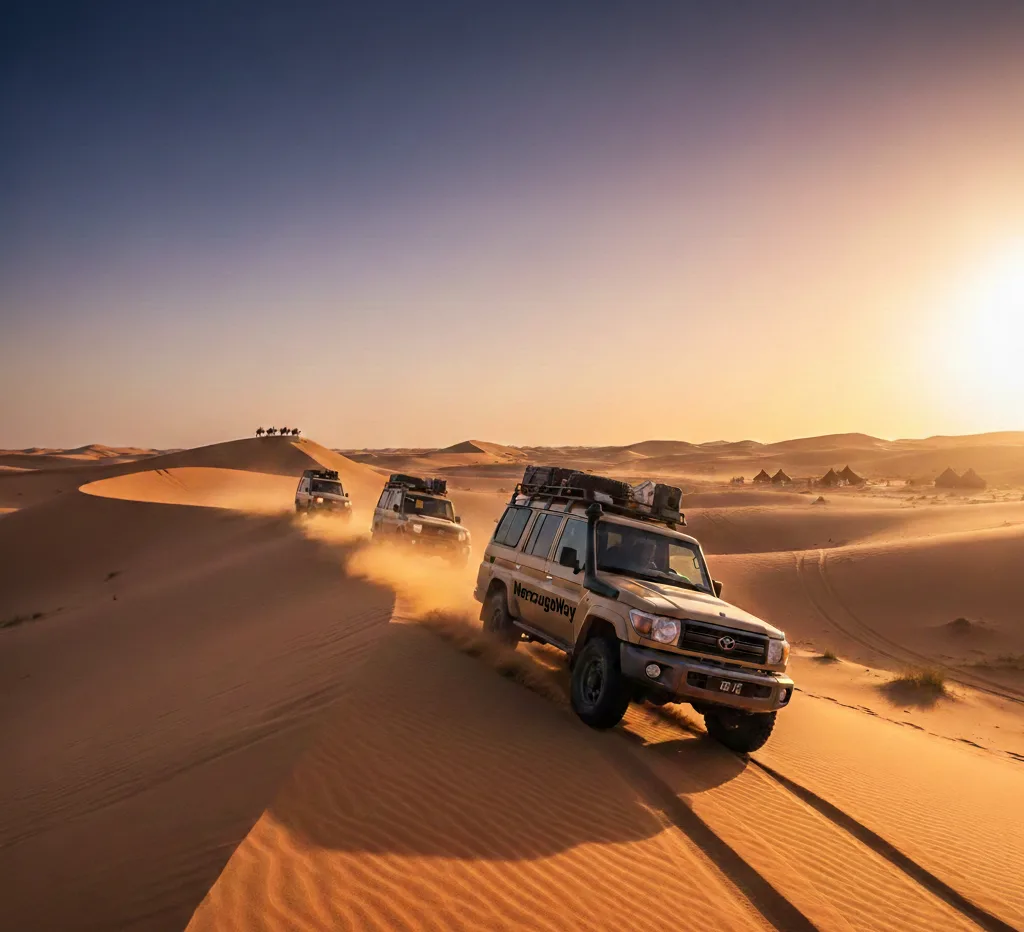
4x4 Dunes Tour in Erg Chebbi
Conquer the Erg Chebbi dunes in a powerful 4x4. An off-road adventure that takes you deep into the Sahara's most dramatic landscapes.